

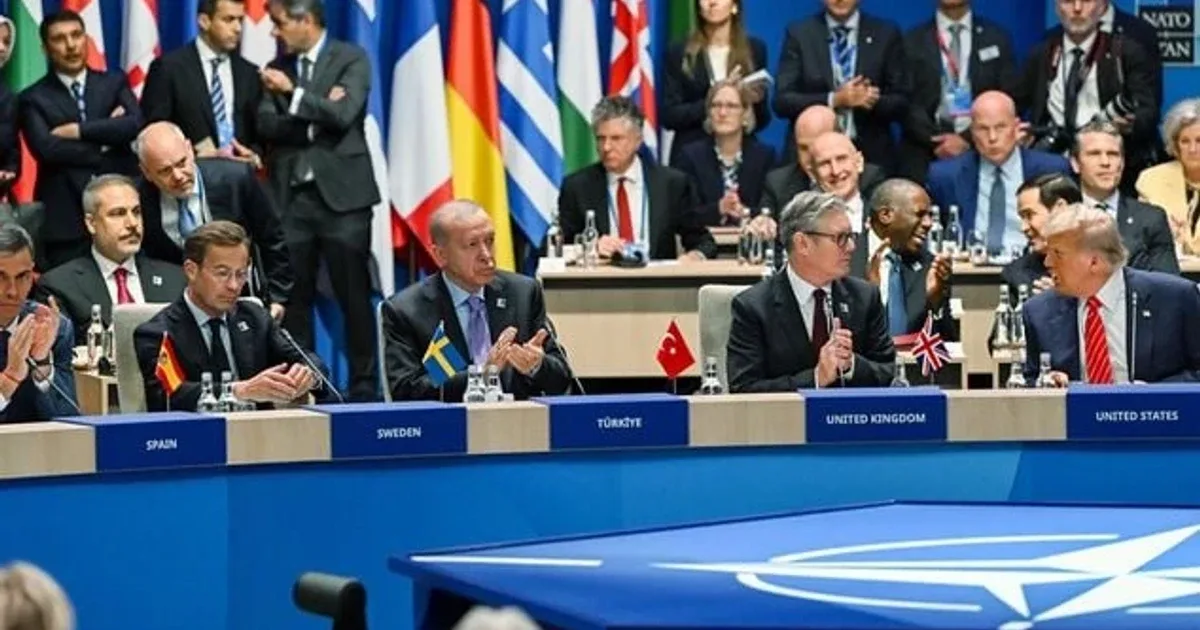
At the recent NATO summit in Ankara, European allies faced intensified calls to assume a larger share of defense spending within the alliance. This push reflects a strategic shift aimed at balancing the defense burden more evenly between the United States and Europe, particularly as Washington signals intentions to reduce its security commitments on the continent.
The restructuring began at NATO’s previous summit in The Hague, where member states agreed to a long-term target of dedicating 5% of GDP annually to defense-related expenditures by 2035. This commitment divides into 3.5% for core defense capabilities and 1.5% for broader security needs. The framework connects to Article 3 of the Washington Treaty, which mandates that members maintain and enhance their individual and collective military capacities.

Recent figures reveal that European NATO members and Canada have already increased their core defense investments significantly, with a reported rise of USD 139 billion for 2025. Some countries are projecting they could meet or approach the new financial goals as early as 2026. Despite these spending increases, experts note that transforming budgets into tangible military strength remains a complex and lengthy process.
The Ankara summit also underscored ongoing political frictions within NATO. While European leaders aimed to focus on practical implementation of defense commitments, the meeting was overshadowed by outspoken criticism from the U.S. President, who confronted some allies over their budget contributions and reignited discussion about territorial issues such as Greenland. These outbursts intensified questions about the alliance’s cohesion and the United States’ future role in European security.
Total attention centered on whether Europe can expedite the development of military capabilities to sustain allied cooperation and keep the United States engaged. NATO Secretary General Mark Rutte emphasized efforts to maintain the alliance’s unity, while Turkish President Recep Tayyip Erdogan shaped the summit setting, emphasizing a low-key, action-oriented agenda in a region affected by multiple security challenges, including the war in Ukraine and Middle Eastern tensions.