

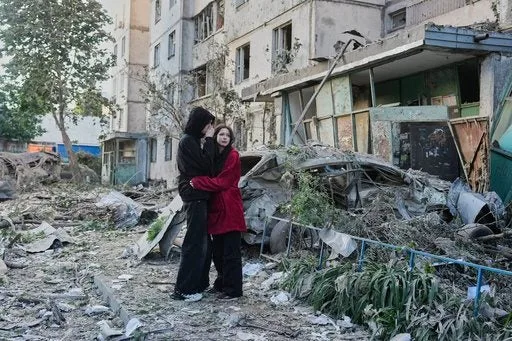
Russian forces targeted Ukrainian cities with a large-scale wave of missiles and drones, killing at least 18 civilians and injuring more than a hundred. The strikes focused mainly on Kyiv and Dnipro, where emergency crews recovered bodies from residential buildings damaged during the attack.
The assault extended overnight and into the following day, causing explosions that swept across urban areas. The Dnipro city administration confirmed 12 fatalities, including a young child and a mother and her son, while Kyiv authorities reported six dead and numerous injuries. Residents had been bracing for the attacks after Russia issued warnings and advised foreign diplomats to leave, though no embassies reported damage.

This intensified offensive highlights Moscow's strategy to capitalize on Ukraine's limited missile defense capabilities, especially given the depletion of Western air defense supplies due to other conflicts. Ukraine’s forces intercepted many incoming threats, destroying the majority of the drones and a significant number of missiles, but the remaining attacks caused deadly damage.
Ukrainian President Volodymyr Zelenskyy called for increased support from the United States and Europe, emphasizing that without better defenses, missile strikes will persist. The Russian campaign recently included the launch of hypersonic ballistic missiles, further complicating Ukraine's defense efforts and putting civilians at risk.
Residents shared harrowing accounts of sheltering through the bombardment. One Kyiv mother described protecting her child in a bathtub amid shattered windows and debris. Despite the damage, both escaped unharmed.
According to Ukraine’s air force, the Russian military launched dozens of missiles alongside hundreds of drones across several key Ukrainian cities, including Poltava, Kharkiv, and Zaporizhzhia. Ukrainian air defenses intercepted a substantial portion of the attacks, destroying roughly 40 missiles and over 600 drones, yet multiple strikes penetrated defenses.
In response to the casualties, Dnipro declared a day of mourning. However, the city faced continued attacks even after the announcement, illustrating the ongoing intensity of the conflict. These developments reflect Moscow’s apparent effort to shift public perception of the war by escalating its military pressure while seeking to portray progress to its domestic audience.