

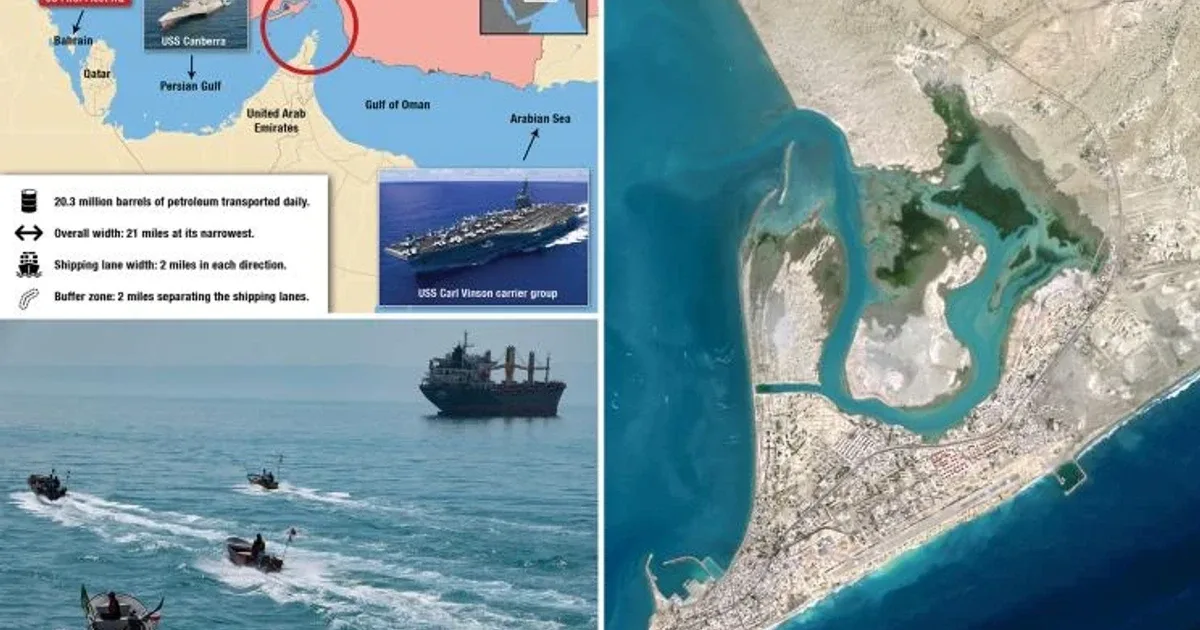
The Strait of Hormuz, a crucial artery for global energy transport, has seen a significant slowdown in maritime traffic following a resurgence of hostilities between the United States and Iran. Recent attacks on LNG and crude oil tankers in the area have heightened risks to oil prices and supply chain stability, as hundreds of vessels remain vulnerable in the increasingly volatile waters.
This narrow passage accounted for the daily transit of approximately 20 million barrels of oil and oil products in 2024, representing about one quarter of the world’s seaborne oil trade. Additionally, nearly 20% of global liquefied natural gas (LNG) shipments rely on this route, underlining its critical importance. Alternatives to the Strait of Hormuz are limited, with pipeline capacity capable of rerouting only a fraction of crude volumes, estimated by the U.S. Energy Information Administration to be between 3.5 and 5.5 million barrels per day.

The International Energy Agency has cautioned that even brief interruptions in the strait could have far-reaching consequences, impacting shipping insurance, freight costs, and ultimately prices at refineries and consumers worldwide. Following recent attacks, the Joint Maritime Information Center has escalated the security threat level in the Strait of Hormuz to "severe," signaling a high likelihood of deliberate hostile actions in the current climate.
The situation echoes the 1980s "Tanker War," when merchant vessels faced sustained attacks amid the Iran-Iraq conflict. Presently, Iran’s joint military command has insisted that all tankers follow Tehran-approved routes or face "forceful response," raising tensions further. This directive came after a projectile strike endangered a Qatari LNG tanker, putting it at risk of explosion, while a Saudi crude oil tanker was also reported damaged.
The United Nations’ International Maritime Organization is closely monitoring the region, where more than 20,000 seafarers operate, including roughly 6,000 who remain stranded on hundreds of ships trapped in the Persian Gulf amid security concerns. Earlier in the year, attacks resulted in casualties among crew members, underscoring the human cost of the conflict escalation.
Washington’s historic role in safeguarding shipping lanes in the Strait of Hormuz remains influential in shaping its response to the current confrontation, particularly after the collapse of a diplomatic framework established to ease tensions earlier this year. The renewed fighting complicates efforts to secure this strategic passage critical to global energy markets and international maritime safety.