

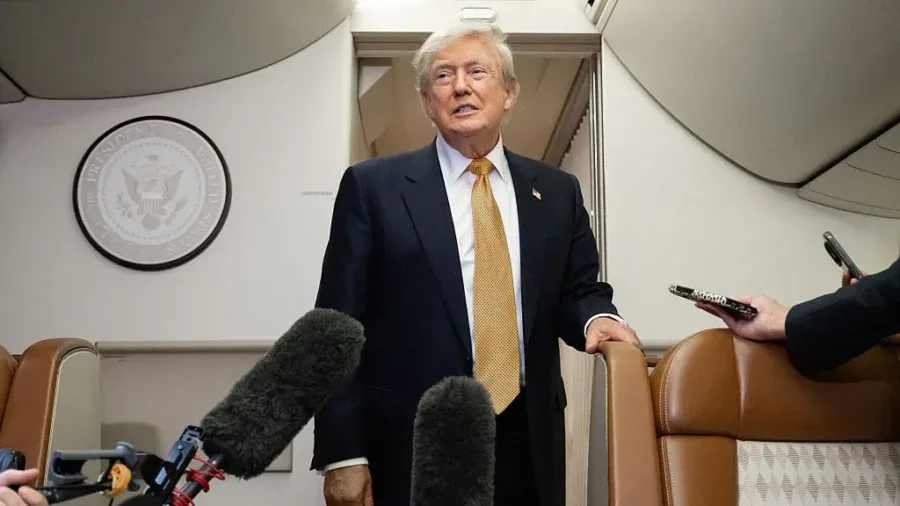
President Donald Trump signaled the official end of the ceasefire between the United States and Iran, while announcing that the U.S. government has agreed to continue diplomatic talks with Tehran amid escalating conflict in the Middle East. Trump’s statement came through a post on his social media platform, where he stressed that although discussions will proceed, the ceasefire itself is no longer in effect.
The initial ceasefire, reached earlier this year, unraveled following Iranian attacks on vessels in the Strait of Hormuz, a critical chokepoint for global oil and natural gas transport. Iran demanded that ships passing through the strait adhere to routes approved by Tehran, a demand the U.S. and international maritime authorities have resisted. The resulting confrontation triggered a series of retaliatory strikes on both sides, deepening regional instability.

The U.S. military reported conducting a series of precision strikes targeting numerous Iranian military sites. In response, Iran expanded its attacks across the region, launching missile strikes in Bahrain, Jordan, Kuwait, and Qatar. Several countries activated missile alert systems, and there was at least one reported injury during interceptions of incoming attacks in Kuwait. Iranian state media cited statements from the head of Iran’s Supreme National Security Council warning that any U.S. aggression against Iranian infrastructure would provoke reciprocal measures.
Despite the collapse of the ceasefire, the U.S. administration has maintained diplomatic engagement. High-level officials, including the vice president, have met with Iranian representatives following a memorandum of understanding signed the previous month, aiming to clarify the path forward through further negotiations.
The strategic Strait of Hormuz remains a focal point in the conflict. Iran’s control attempts over the waterway have disrupted a significant portion of the world’s oil and natural gas supply, contributing to global energy market volatility. Although oil prices have retreated from their wartime peaks, the region’s maritime security continues to be a major concern for international trade and security alliances.