

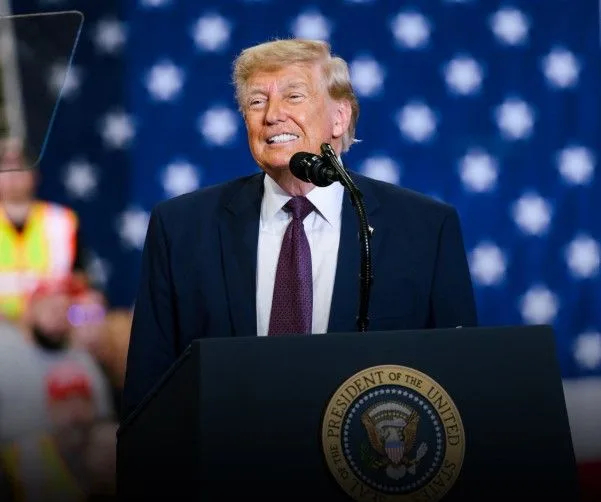
During the White House Correspondents' Dinner, President Donald Trump addressed ongoing tensions with Iran, emphasizing that Tehran is currently interested in engaging in talks with Washington but remains unwilling to finalize a deal. He reiterated a clear US policy stance that Iran must not obtain nuclear weapons, framing this goal as non-negotiable.
Trump claimed recent US military operations had substantially weakened Iran's armed forces, citing losses in naval, air, and drone capabilities, although he did not provide specific evidence for these assertions. According to the President, Iran’s military assets such as jets, patrol boats, and radar systems have been severely damaged, reducing the country’s operational strength.

Highlighting the broader foreign policy strategy, Trump underscored the United States’ commitment to preventing nuclear proliferation in the Middle East, citing concerns over security for American cities, Israel, and the region at large. He warned that if Iran had nuclear weapons, it would use them, further justifying Washington's hardline approach.
Despite the focus on Iran, much of Trump’s hour-long speech touched on other themes such as media criticism and domestic politics. He also framed the US as enjoying a resurgence on the global stage, claiming foreign leaders acknowledged America’s improved standing and vitality compared to a recent past when he described the country as weakened.
The White House Correspondents' Dinner was rescheduled following a recent security incident, and Trump began by condemning political violence and expressing gratitude to law enforcement, including the Secret Service, for their response.