

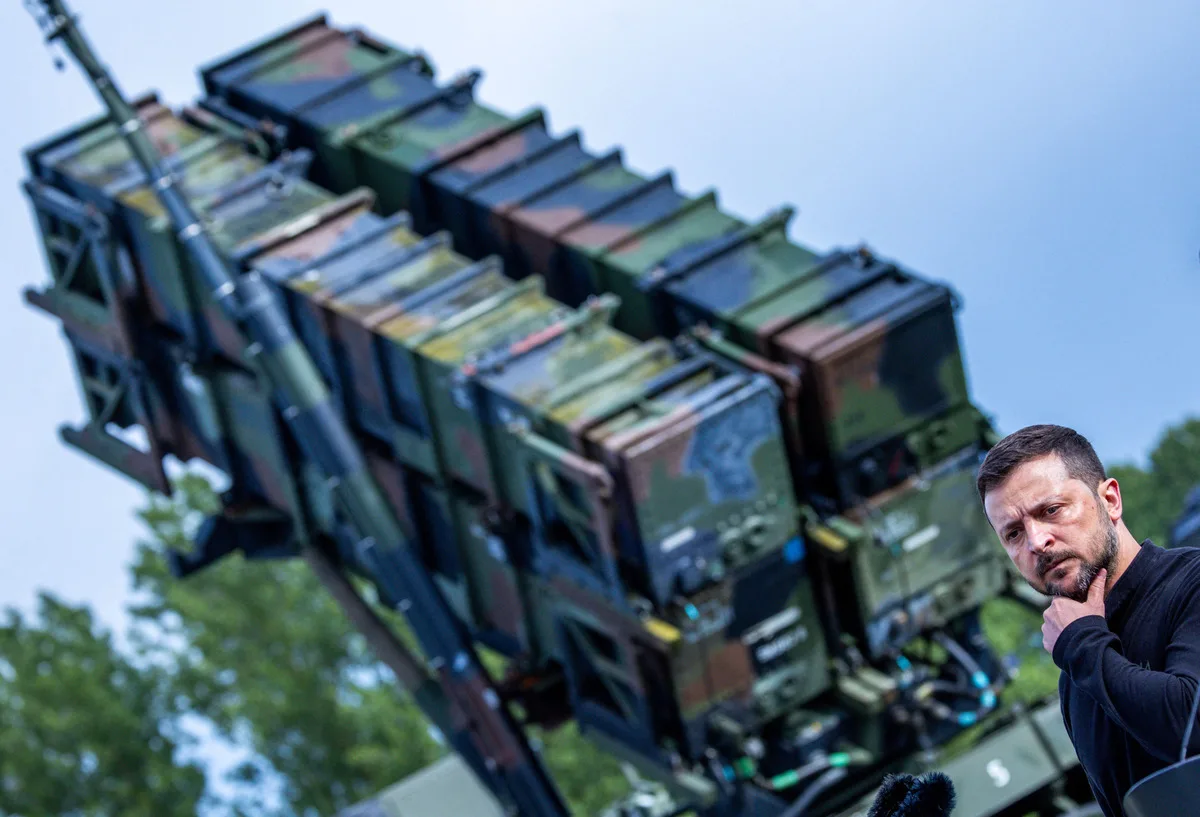
Ukraine is spearheading the development of Freyja, a European-designed air defense system aimed at countering sophisticated Russian missile attacks, including hard-to-stop ballistic missiles. A senior Ukrainian official overseeing the project confirmed that the first prototype is expected to be ready within the first half of 2027, reflecting Kyiv’s urgent need for more advanced missile defense capabilities amid ongoing bombardments.
The existing U.S.-made Patriot system remains the benchmark for intercepting ballistic missiles, but its widespread demand has strained global supplies, notably in Ukraine and other conflict zones. Ukraine has not yet developed a domestic system capable of stopping ballistic missiles, while Europe's current air defense platforms, such as the IRIS-T and SAMP-T systems, have not successfully intercepted ballistic threats. Freyja is intended to fill this gap by providing a ground-launched, interceptor-based defense tailored to the challenge posed by these high-speed, high-altitude missiles.

As part of a broader effort to strengthen collective security, Ukrainian President Volodymyr Zelensky recently met with leaders from nearly a dozen European countries to announce an "anti-ballistic missile coalition." The coalition aims to build a purely defensive missile shield to protect Europe from ballistic threats, working alongside existing air defense networks. Such cooperation not only bolsters European defenses but also offers Ukraine closer integration with NATO and potential access to lucrative defense partnerships.
Freyja’s development involves several major European defense companies, including Leonardo and Saab, with Ukraine providing the interceptor missile technology. The system is designed to launch interceptors from the ground to destroy incoming ballistic missiles mid-flight. The technical challenges of intercepting ballistic missiles lie in their extreme speed, high altitude, and steep descent trajectories, which leave minimal reaction time for defense systems. Freyja aims to adopt lessons learned from Patriot’s performance in Ukraine to address these challenges effectively.
The project timeline is described as “tight but ambitious,” underscoring the urgency of delivering a prototype within the next few years. Europe's growing concern over missile threats from Russia has fueled momentum for such collaborative defense initiatives and highlighted the need for indigenous missile defense solutions beyond reliance on U.S. systems.