

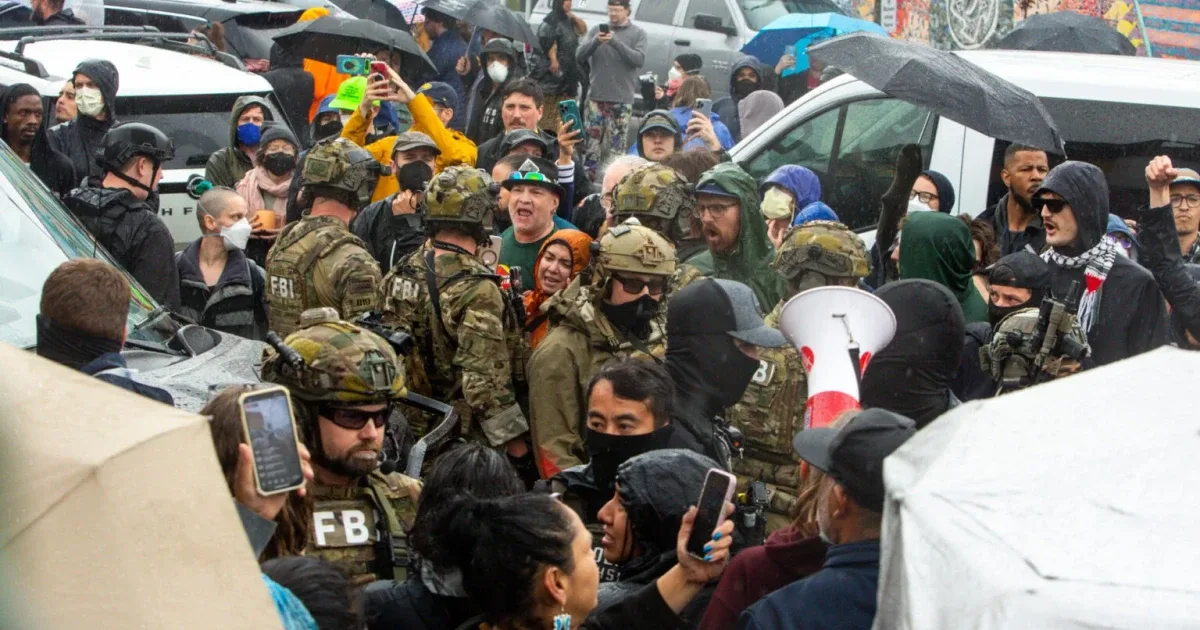
Ukrainian law enforcement initiated an investigation after a tense and violent confrontation erupted in Lviv’s Sykhiv district during the enforcement of a military draft. Officers from the Territorial Recruitment Center detained a man for failing to comply with military registration rules, which quickly escalated as about 200 civilians gathered around the recruitment vehicle, damaging it and confronting the officers.
The clash resulted in injuries to a deputy police chief and prompted authorities to open criminal proceedings against those obstructing military activities and using violence against law enforcement officers. Regional police, prosecutors, and the Security Service of Ukraine joined forces in examining the incident.

Lviv’s mayor urged calm among residents, emphasizing the importance of unity and the need to focus on the external threat facing the country. Meanwhile, the Presidential Office and the Defense Ministry condemned the attack on servicemen and called for accountability, highlighting the incident as a critical test of state authority amid ongoing wartime pressures.
This episode in Lviv, a city relatively distant from the war’s most intense fighting zones, underscores growing tensions between the state’s mobilization efforts and public fatigue. The ongoing conflict, now in its fifth year, has strained Ukraine’s draft system, as legal and social challenges complicate efforts to maintain troop levels.
Recent changes in conscription policies have intensified the pressure. In April 2024, Ukraine lowered the minimum draft age from 27 to 25 and adopted stricter mobilization rules. Meanwhile, plans to reform voluntary recruitment for younger men between 18 and 25 are underway, including introducing financial incentives and clearer military service terms.
The draft system faces additional complexity due to martial law restrictions barring men aged 18 to 60 from leaving the country while only those over 25 are subject to conscription. This policy gap has fueled debates over fairness and obligation, often turning recruitment into a flashpoint of public discontent—as demonstrated in the Lviv confrontation.