

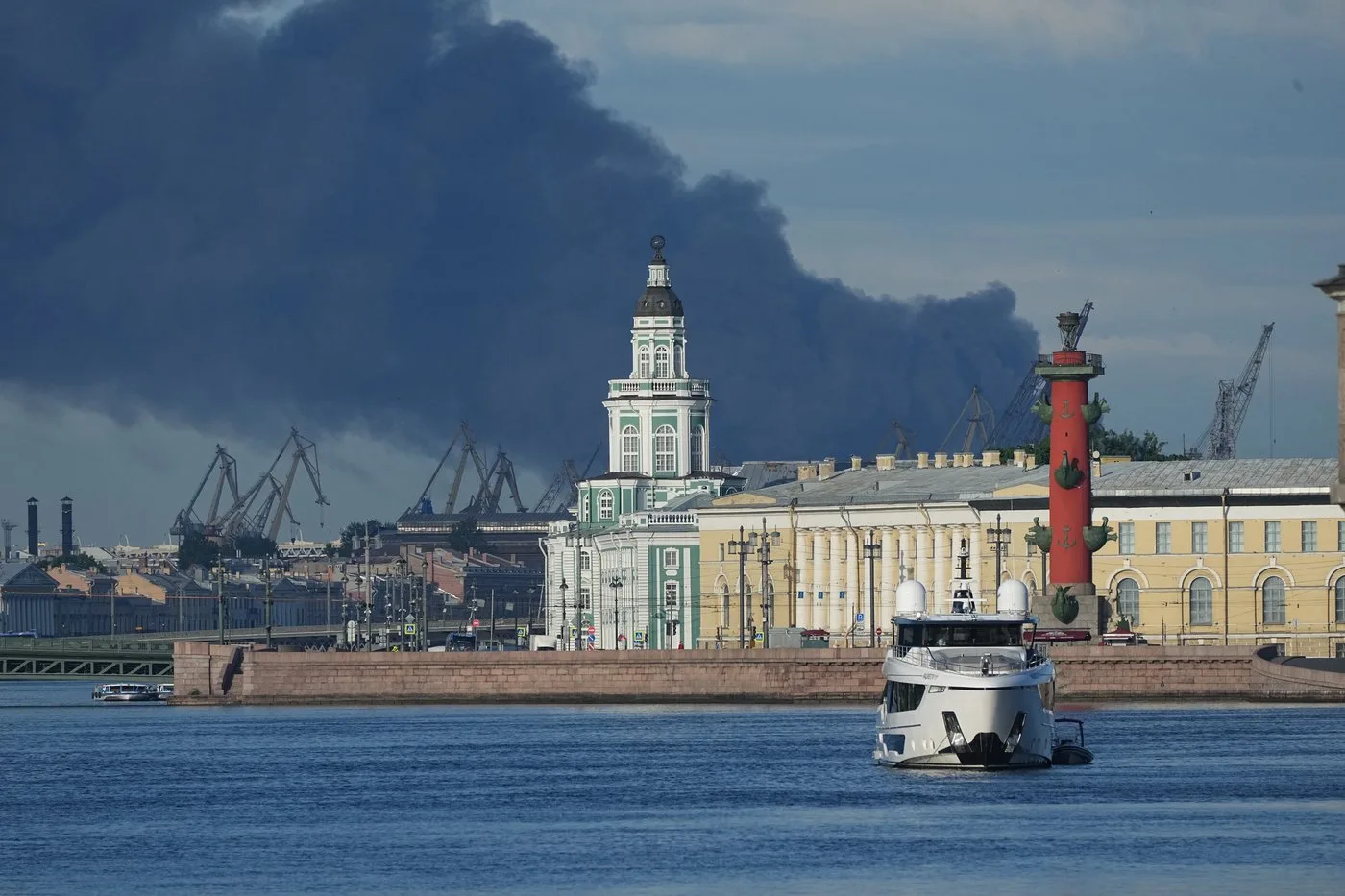
Ukraine intensified its drone campaign against Russian territory by targeting St. Petersburg, Russia’s second-largest city, with a large-scale attack that forced residents to stay indoors. The offensive, which involved drones reaching enemy naval arsenals and a base in Kronstadt, came shortly after Russian President Vladimir Putin dismissed Ukrainian President Volodymyr Zelenskyy’s offer for direct peace talks.
The regional government reported minor injuries among three people and disruptions to mobile internet service following the strikes. Authorities in the Leningrad region defended against the unprecedented onslaught by shooting down 141 drones, while Russia’s Defense Ministry claimed an interception of 376 Ukrainian drones during the assault. The attack underscored Kyiv’s growing capability to penetrate deep Russian airspace and target strategic sites.

Ukrainian President Zelenskyy emphasized the long reach of these attacks, pointing to a similar drone strike that recently ignited an oil depot in the Krasnodar region. This follow-up strike also coincided with tensions surrounding the St. Petersburg International Economic Forum, an event Putin uses to attract investment but which was overshadowed by security concerns arising from the drone attacks.
Following Putin’s rejection of Zelenskyy’s suggested face-to-face meeting, Ukrainian officials signaled that the conflict would intensify. The Ukrainian Foreign Minister warned of worsening conditions for Russia and promised that no location within Russia would be safe from future long-range strikes. This statement came amid ongoing drone and artillery exchanges along the front lines, where territorial changes remain minimal.
Meanwhile, Russian forces continued their own aerial and artillery bombardments within Ukraine, notably striking districts in the Dnipropetrovsk region multiple times and causing casualties. In the Zaporizhzhia region, Russian drone attacks sparked fires and injuries, demonstrating the persistent and reciprocal nature of the hostilities.