

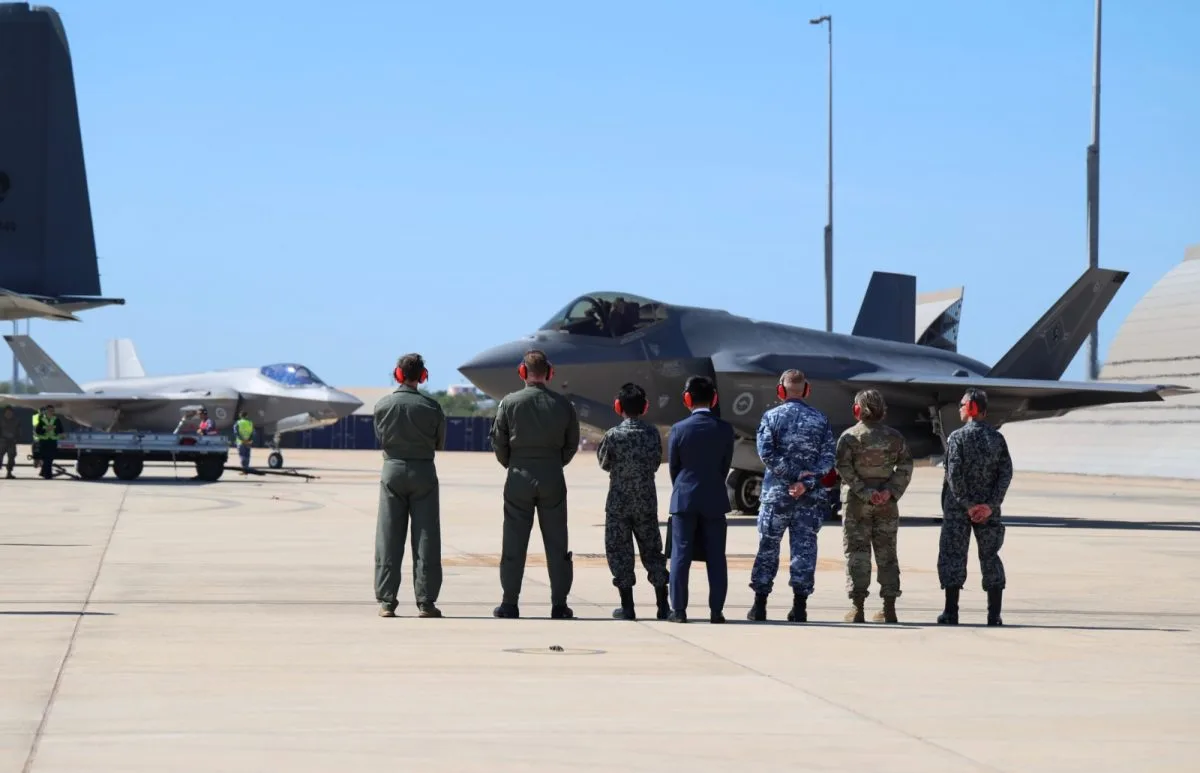
The United States, Australia, and Japan have kicked off Exercise Southern Cross 26, a trilateral wargame featuring the advanced F-35 Lightning II stealth fighters, signaling a unified military stance in the Indo-Pacific region amid heightened tensions following China’s recent submarine-launched ballistic missile test.
The exercise, hosted at Royal Australian Air Force bases Darwin and Tindal, involves about 1,000 personnel and 40 aircraft from the three nations. It emphasizes joint operations in a high-end warfighting environment, including agile deployment as a dispersed force, air-to-air refueling, multinational aircraft maintenance, and live weapons employment in simulated combat scenarios.

A notable highlight of the drills included a forward arming and refueling point demonstration at RAAF Darwin, showcasing the ability to support F-35 jets at austere bases within the region. Japanese F-35As also received refueling mid-flight from an Australian KC-30A tanker over the Pacific Ocean during their transit to Australia, enhancing real-time interoperability and operational range.
This exercise marks the third major stealth fighter training event among these allies following COPE North in Guam and Bushido Guardian in Japan over the past two years. The drills underscore the strategic priority these countries place on strengthening their trilateral defense cooperation amid China’s growing military assertiveness.
The F-35 program, featuring shared sensor networks, stealth, and data-links, remains central to the defense posture of all three nations. The US operates over 500 F-35A jets, the Royal Australian Air Force has received 72, and Japan has ordered more than 100, with deliveries underway for over 40 aircraft. These numbers reflect their commitment to maintaining an advanced airpower edge in the region.
Military officials emphasize that these joint exercises go beyond training to serve as a clear deterrent against potential aggression in the Indo-Pacific, reinforcing the trilateral alliance’s readiness to respond to evolving security challenges.