

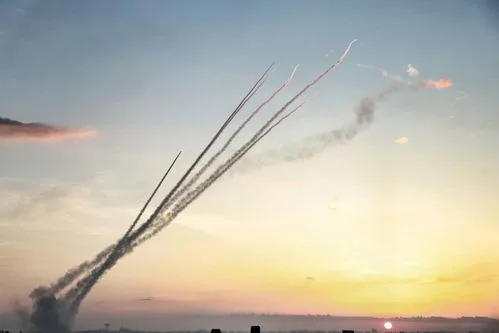
The US Central Command initiated a series of powerful strikes against Iranian targets in response to attacks on three commercial vessels navigating the strategic Strait of Hormuz. The military operation aimed to impose significant costs on Iran for targeting civilian maritime traffic in international waters.
According to the Central Command, the strikes followed assaults on tankers, two of which were confirmed as a Saudi crude oil tanker and a Qatari liquefied natural gas tanker. These attacks involved unidentified projectiles and a drone strike, damaging the vessels and threatening the safety of innocent crews.

Reports indicated explosions near Iran's Qeshm Island and port cities Bandar Abbas and Sirik shortly after the strikes. The United Kingdom Maritime Trade Operations documented three separate incidents along the Strait. In the first, a tanker sustained fire damage from a projectile near Oman’s coast. The second tanker suffered structural damage after being hit, while the third, struck by a drone, continued to its next destination with minor harm.
Earlier intelligence also revealed that Iran’s Islamic Revolution Guard Corps Navy targeted two tankers attempting to transit the Strait via a route backed by the US and Oman. These tankers reportedly ignored Iranian warnings before being engaged, further escalating regional tensions.
The Strait of Hormuz is a critical maritime chokepoint through which a significant share of the world’s oil supply passes. Attacks on commercial shipping in this area pose serious risks to global trade and regional security, prompting swift military responses aimed at deterring further aggression.