

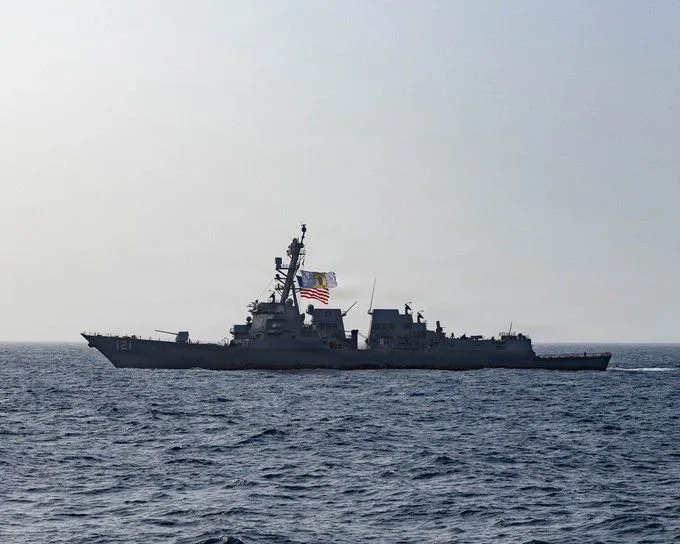
The US military disabled an unladen oil tanker flying the Curacao flag after it tried to breach a naval blockade on Iranian ports in the Arabian Gulf. The ship, named M/T Belma, ignored repeated warnings before a US aircraft fired Hellfire missiles at its smokestack, forcing it to turn away from Kharg Island, an important Iranian port. This action highlights the fraught enforcement of US restrictions on maritime movements near Iran’s coastline.
The naval blockade, reinstated by US forces recently, is part of a broader campaign targeting Iranian military assets. Earlier on the same day, the US Central Command launched two waves of precision strikes against Iranian military installations. The first wave focused on coastal defense systems and cruise missile facilities on Greater Tunb Island. A second wave of strikes followed, aimed at degrading Iran’s ability to threaten vessels passing through the Strait of Hormuz, a crucial international shipping route.

In response to the US operations, Iran’s Islamic Revolutionary Guard Corps (IRGC) claimed to have launched retaliatory missile attacks on US military facilities in Bahrain and Jordan. According to local reports, the IRGC’s Aerospace Force targeted the al-Azraq base in Jordan, destroying shelters that housed US fighter jets and MQ-9 drones. These tit-for-tat strikes have intensified tensions in the region, showcasing the volatile standoff between US forces and Iran’s military infrastructure.