

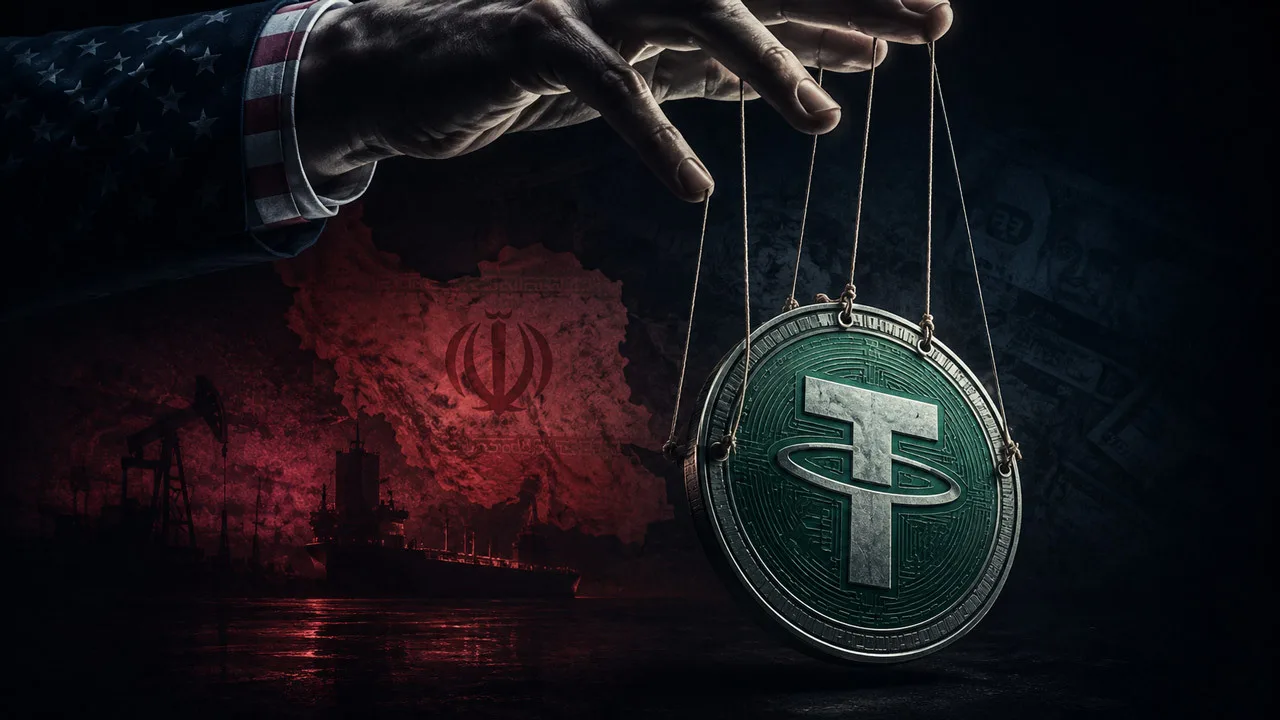
The US government has significantly expanded its sanctions enforcement against Iran by freezing approximately $475 million in Tether’s USDT stablecoin connected to Iranian entities, marking a shift from conventional banking restrictions to targeting cryptocurrency networks. In recent months, Tether acted to block movement of the funds in collaboration with US authorities, effectively immobilizing digital assets controlled through specific blockchain addresses.
This operation included the freezing of four wallets on the Tron blockchain linked to the Central Bank of Iran, also known as Bank Markazi. These wallets held around $131 million in USDT, frozen as part of a broader crackdown initiated by the Office of Foreign Assets Control (OFAC) to disrupt what Washington identifies as Iran’s schemes to evade economic sanctions. Earlier, in April, Tether halted transfers from two additional Tron wallets containing over $344 million, demonstrating a continuing pattern of collaboration with US enforcement agencies.

Tether’s unique position stems from its control over the contracts governing USDT, enabling it to block addresses and restrict token movements even though these wallets remain visible on the public blockchain. This capability turns stablecoin issuers into powerful tools in sanction enforcement, extending Washington’s reach beyond traditional banking systems into decentralized finance.
The freezes coincide with intensified tensions between the US and Iran, including renewed restrictions on maritime traffic near the Strait of Hormuz and military strikes targeting Iranian interests. These geopolitical developments frame the sanctions as part of a comprehensive effort to curb Iran’s ability to access dollar-denominated assets and finance its activities through alternative financial channels.
Alongside wallet freezes, Washington has targeted Iran’s broader cryptocurrency infrastructure through an initiative called Operation Economic Fury. This campaign has sanctioned multiple crypto exchanges that facilitate Iran’s digital asset flows. Notably, exchanges such as Nobitex, Bitpin, Ramzinex, and Wallex have faced penalties for enabling the Iranian government to acquire significant stablecoin holdings, including steps allegedly assisting the Central Bank of Iran in securing hundreds of millions of dollars in digital assets.
The Treasury Department’s actions illustrate a more proactive approach to sanction enforcement on the crypto front, moving beyond passive monitoring to actively disabling platforms and wallets involved in sanction evasion. Through cooperation with stablecoin issuers and targeted sanctions against exchanges, the US aims to close the gaps Iran exploits to move funds outside the traditional financial system.