

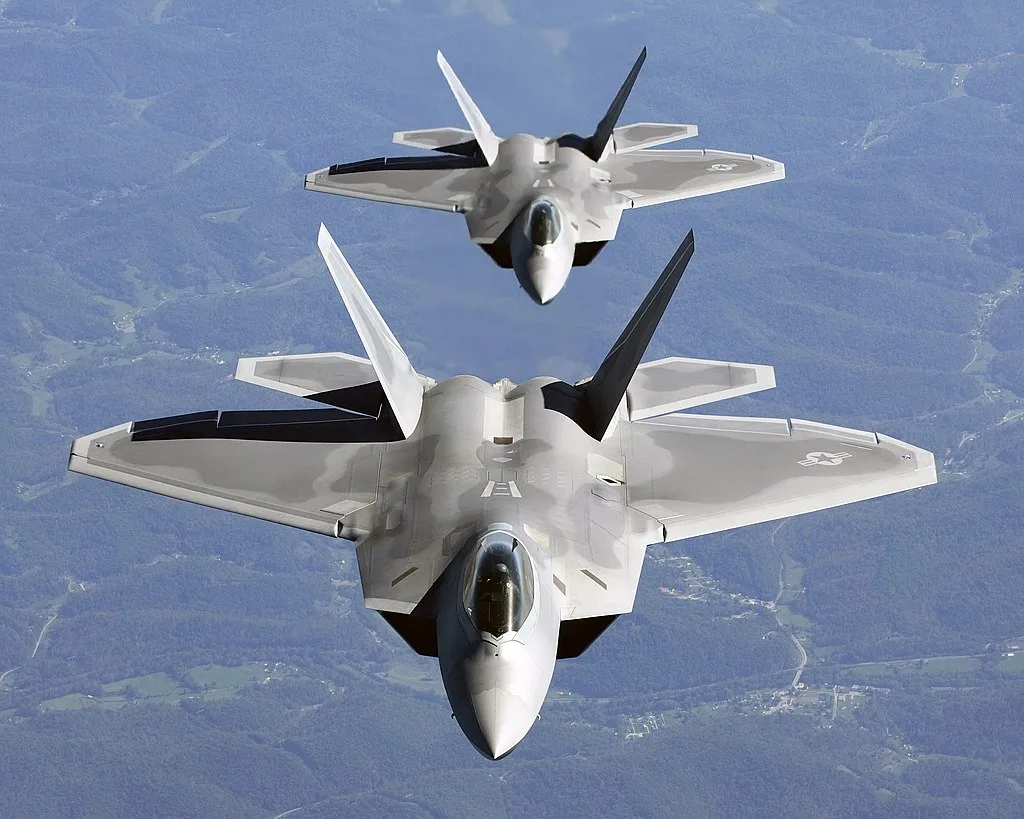
The United States has withdrawn its fleet of F-22 Raptor stealth fighters from Israel, reversing an unprecedented deployment that began earlier this year amid heightened tensions with Iran. These advanced jets, part of the 1st Fighter Wing from Langley Air Force Base, departed the Ovda Air Base in Israel and landed at RAF Fairford in the United Kingdom in several waves over recent days.
This redeployment follows months of intensive military activity in West Asia, which included the first-ever stationing of F-22 Raptors in Israel for joint operations. The initial deployment supported "Operation Epic Fury," launched in late February, when the U.S. and Israel conducted coordinated airstrikes targeting Iranian assets. Despite the deep strategic alliance between the U.S. and Israel, this marked a significant escalation in American military involvement in the region.

The withdrawal of the Raptors—a highly sophisticated and limited asset—comes as part of a broader U.S. drawdown of high-value aircraft across the region. Alongside the F-22s, recent months saw the return of B-52 Stratofortress bombers from the UK and the redeployment of F-15E Strike Eagles, both of which had been engaged in missions related to Iran. Additionally, A-10 Thunderbolt II attack planes, also noted for their active deployment, have moved back to their home bases after combat operations.
Operational limitations partly explain these decisions. The U.S. Air Force originally produced fewer than 200 F-22 Raptors with only a fraction maintained in combat-ready condition at any given moment. The aircraft’s Mission-Capable Rate has hovered around 40-50% in recent years, restricting continuous deployment. This scarcity underscores why the U.S. may prioritize rotating these assets carefully during ongoing conflicts.
Observers have taken particular interest in the timing of the drawdowns as fresh hostilities erupted in the Strait of Hormuz, where recent attacks on maritime vessels have escalated tensions between Iran and the U.S. Following Iran’s strike on an oil tanker near Oman, U.S. officials declared the end of a tenuous ceasefire, intensifying fears of renewed large-scale conflict.
China’s early identification of the Raptors’ presence at Ovda Air Base through satellite imagery added an unexpected dimension to the deployment, revealing the level of global surveillance and strategic signaling involved in this military buildup.