

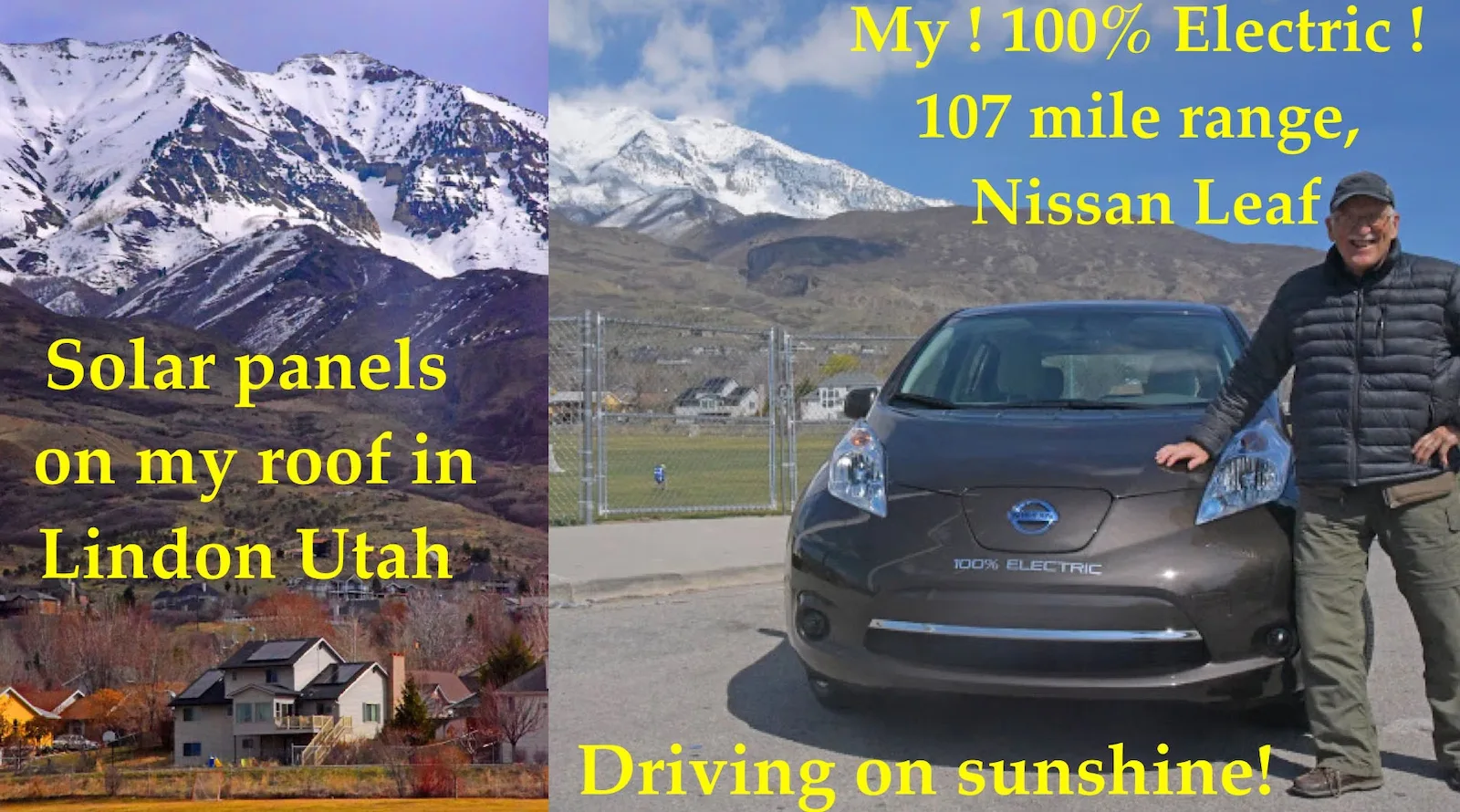
The journey toward fully embracing electric vehicles (EVs) often unfolds over years, reflecting advancements in technology and infrastructure. Starting with a leased 2014 Nissan Leaf, an early EV model with limited range and sparse charging options, one driver’s experience encapsulates both the promise and persistence required to go fully electric.
Initially, the 2014 Leaf’s EPA-rated range of 81 miles constrained travel, particularly for longer commutes. Charging infrastructure was scarce, with just a handful of CHAdeMO fast chargers available. This meant carefully timed stops and even sacrificing comfort—such as turning off heating or air conditioning during demands—to ensure the ability to complete essential trips. The driver compensated by installing a Level 2 home charger and later adding rooftop solar panels to power the vehicle sustainably.

Over subsequent years, the driver upgraded to newer Leaf models with improvements in range and styling: the 2016 version provided approximately 107 miles of EPA range, although battery degradation reduced that after two years, and the 2018 model extended range to 150 miles. Yet, even with these enhancements, long-distance travel remained challenging due to limited public fast-charging infrastructure outside major metropolitan areas. This led the driver to ship a 2018 Leaf across states rather than drive it full distance, underscoring the continuing practical hurdles for EV owners during that era.
The narrative culminates with the adoption of Tesla’s latest Full Self-Driving (FSD) V14, a software suite aimed at delivering an autonomous driving experience—a stark contrast to the early limitations faced. This progression from basic electrification to advanced vehicle autonomy illustrates the rapid evolution within the EV landscape. Yet, it also emphasizes the ongoing interplay between vehicle capability, charging networks, and user lifestyle adaptation.
Throughout the journey, this EV driver maintained a strong advocacy role, participating in community events like local parades to promote electric transportation awareness. Their personal account offers insight into the practical realities and gradual adoption curve that many EV enthusiasts encounter, from range anxiety and charging logistics to the excitement of cutting-edge technology that promises to redefine driving in the near future.