

BYD has won a contract to provide 11.275 gigawatt-hours (GWh) of battery capacity for Masdar’s Round the Clock (RTC) project in Abu Dhabi, marking one of the largest energy storage agreements in history. This contribution represents the bulk of the project’s total 19 GWh battery system, which complements a massive 5.2-gigawatt solar array designed to deliver clean power continuously.
The RTC plant aims to overcome the intermittent nature of solar energy by ensuring 24-hour reliable clean electricity at a gigawatt scale, a significant milestone for renewable energy deployment. Equipped to dispatch approximately 1 gigawatt of continuous baseload power, the facility pairs an expansive solar photovoltaic array with a battery energy storage system (BESS) that rivals many national grid-scale operations.

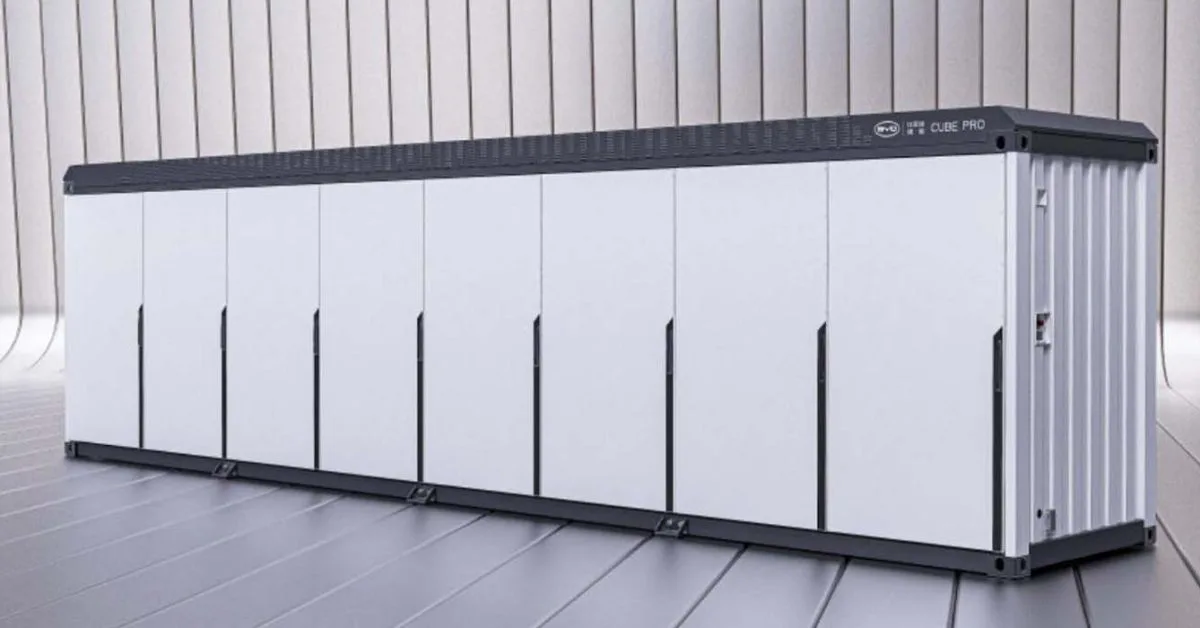
BYD’s portion of the project features a single battery station rated at 1,644 megawatts with 11,275 megawatt-hours of capacity, utilizing its Haohan storage technology. This system is built around the company’s advanced Blade Battery, a lithium iron phosphate (LFP) cell boasting more than three times the capacity of conventional grid storage cells. The design reduces battery management complexity by up to 80%, enabling 10 megawatt-hours to fit within a standard 20-foot container, optimized for the harsh desert environment with IP66 protection and operating temperatures from -30°C to 55°C.
Notably, while Masdar originally identified CATL as the preferred battery supplier, contract awards reveal that BYD alongside Sungrow — which secured about 7.5 GWh earlier — together hold exclusive supply contracts for the full 19 GWh capacity. This underscores the current dominance of Chinese manufacturers in utility-scale energy storage, transitioning from electric vehicle battery leadership into grid applications.
BYD’s battery management system, GC Master, supports energy management operations of up to 15 GWh within a single station, enhancing the system’s efficiency and reliability. The project sits amid a wave of growing energy storage deployments in the Middle East, where Chinese firms continue to capture significant contracts as storage costs decline sharply.
In addition to the Abu Dhabi award, BYD recently secured a 12.5 GWh storage deal in Saudi Arabia. Innovations in battery chemistry and production are rapidly reducing costs, with BYD working to deliver sodium-ion batteries priced near $0.04 per watt-hour, while other Chinese suppliers push longevity and scalability. This competitive landscape centers on developing the most affordable and durable grid-scale storage solutions worldwide.