

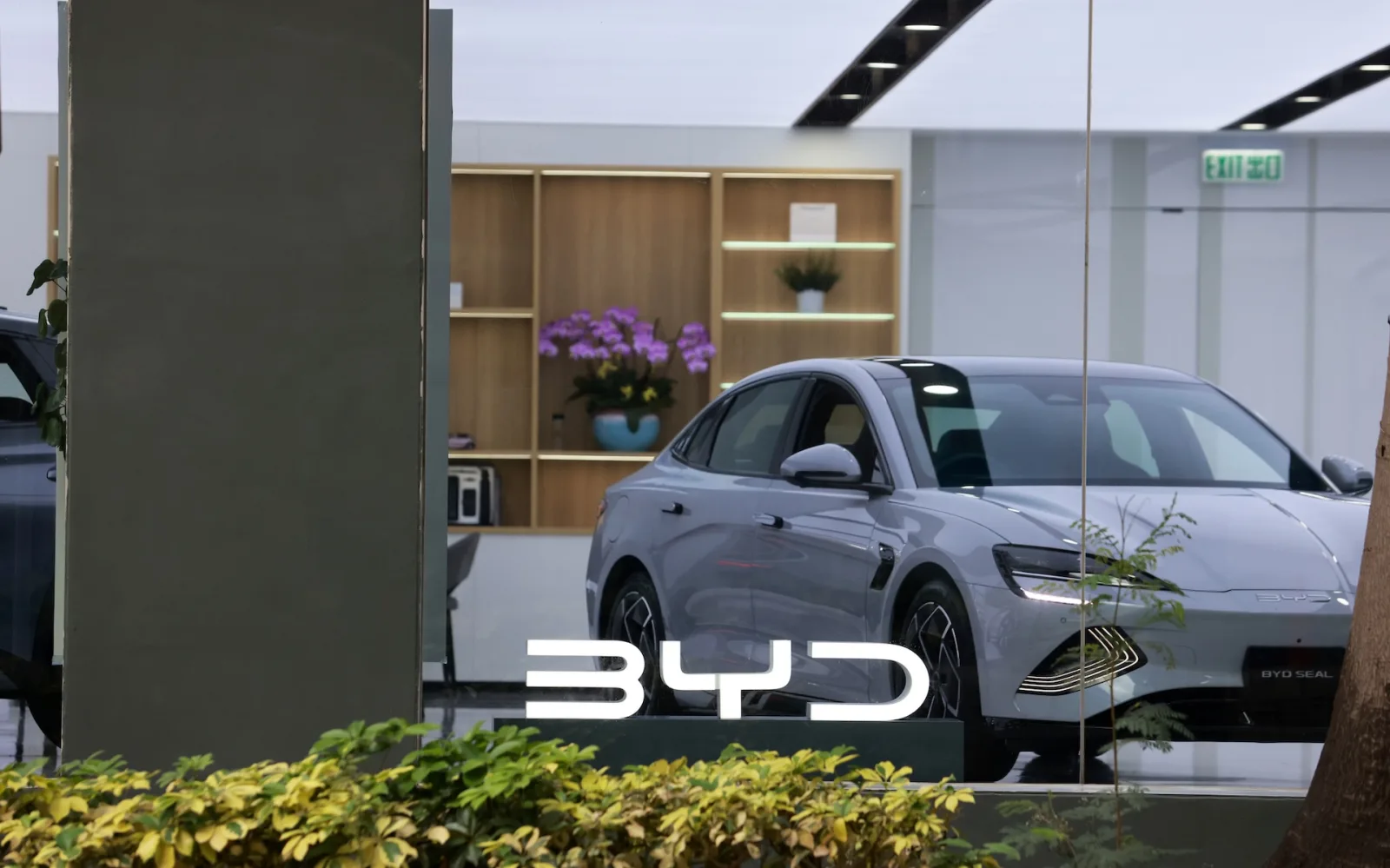
BYD has launched the Da Han, an electric sedan that targets a critical consumer concern: driving range. Equipped with a large 102.3-kilowatt-hour lithium iron phosphate battery, the vehicle boasts an estimated range of up to 626 miles under China’s CLTC testing cycle, positioning it ahead of many competitors on distance alone.
This extensive range comes in several variants, including rear-wheel-drive models rated between 603 and 626 miles, and all-wheel-drive versions offering between 510 and 547 miles with power output reaching 764 horsepower. The battery alone weighs nearly 1,600 pounds, highlighting the scale involved to achieve these figures. Despite its size—longer than the Mercedes-Benz S-Class—the starting price is reportedly around $44,300, which could make it a strong contender in the premium electric vehicle segment.

The significance of BYD’s offering lies in addressing a major hesitation among potential EV buyers: range anxiety. Though the CLTC standard generally yields more optimistic range estimates than the U.S. Environmental Protection Agency’s method, such figures still mark a notable advancement in electric vehicle capabilities, potentially improving daily driving convenience and reducing the frequency of charging stops on longer trips.
Electric vehicles bring inherent benefits such as lower fuel and maintenance costs due to fewer moving parts and no oil changes, coupled with the environmental advantage of zero tailpipe emissions. The Da Han’s use of lithium iron phosphate (LFP) batteries supports these goals by offering cost-efficient, durable energy storage and relying less on expensive raw materials. LFP technology also aligns with industry trends aiming to enhance battery life, performance, and affordability.
Improved charging infrastructure further complements long-range EVs like the Da Han. While public fast chargers are expanding, many users depend on home charging setups, where Level 2 chargers provide much faster overnight charging compared to the slower Level 1 standard. Services offering quick estimates and installations for home charging stations aim to make this transition smoother for consumers.
Ultimately, BYD’s Da Han sedan reflects a broader shift in the EV market toward combining extended driving range with accessible pricing. Its introduction signals intensifying competition among manufacturers striving to meet customer demands for practicality, affordability, and sustainability in electric transportation.