

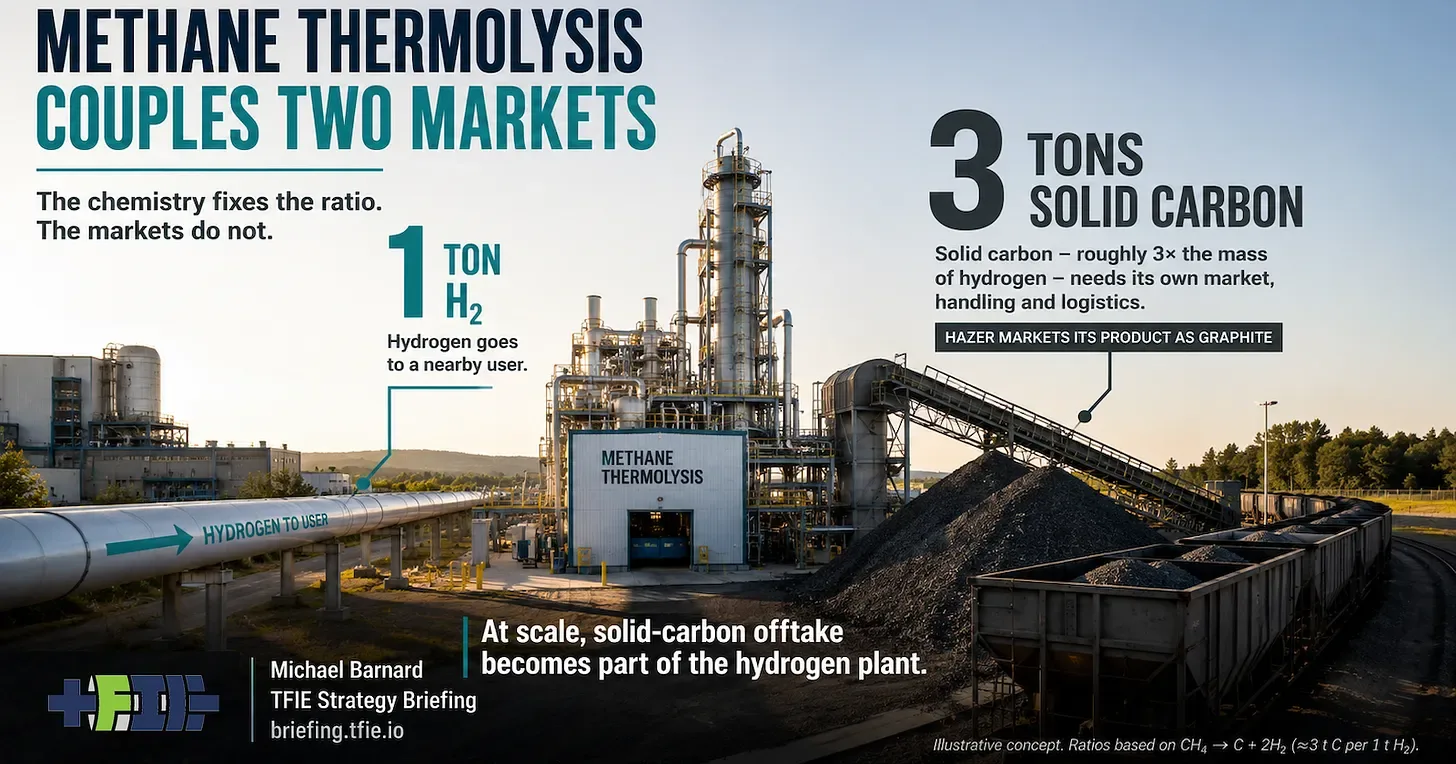
Methane thermolysis, a promising method for producing hydrogen and solid carbon, faces significant hurdles due to the limited demand for the carbon byproduct it generates. While hydrogen can be used as a fuel or industrial input, the process yields large quantities of graphite that existing markets cannot fully absorb, creating a major bottleneck for scaling the technology.
Even when paired with a substantial hydrogen direct-reduced iron (DRI) steelworks operation—one of the largest potential industrial consumers of hydrogen—the balance still results in an estimated 80 to 90 percent of the graphite produced lacking a market. This leaves producers with a surplus of carbon that must either be stockpiled or directed toward less optimal applications, complicating the economics of methane thermolysis.

The carbon produced through thermolysis differs in its properties and purity compared to other industrial graphites, adding another layer of complexity in finding suitable end uses. Current high-value applications, such as battery anodes or specialty materials, represent only a fraction of the volume generated, while traditional carbon markets do not match the scale or specifications needed to absorb the entire output.
For methane thermolysis to become economically viable at scale, alternative markets or improved pathways for utilized carbon must be developed. Possibilities include new carbon-based materials, enhancements in carbon sequestration techniques, or integration with industries capable of consuming large graphite volumes in a sustainable manner.
This supply-demand mismatch underscores a broader challenge in transitioning hydrogen production technologies: addressing co-produced materials and ensuring comprehensive market strategies that account for all outputs, not just the primary hydrogen product.