

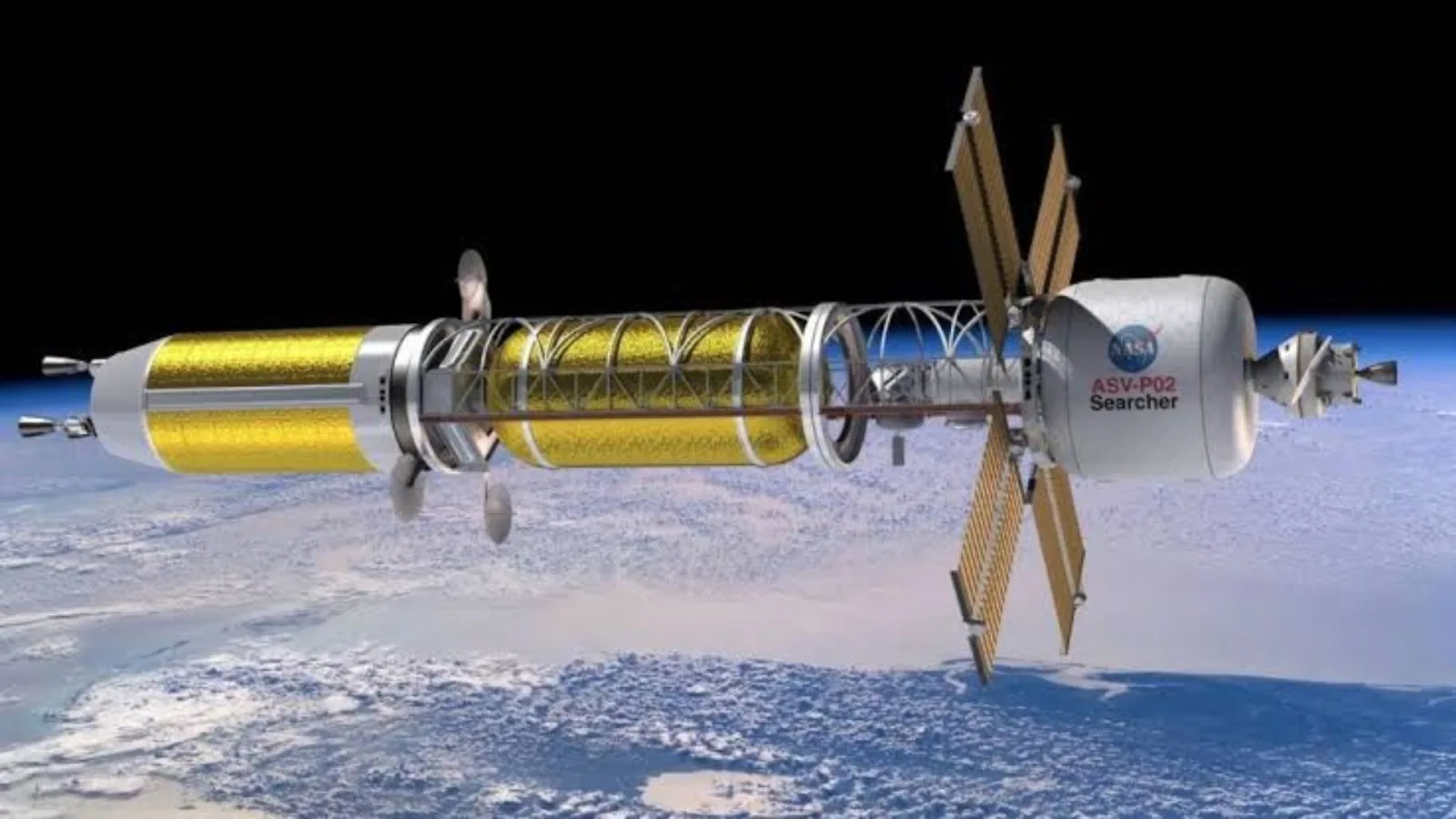
NASA and the U.S. Department of Energy (DOE) have entered into a strategic partnership to accelerate the development of compact nuclear fission reactors designed for deep-space missions. Moving beyond traditional chemical propulsion, this collaboration focuses on creating reliable, high-output nuclear power systems to support sustained human and robotic exploration beyond Earth’s orbit.
The agreement formalizes the joint effort to leverage DOE’s expertise in nuclear technology alongside NASA’s space exploration experience. These reactors aim to provide a continuous and robust power supply capable of enabling longer mission durations and more demanding onboard systems, such as life support and scientific instrumentation, in environments where solar energy is insufficient or unavailable.

The partnership encompasses several key objectives, including research on reactor design, safety protocols, fuel handling, and integration with spacecraft systems. The nuclear reactors under development are intended to be small and lightweight yet powerful, making them suitable for surface missions on the Moon, Mars, and eventually deep space. Unlike current power sources, these reactors can deliver consistent energy output regardless of sunlight exposure or environmental conditions.
Advancing nuclear power technology for space aligns with NASA’s broader goals of establishing a sustainable human presence off-Earth. Applications include powering habitats, scientific experiments, and propulsion technology that require high energy density and long-term reliability. This approach addresses the limitations of solar panels and chemical batteries, which degrade over time or deliver insufficient power for extended missions.
This collaboration also highlights the dual-use potential of nuclear technology, emphasizing stringent safety measures and robust containment systems to mitigate risks in space environments. Both agencies continue to evaluate material durability, thermal management, and radiation shielding to ensure the reactors operate safely during launch, transit, and surface deployment.