

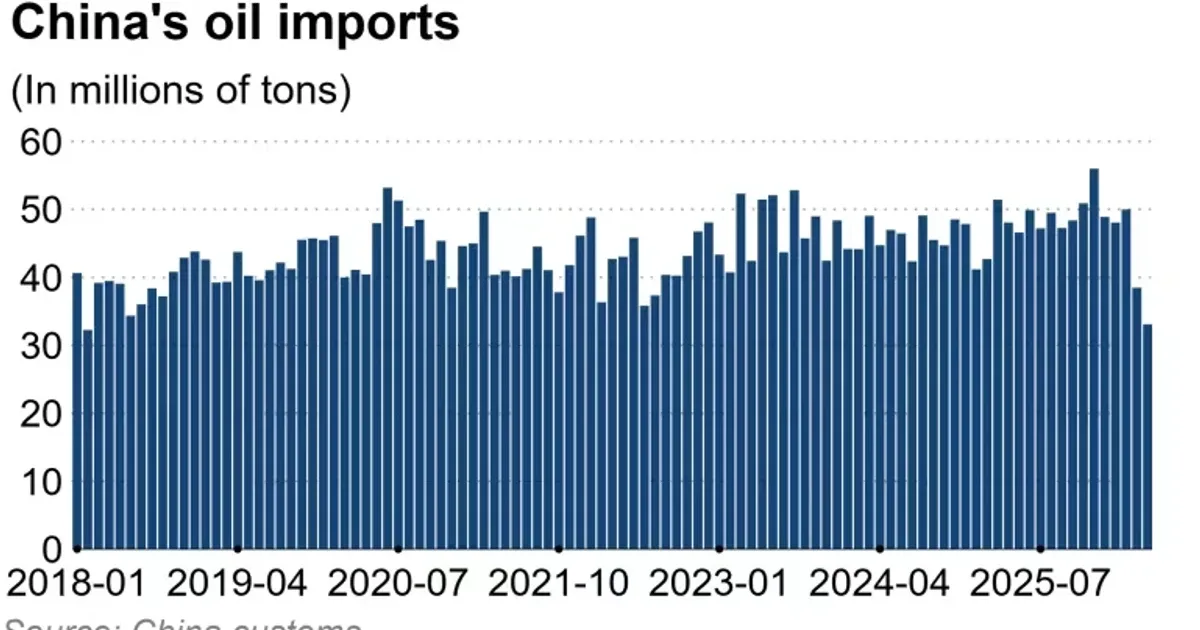
China has evolved from the world’s largest oil importer to a critical driver of global oil price dynamics through strategic buying and stockpiling. Its massive reserves allow Beijing to influence oil supply by deciding whether to refine crude or hold it in storage, a factor that now affects price floors and ceilings alongside, and sometimes independently of, OPEC’s production choices.
According to estimates from the U.S. Energy Information Administration, China ramped up its strategic oil inventories by an estimated 1.1 million barrels per day in 2025, pushing total stocks to nearly 1.4 billion barrels by the end of that year. This figure dwarfs the U.S. Strategic Petroleum Reserve, which held around 413 million barrels in late 2025 and about 409 million barrels in April 2026. Unlike the U.S., China does not publicly disclose its full reserves, relying on indirect indicators such as import volumes, refinery activity, and storage expansion to gauge the size of its stockpile.

This lack of transparency complicates market predictions. When a buyer of China’s scale can flexibly switch between consuming oil and storing it without signaling public targets, it becomes challenging for traders to determine whether increased imports represent a temporary replenishment or a signal of longer-term demand shifts. This uncertainty itself influences oil price volatility and market behavior.
China’s ability to influence prices operates in two directions. When prices drop, it can aggressively purchase crude and add to reserves, reducing available supply and underpinning a price floor. Conversely, when prices rise, China can reduce imports and draw on its reserves, capping price increases by avoiding immediate new demand on the market. This strategic behavior has been particularly evident during supply shocks, such as disruptions related to Iran, where China’s ability to sharply cut imports without depleting reserves helped mitigate price spikes.
The ripple effects extend beyond China’s borders. As crude oil is the primary input for gasoline and diesel production, China’s stockpiling choices effectively tighten or ease global supplies, directly influencing refined fuel prices in markets like the U.S. Higher fuel costs feed into inflation through increased transportation and shipping expenses, making China’s actions a significant factor in global economic conditions.