

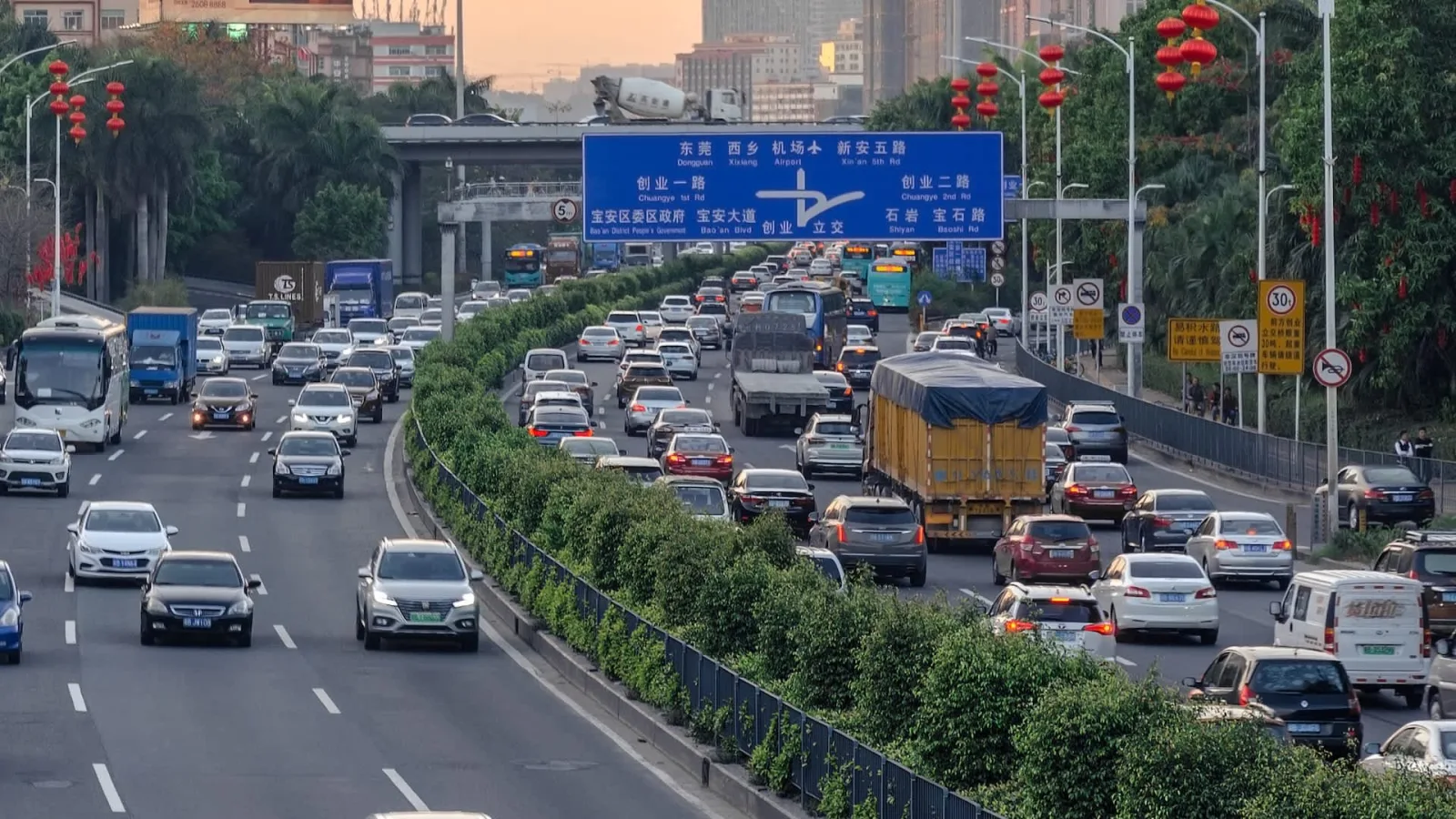
China’s transition from gas-powered cars to electric vehicles (EVs) has led to a notable drop in hazardous air pollutants across its cities, contributing to an estimated 262,000 fewer premature deaths, according to a recent scientific study. This research offers some of the first concrete evidence that electrifying transport can yield substantial public health benefits.
The study, published in Nature Health, analyzed air quality data from 150 Chinese cities using high-resolution satellite measurements combined with machine learning models. Researchers compared actual pollution levels to a hypothetical scenario where all vehicles remained combustion-engine powered. By 2023, areas with higher adoption of new energy vehicles—including battery-electric, plug-in hybrids, and hydrogen-powered models—showed dramatic declines in fine particulate matter (PM2.5) by nearly 24% and carbon monoxide levels fell by over 30%.

Fine particulate matter, or PM2.5, is particularly dangerous, as long-term exposure increases risks of stroke, heart disease, lung cancer, and respiratory illnesses. Outdoor air pollution is responsible for millions of premature deaths worldwide each year, with China alone accounting for roughly a quarter of all these fatalities. The observed improvements in PM2.5 mark a meaningful public health milestone in some of China’s most polluted metropolitan areas.
However, not all pollutants decreased equally. Nitrogen dioxide levels dropped only marginally, and reductions in larger particle pollution were limited. A significant hurdle remains the slow electrification of heavy-duty diesel trucks, which continue to emit substantial pollution. These vehicles are harder to replace with electric models and remain a major source of nitrogen oxides and particulate matter.
Researchers also discovered that the most pronounced environmental and health benefits occurred in wealthier cities where electric vehicle adoption has been fastest. This suggests that expanding EV access into lower-income regions could generate even greater health gains in the future.
The authors concluded that while shifting passenger vehicles to electric power has improved air quality, the next wave of public health progress will depend on accelerating the electrification of heavy-duty trucks and wider deployment beyond China’s affluent urban centers.