

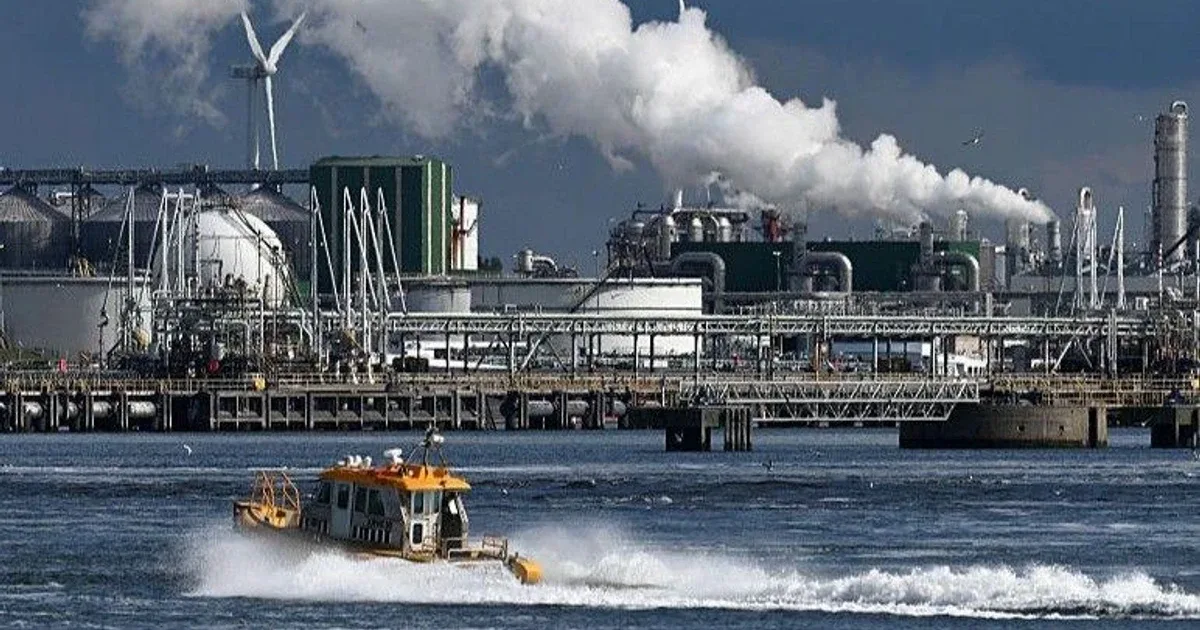
A climate advocacy group has formally urged the Port of Rotterdam Authority to present a detailed strategy that accelerates the shutdown of fossil fuel operations within half a year. The demand addresses the port's outsized role in greenhouse gas emissions and challenges the position of this government-owned entity in Europe’s largest fossil fuel transit hub.
Recent analysis by CE Delft revealed that fossil fuel-related emissions connected to the Port of Rotterdam reached an estimated 604 million tonnes of CO2 equivalent in 2023. This figure is more than three and a half times the total annual emissions for the entire Netherlands. While direct emissions within the port boundaries have declined over recent years—from 30.6 million tonnes CO2 in 2016 to 20.3 million tonnes in 2023—they still represent a substantial impact.

The Port of Rotterdam Authority manages leases and infrastructure across the port, jointly owned by the Dutch state and the Rotterdam municipality. It has focused on reducing direct emissions in partnership with port companies but resists binding commitments on indirect emissions, which represent the majority of its climate footprint. The port serves not only as a local industrial zone but also as a critical node linked by pipelines to fossil fuel centers in Antwerp and the Rhine-Ruhr region.
As Europe’s largest bunkering port and among the world’s top three, Rotterdam handles nearly 10 million tonnes of ship fuel annually. In 2023, bunker fuel volumes slipped slightly to 9.9 million tonnes while liquefied natural gas (LNG) bunkering increased significantly. The authority emphasizes its strategic priority of building a “climate neutral and circular” port, but it argues that forcing a rapid fossil fuel phaseout would overstep its mandates, conflict with Dutch and EU climate guidelines, and could jeopardize energy security and the competitiveness of European industries.
This lawsuit marks a novel approach by targeting a state-owned public system operator rather than individual companies or permits. It follows a history of Dutch climate litigation, including high-profile cases like Urgenda’s successful suit against the government and challenges directed at Shell. Advocates hope this legal action could set a precedent for courts to compel public entities managing infrastructure to align more aggressively with climate goals.