

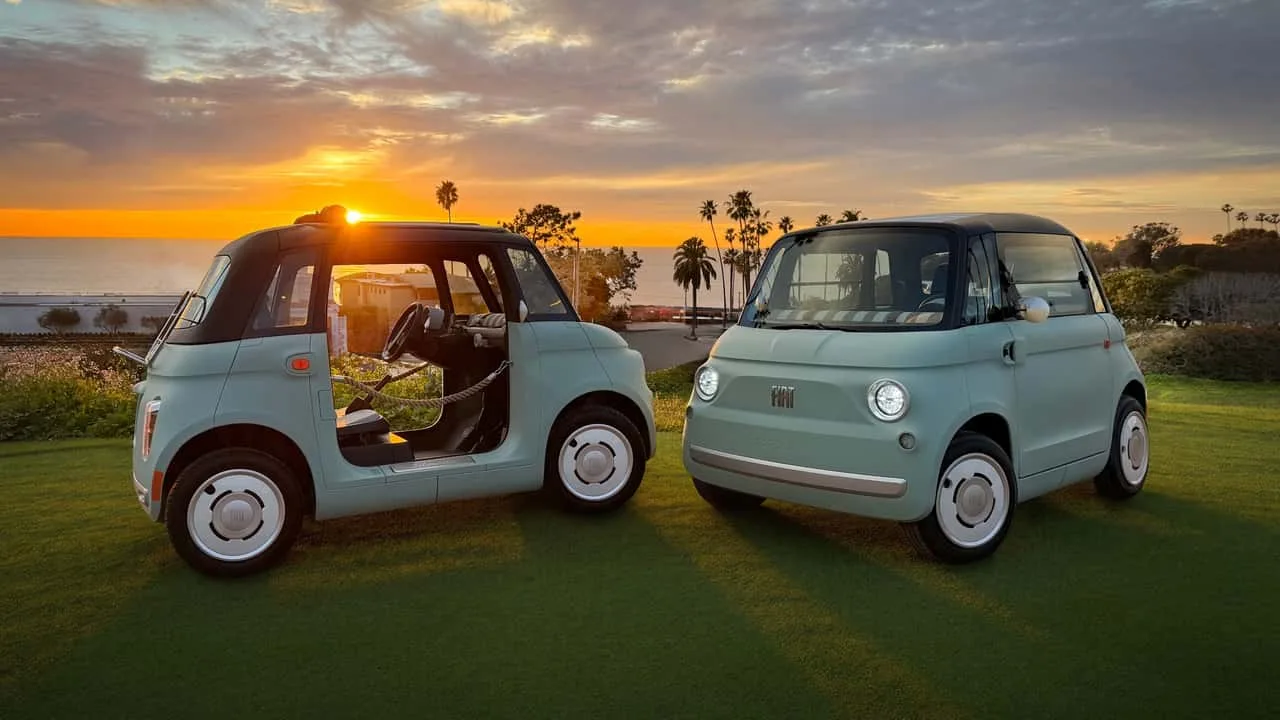
Fiat has unveiled the Topolino, an ultra-compact electric microvehicle for the U.S. market priced at $13,995 before fees. This two-seater stands out for its affordability, offering an entry point to electric mobility far below the cost of typical EV models. However, the Topolino’s performance and capabilities qualify it more as a neighborhood electric vehicle than a conventional car.
The vehicle’s limited top speed of 19 mph initially disqualifies it from street legality in most contexts. Fiat plans to offer a complimentary speed upgrade to raise this to 25 mph, meeting the minimum threshold for classification as a Low-Speed Vehicle on public roads. The Topolino’s modest 5.4 kWh battery provides a driving range of approximately 46 miles, reflecting its intended use for short trips rather than long-distance travel.

Sharing its platform with the French Citroën Ami, the Topolino resembles a highly refined golf cart or enclosed scooter rather than a traditional automobile. It complies with regulations for quadricycles in Europe and will be classified as a Neighborhood Electric Vehicle (NEV) in the U.S. after the upgrade. The design includes practical quirks such as symmetrical doors that open in reverse directions, evoking the Ami’s style, and distinctive retro-inspired headlights and taillights that give the Fiat model a friendlier, vintage vibe. The Dolce Vida edition notably features a canvas roof and rope doors, nodding to Fiat’s historic 500 Jolly.
Inside, the Topolino is stark. The standard features include seatbelts, a horn, a windshield, and a defroster, but it lacks heating, air conditioning, and any entertainment system. A phone holder is included, underscoring the minimalist approach. Reviews of its French counterpart criticized its driving dynamics and comfort, indicating the Topolino prioritizes utility and compactness over performance or luxury.
Fiat’s marketing suggests the Topolino is aimed at niche environments like golf courses, amusement parks, and other enclosed communities where low speed and short range suffice. While it does not challenge full-size electric cars on performance or practicality, it addresses a segment of micro-mobility that has been largely underserved in the U.S. market by offering a genuine low-cost, small footprint electric vehicle choice.