

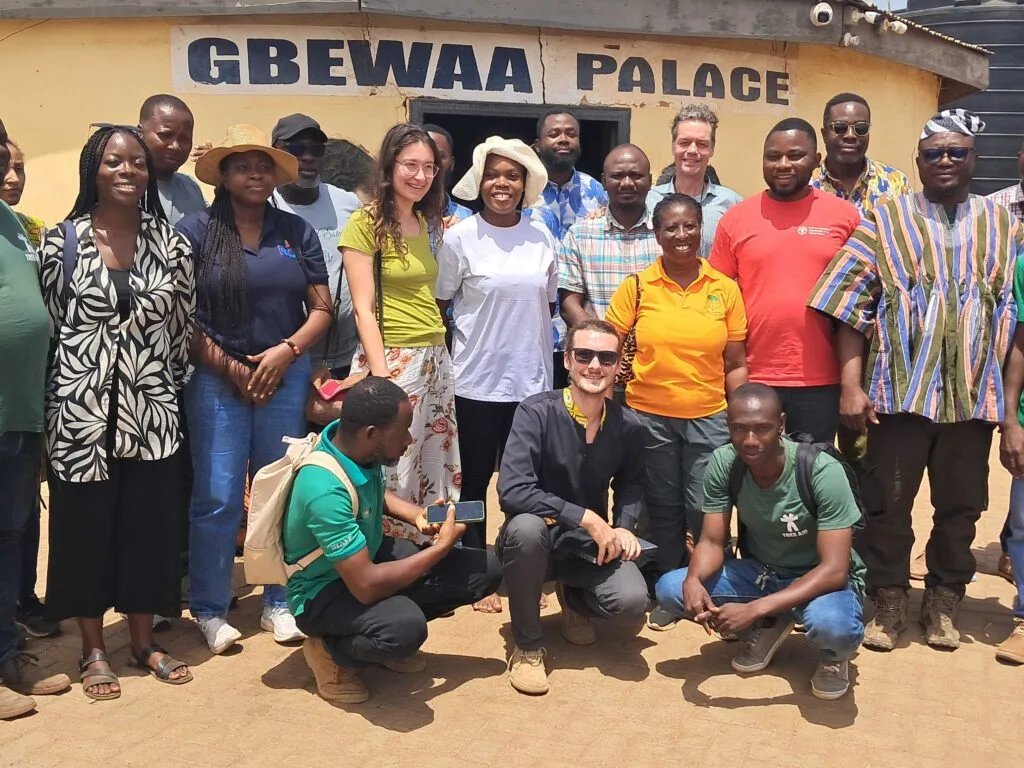
During a high-level dialogue in Tamale, Ghana, key stakeholders stressed the need for urgent investment and coordinated policies to expand agroforestry nationwide. The initiative aims to address climate change impacts, halt land degradation, and reduce rural poverty by integrating trees into farming systems.
The meeting, convened by the Agroforestry Technical Working Group (ATWG), took place after a three-day field mission across the Northern and Savannah Regions. Participants observed ongoing agroforestry and land restoration projects implemented by organizations like Tree Aid Ghana and Green for Change Ghana. These site visits offered practical insights into community-led approaches that combine tree planting with crop cultivation to restore degraded landscapes and enhance food security.

The delegation’s itinerary included visits to multiple locations renowned for agroforestry efforts. In Yendi, farmers showcased agroforestry practices alongside a women-led nursery and nutrition garden, a notable innovation supporting year-round vegetable production and improving household nutrition. This model illustrates how mixed farming systems can strengthen livelihoods while increasing soil fertility and water retention.
Jonathan Naaba, Country Director of Tree Aid Ghana, highlighted the role of international support in sustaining these projects. He noted Ecosia’s funding for seedling production and mentioned the Ghana Shea Landscape Emission Reduction Project, which receives backing from the Green Climate Fund, Forestry Commission, Global Shea Alliance, and the United Nations Development Programme. This project has helped establish standardized nurseries, enhancing community resilience.
Anneleen de Ruiter from the Netherlands Enterprise Agency reflected on the distinctiveness of agroforestry in the Savannah regions, contrasting it with the traditional cocoa-focused models. She pointed out that integrating Shea and cashew trees with food crops creates diversified, climate-resilient farming systems while shade and timber trees contribute to improving local microclimates affected by rising temperatures and erratic rainfall.
The dialogue gathered a diverse group, including traditional authorities, policymakers, development partners, technical experts, and farmers, all discussing strategies to scale agroforestry. Their shared goal was to establish a robust framework for agroforestry expansion that leverages the unique ecosystems of northern Ghana to boost climate adaptation and rural development.