

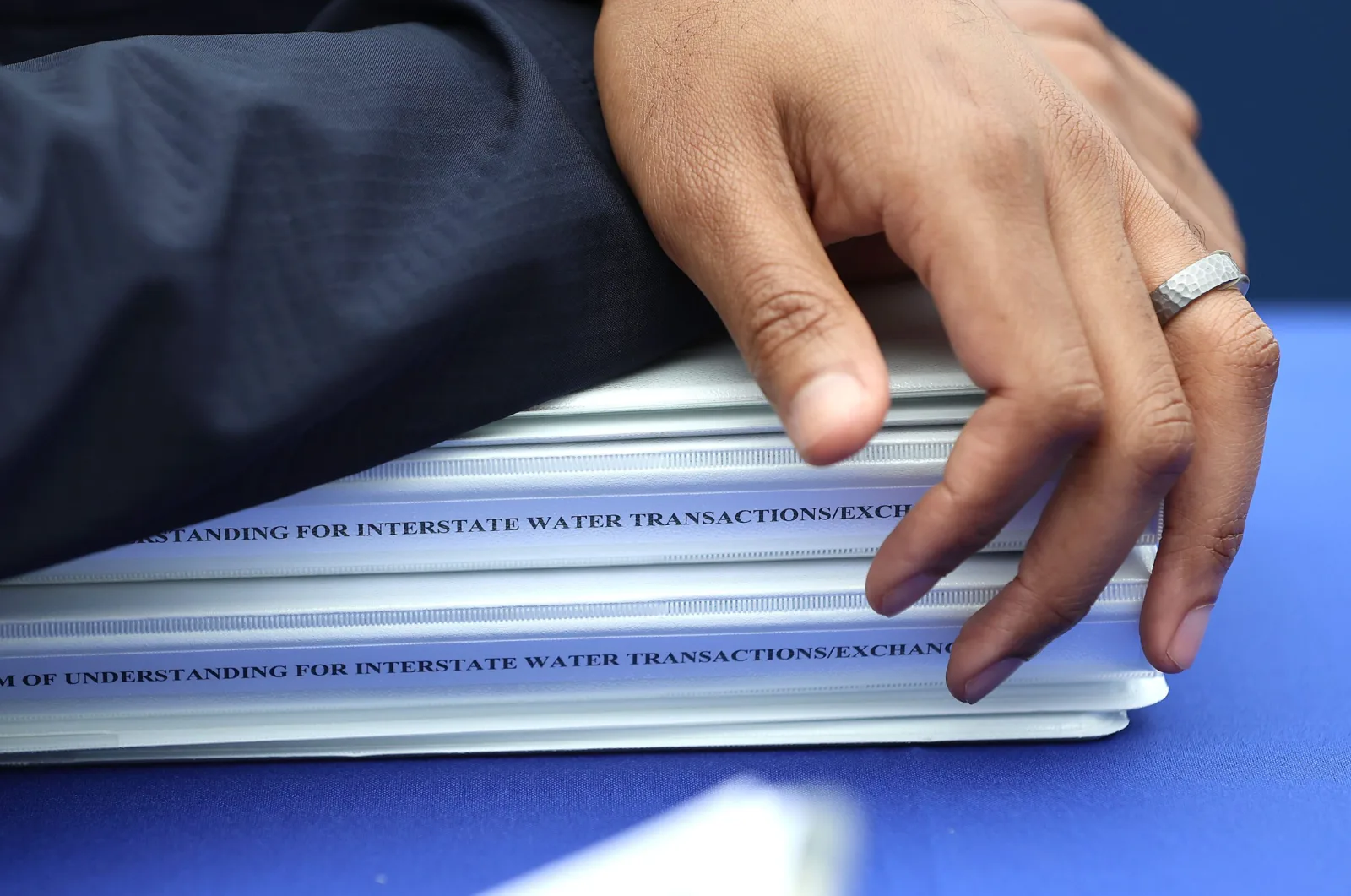
Water authorities from California, Nevada, and Arizona signed a memorandum of understanding to initiate negotiations on a pioneering interstate water market for the Colorado River. This agreement would allow states to trade water rights without physically transferring water, setting a precedent for collaborative management of one of the nation’s most stressed water sources.
The San Diego County Water Authority stands at the center of this initiative, as it holds a surplus of Colorado River water relative to local demand. Its general manager described the deal as “a QSA 2.0,” referencing the 2003 Quantification Settlement Agreement that enabled Southern California agencies to purchase water from Imperial Valley farmers through complex arrangements. That deal required some Imperial farmland to lie fallow to provide water supplies for urban areas.

One of the major challenges in this new deal remains securing agreement from the Imperial Irrigation District, whose farmers hold senior water rights. These rights rank among the oldest on the river and typically shield the district’s users from losing water before downstream cities or even states are forced to cut back. The district’s support will be essential for any future interstate water sales, as the farmers remain wary of increased cutbacks if urban utilities leverage investments like desalination and water recycling to expand market trades.
Unlike the original QSA fallback on conservation measures, this agreement would not impose new environmental constraints or demand additional water reductions. Instead, the trades would happen via accounting mechanisms, with water “exchanged on paper.” For example, a buyer in Arizona purchasing San Diego’s desalted water would withdraw an equivalent volume from their own Colorado River allocation rather than receiving physical shipments from California.
Despite these advances, key questions persist. It remains unclear whether water sold across state lines will impact individual states’ legally allotted shares under existing Colorado River water rights. During times of scarcity, states face intense negotiations on how to reduce usage equitably—adding complexity to how an interstate market might function within the basin’s legal and hydrological framework.
The Colorado River, which supplies water to about 40 million people across seven U.S. states and Mexico, is currently at record-low levels due to prolonged drought and climate change. This new mechanism reflects a shift toward innovative water governance in a region confronting unprecedented scarcity. Legal hurdles and stakeholder negotiations are expected as agencies work to balance agricultural interests, urban demands, and environmental protections within this framework.