

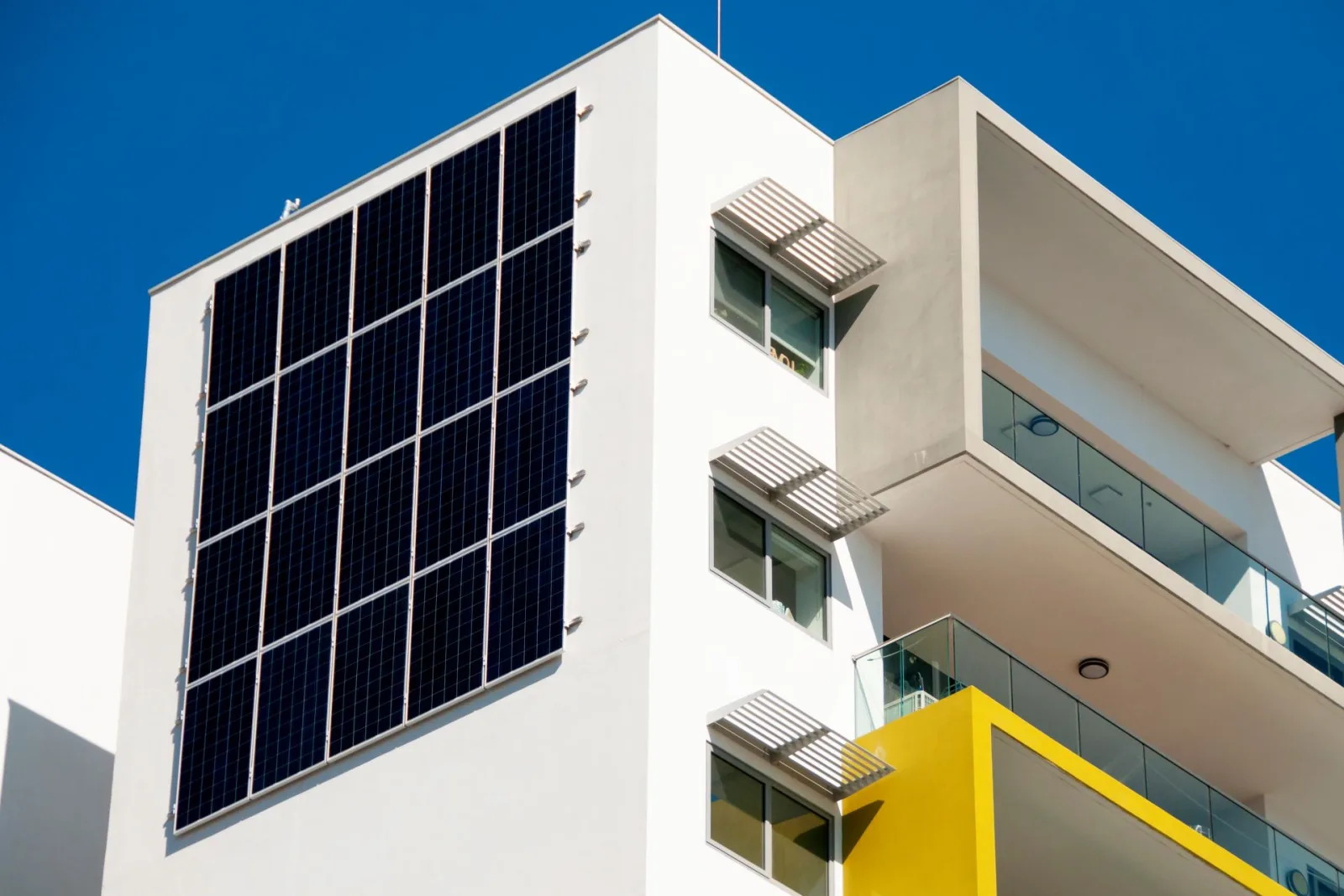
Scaling rooftop solar in apartment buildings has long posed challenges due to limited roof space, complex shared electrical systems, and frequent tenant changes. Sydney researchers have introduced an AI-driven system designed to tackle these obstacles by managing solar energy and battery storage across multiple units efficiently, potentially cutting operational costs by up to 30%.
The pilot, conducted by UNSW Canberra in partnership with technology firms Voltval and JT Solar Technology, deploys a modular power portal controlled by artificial intelligence. This system predicts electricity supply and demand dynamically, directing energy flows between apartments as conditions fluctuate. Such centralized control aims to maximize clean energy use throughout the building rather than treating each unit’s solar setup independently.

In Australia, approximately 2.5 million people live in apartments, yet only a small fraction—around 3.5% in New South Wales—have access to rooftop solar power. The pilot is funded through a government program focused on advancing recycling and clean energy initiatives, with a commitment of about 1.2 million Australian dollars. If successful, this approach could lower electricity bills for apartment residents and make shared solar solutions more attractive for multi-unit housing, which historically lags behind standalone homes in clean energy adoption.
By integrating battery storage with solar arrays, the project also enhances energy resilience, offering backup power during outages and enabling residents to reduce reliance on grid electricity when prices peak. This aligns with broader trends where solar and energy storage serve not only environmental goals but also practical benefits like cost savings and energy security.
Sydney’s pilot shifts the focus from individual units to the entire property, managing resources collectively across rooftops, parking lots, and electrical infrastructure—areas often beyond tenant control. Partners beyond academia and tech companies, including property management firms, play a crucial role in operationalizing this model in real apartment buildings.
Expanding shared solar and storage in apartment settings could significantly reduce cities’ dependence on fossil fuels, lowering greenhouse gas emissions and improving urban air quality. This initiative contributes to advancing clean energy solutions that are both financially viable and scalable within dense urban environments.