

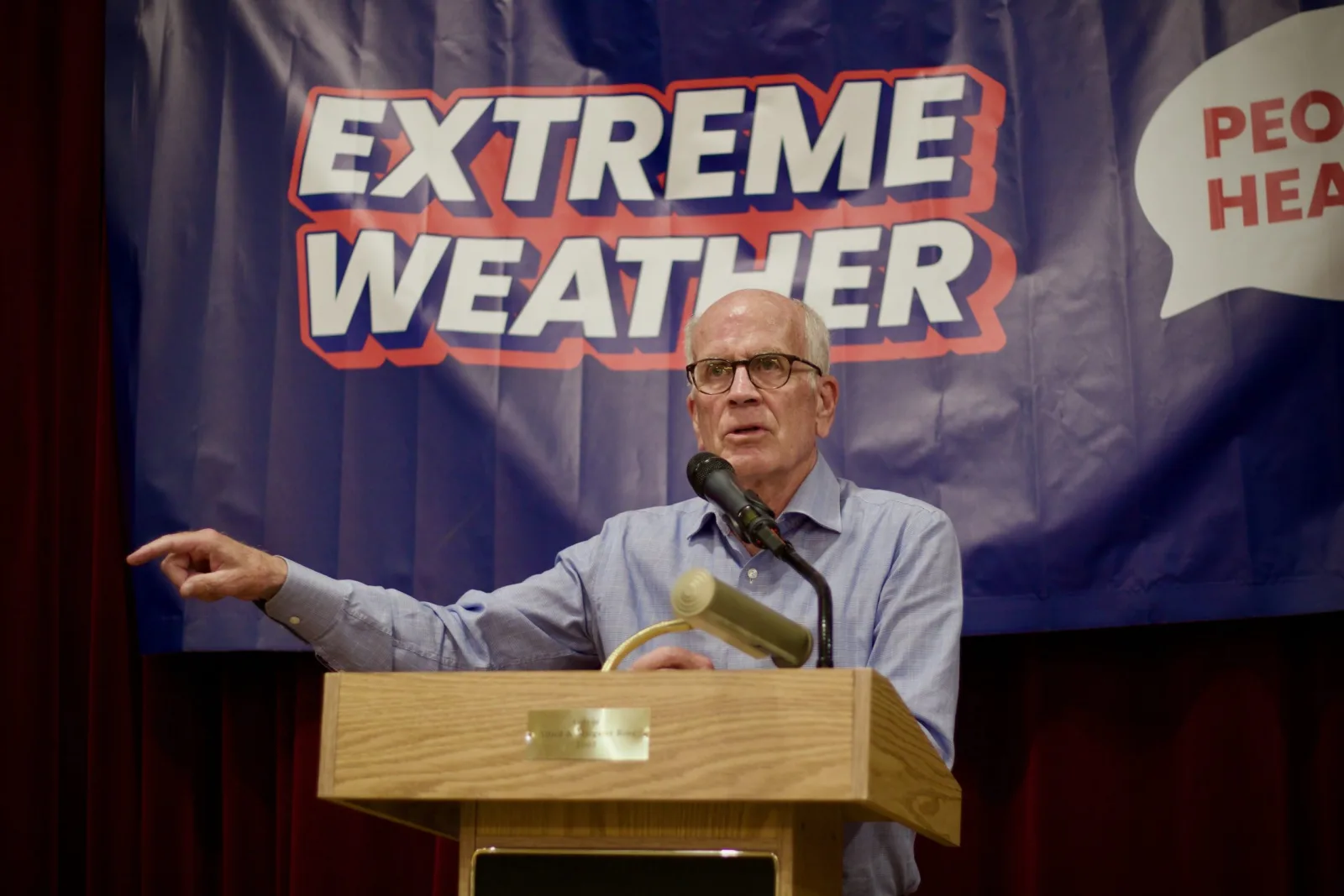
At a public forum in Barre, Vermont, local residents recounted the hardships faced during severe floods that hit the state in recent years, highlighting the persistent risks posed by climate change. Among those speaking was Julie Bond, leader of a homeless shelter along Gunner Brook, who described a painted ruler on the shelter’s wall used to monitor rising floodwaters and trigger evacuations. She recalled the traumatic experience during the July 2023 deluge when floodwaters swept away the shelter’s van, barely escaped by the driver and passenger.
The gathering, named the Extreme Weather People’s Hearing, brought together Vermonters to share their flood experiences and discuss the ongoing threat of extreme weather events. The Old Labor Hall in Barre, which itself suffered flood damage, served as the venue. In the previous days before the town saw renewed but less severe flooding, speakers reflected on the toll of recurring disasters in the region.

Washington County, where Barre is located, has received the highest number of federal disaster declarations nationwide over the past decade, according to a recent study. This designation underscores the area’s vulnerability to extreme weather aggravated by climate change, as noted by the National Oceanic and Atmospheric Administration.
Alongside community voices, state officials joined the panel and criticized the politicization of federal disaster relief. Since a controversial shift in federal administration in 2025, some Democratic-leaning states, including Vermont, experienced repeated denials of Federal Emergency Management Agency (FEMA) aid, even after severe floods. Vermont communities facing flood damage were left to fund recovery efforts themselves, while Republican-leaning states received federal assistance for similar disasters.
Speakers emphasized that navigating disaster assistance posed an immense challenge, often surpassing the difficulty of recovering from flood damage itself. Many warned that the level of aid provided falls short of what individuals and local governments require for full rehabilitation.
Climate advocacy groups at the event expressed strong support for Vermont’s legislation aimed at holding fossil fuel companies financially accountable for the damage climate change causes, linking corporate responsibility to accelerating extreme weather patterns across the state.
U.S. Senator Peter Welch took part in the hearing, underscoring the need for increased focus on climate impacts and federal support to help Vermont withstand future disasters.