

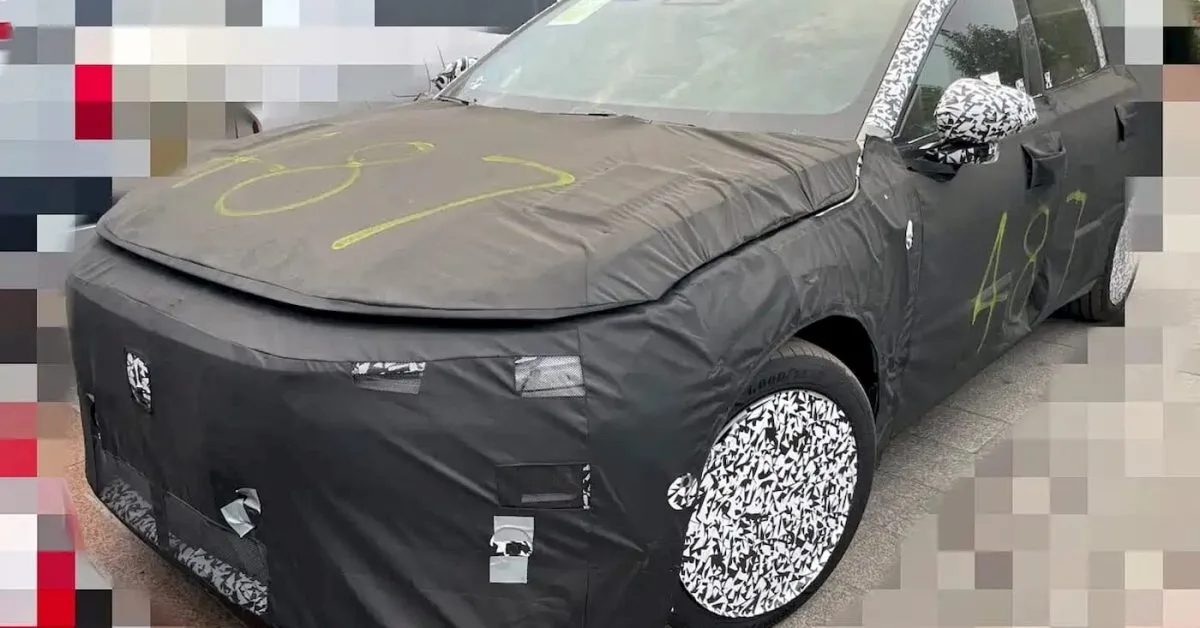
Volvo has unveiled images of a new sedan prototype that appears to blend next-generation technology with traditional internal combustion, challenging expectations of a fully electric model. Despite mounting industry pressure to go fully electric, this early test mule sports a roof-mounted LiDAR sensor while still showing visible exhaust pipes, indicating the presence of a gasoline engine.
The Swedish automaker has confirmed its intention to reenter the sedan segment with new midsize electric sedans and wagons built on its advanced SPA3 platform, slated for release in the second half of 2028. However, the prototype’s combustion engine hints that Volvo’s transition may include hybrids or plug-in hybrid variants alongside pure electric options.

Volvo recently discontinued its smallest electric SUV, the EX30, in the U.S. market due to challenging import costs and the expiration of federal EV tax credits, signaling renewed caution in its electric vehicle rollout. Alongside the upcoming sedan, Volvo plans to expand its hybrid and plug-in hybrid offerings across existing models such as the XC40, XC60, and XC90, possibly including a refreshed S70 hybrid.
Meanwhile, Volvo continues to push forward with its electric SUV lineup. The 2027 EX60, built on the SPA3 platform, boasts industry-leading range and fast-charging capabilities, with a top-tier AWD version promising an EPA-estimated 400 miles on a single charge. The EX60 is priced starting around $58,400 and offers fast charge gains of up to 165 miles in 10 minutes.
The smaller, aging EX40 model is expected to be replaced by the EX50, which will serve as Volvo’s more affordable entry-level electric SUV. These moves underscore Volvo’s dual strategy of advancing electric vehicles while maintaining a foothold in hybrids and gasoline-powered models during the transitional years.