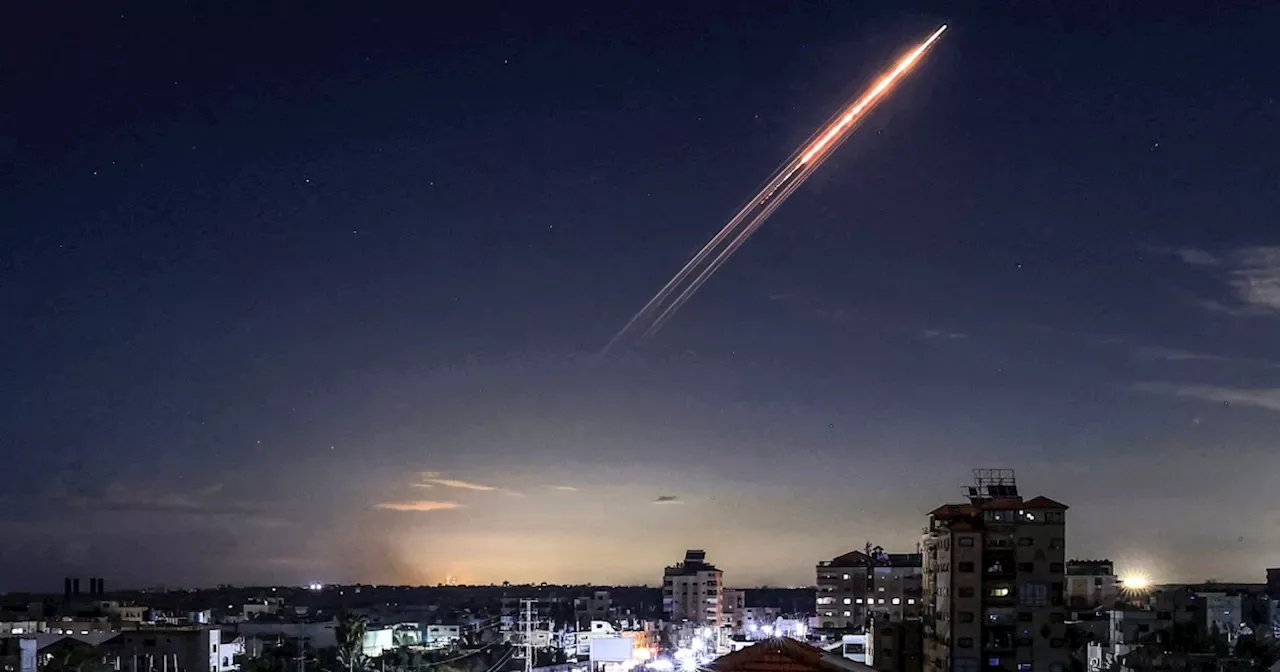
Iran is stepping up efforts to retrieve missiles and other weapons it concealed underground or buried beneath rubble from U.S. and Israeli airstrikes, according to U.S. officials and sources familiar with the matter. The acceleration comes as a temporary ceasefire, which began on April 8, has stalled without producing a diplomatic resolution, and American officials assess that Iran aims to rebuild its drone and missile capabilities for potential future operations across the Middle East.
President Donald Trump is scheduled to meet with his national security team on Thursday to review military options, including potential new strikes, as well as strategies for controlling the Strait of Hormuz and securing Iranian nuclear material, according to a U.S. official. Admiral Brad Cooper, commander of U.S. Central Command, plans to brief Trump and his team on available options and the current status of a U.S. naval blockade. The president is expected to decide on a course of action in the coming days.

Iran began blocking the Strait of Hormuz after U.S. and Israeli bombing campaigns commenced on February 28, driving up global oil prices. Trump responded by implementing a naval blockade of Iranian ports in the strait, redirecting 41 vessels as of Wednesday. The temporary ceasefire was intended to create space for negotiations and reopen the waterway, but discussions have yielded no results thus far.
Defense Secretary Pete Hegseth stated earlier this month that U.S. intelligence had detected Iran moving military assets and attempting to reconstitute its capabilities. "You are digging out your remaining launchers and missiles with no ability to replace them," Hegseth said at the Pentagon on April 16.
The White House has declared victory in the military campaign. Spokesperson Anna Kelly stated that Iran's ballistic missiles are destroyed, production facilities demolished, and its navy sunk. However, intelligence assessments complicate this narrative. NBC News reported last week that Iran maintains many of its pre-war military capabilities, including numerous ballistic missiles and more than half of its air force aircraft and naval components.
Experts and congressional aides told NBC News that Iran likely preserved portions of its arsenal through decoys and dispersal, and the regime buried or concealed additional missiles and launchers before the conflict began. Prior to the war, as the U.S. built up military assets in the region, Iran hid much of its weaponry.
Trump acknowledged Wednesday that Iran retained some missile capacity. "They have missiles, about 82 percent are gone," he said during an Oval Office appearance. Secretary of State Marco Rubio, who also serves as interim national security advisor, stated on Monday that Iran retains half of its missile arsenal, though it has lost its factories, navy, and air force.
A White House official noted that Trump's planned mid-May trip to China, already postponed once due to the Iran conflict, is a priority influencing decision-making. The visit to meet with Chinese President Xi Jinping has become a factor in Trump's calculation of whether to resume military operations.