

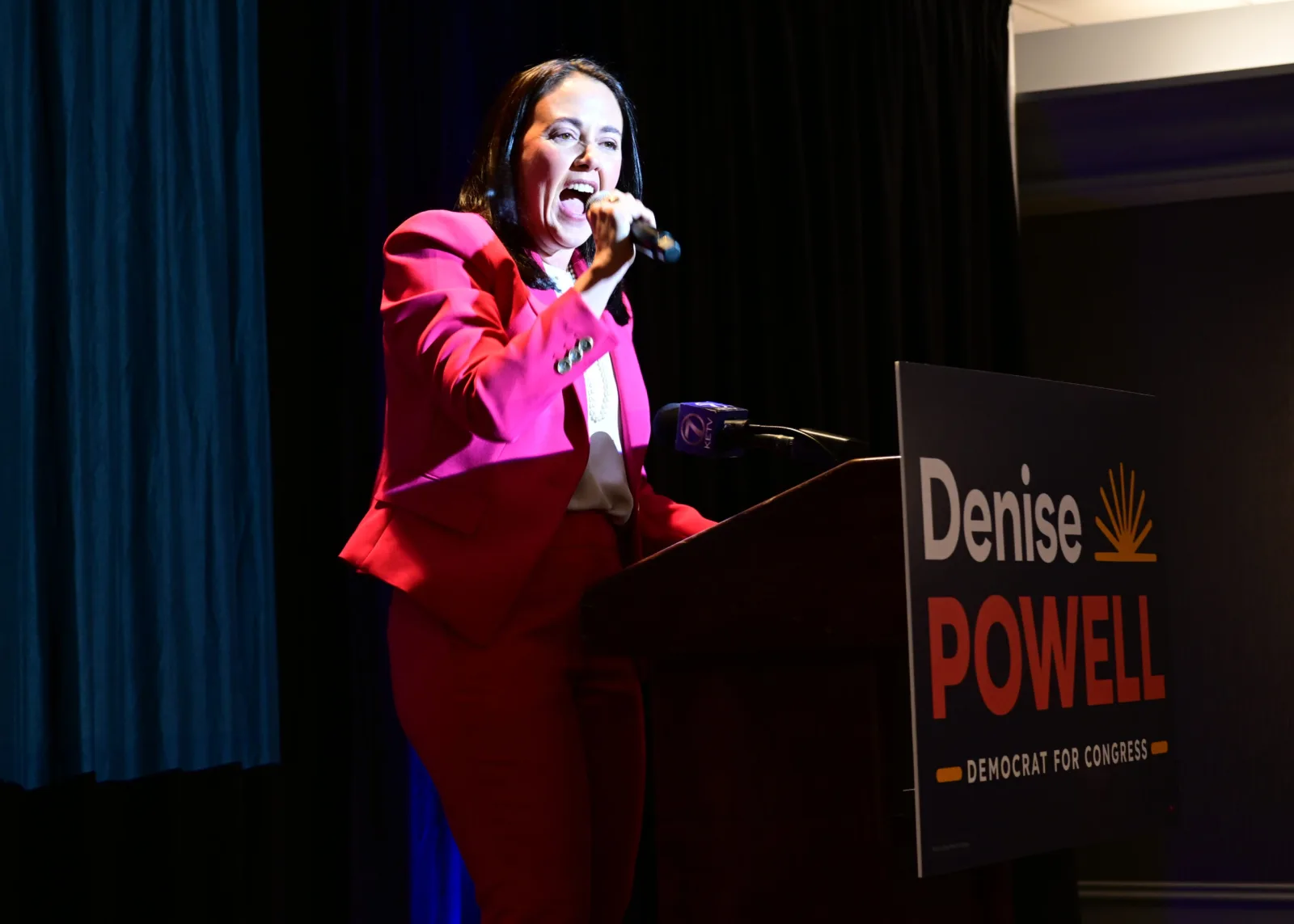
Denise Powell overtook John Cavanaugh shortly before 11 p.m. in the tight Democratic primary race for Nebraska’s 2nd Congressional District, capturing 39% of the vote as the count continued. Cavanaugh had maintained a slim lead for most of the evening but trailed as additional results from Douglas County, where nearly 10,000 ballots remain to be tallied, came in.
Both candidates addressed their supporters late Tuesday. Powell expressed optimism about the results, signaling confidence while noting the race remained unsettled. Cavanaugh, still holding a lead by roughly 300 votes earlier in the evening, emphasized the need for political change and accountability, particularly criticizing Donald Trump and calling for reform-driven leadership in Congress. He did not concede, and no official winner was declared by the Associated Press on election night.

The competition between Powell and Cavanaugh grew increasingly contentious in recent weeks. A SuperPAC aligned with Powell launched a series of negative advertisements claiming that a Cavanaugh victory might jeopardize the district’s Democratic standing—characterizations strongly disputed by Cavanaugh and his campaign. The rivalry unfolded against the backdrop of a district known colloquially as the “Blue Dot,” symbolizing its Democratic lean within a largely Republican state.
Supporters gathered to back each candidate. At a celebration for Cavanaugh’s campaign, his advocates highlighted his legislative experience and ability to win the seat as essential to regaining control of the House of Representatives. They stressed the importance of his leadership and familiarity with policy issues. One longtime constituent praised Cavanaugh’s responsiveness and approachability during his tenure as a state senator.
If Cavanaugh ultimately wins, Nebraska Governor Jim Pillen would have the authority to appoint a replacement to serve out Cavanaugh’s state senate term, which runs through 2028. Pillen’s expected appointment of a conservative successor could reinforce a Republican supermajority in the state legislature, affecting local political dynamics in addition to the federal race. However, the final outcome remains uncertain as counting continues.