

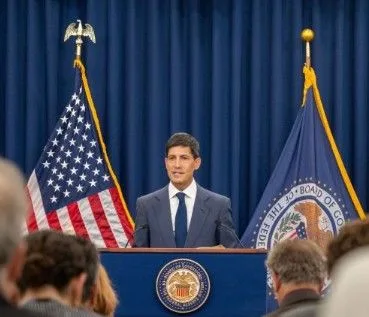
Federal Reserve Chairman Kevin Warsh confronted intense scrutiny from Democratic lawmakers over the central bank’s independence during his first hearing before the House Financial Services Committee. Lawmakers pressed him on whether he would yield to political pressure from President Donald Trump regarding interest-rate decisions, a key issue given the Fed’s influence on the broader economy.
In response, Warsh firmly stated the Federal Reserve operates as an independent institution, emphasizing that its authority to set monetary policy is protected by the Supreme Court. When directly asked whether he works for President Trump, Warsh replied that the Fed is “honoured to be independent” and reiterated his commitment to maintain that autonomy despite outside political forces.

Further questions revolved around how Warsh would react if he or fellow Federal Reserve officials faced political retaliation for their policy votes. Although initially hesitant to engage hypotheticals, he ultimately declared that he would continue to perform his duties without succumbing to pressure. This exchange highlights concerns among Democrats about preserving the Federal Reserve’s impartiality amid a politically charged environment.
Warsh acknowledged that while politics permeates the external environment, the Federal Reserve should remain free from partisan influence within its walls. He described his goal as eliminating any politics inside the institution to safeguard objective decision-making. His assurance aligns with prior commitments made during his confirmation hearing to keep monetary policy “strictly independent.”
Democratic lawmakers also raised the topic of President Trump’s repeated criticism of Warsh’s predecessor, Jerome Powell, questioning how the new chairman planned to protect both his colleagues and the institution. Warsh highlighted his early actions as chairman, emphasizing a dual commitment to independence and reform within the Fed, aimed at strengthening the institution’s credibility and effectiveness.
The Federal Reserve was established by Congress as an independent central bank, with its chairman and governors appointed by the president and confirmed by the Senate. While accountable to Congress through biannual monetary policy reports, its operational independence remains a cornerstone of its ability to influence borrowing costs, employment, inflation, and financial stability without political interference.
Warsh assured lawmakers that the Fed would operate strictly within its legal mandate and avoid engagement in political disputes beyond its scope, reinforcing its role in maintaining economic stability without succumbing to partisan pressures. This stance comes at a time when the Fed’s decisions command close attention both domestically and internationally.