

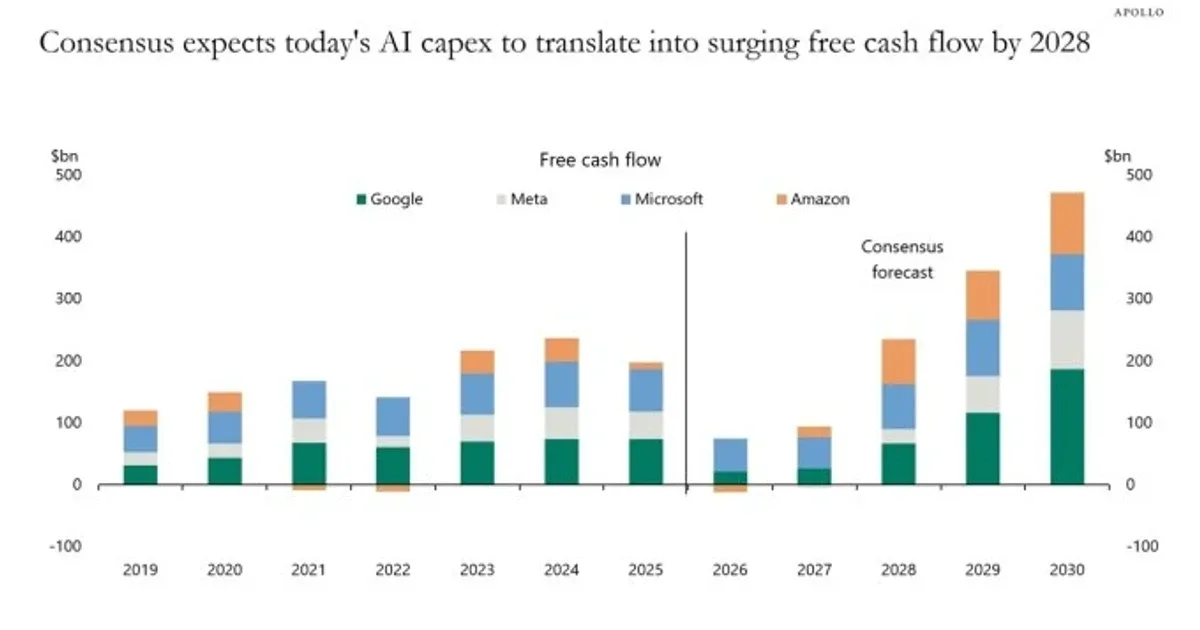
Companies worldwide poured an estimated $235 billion into artificial intelligence infrastructure in 2024, marking a rapid acceleration in AI investment that analysts forecast could reach $2.8 trillion by 2029. Despite this surge, many organizations face difficulties demonstrating the tangible financial benefits from these expenditures.
While AI ranks among the top strategic priorities for the majority of firms, nearly half report that the automation savings they anticipated have not materialized. Challenges such as data access and integration have become major bottlenecks, cited by over 40% of executives as key obstacles hindering AI progress. This disconnect between AI spending and immediate returns underscores a growing accountability challenge for businesses investing heavily in this technology.

Industry surveys reveal that AI adoption continues to advance swiftly. For instance, a large proportion of organizations have increased their AI budgets, with many planning further investments despite limited proof of improved productivity or reduced costs so far. Consumer engagement tools like ChatGPT reached hundreds of millions of weekly active users, indicating widespread AI adoption even without clear corporate profit impact.
Research highlights a distinct lag in productivity gains following AI integration. Studies in manufacturing firms point to an initial drop in productivity before improvements appear over several years. This gap between upfront spending and measurable outcomes is framing the current debate over AI’s economic value as a forecast reliant on longer-term results rather than immediate returns.
The scale of investment reflects expectations for AI’s transformative potential. Some estimates suggest generative AI alone could contribute trillions annually to the global economy if fully embedded across existing software and business functions. However, industry experts caution that current investments outpace revenue generation, underlining the need for clearer pathways to justify large capital expenditures on AI infrastructure.