

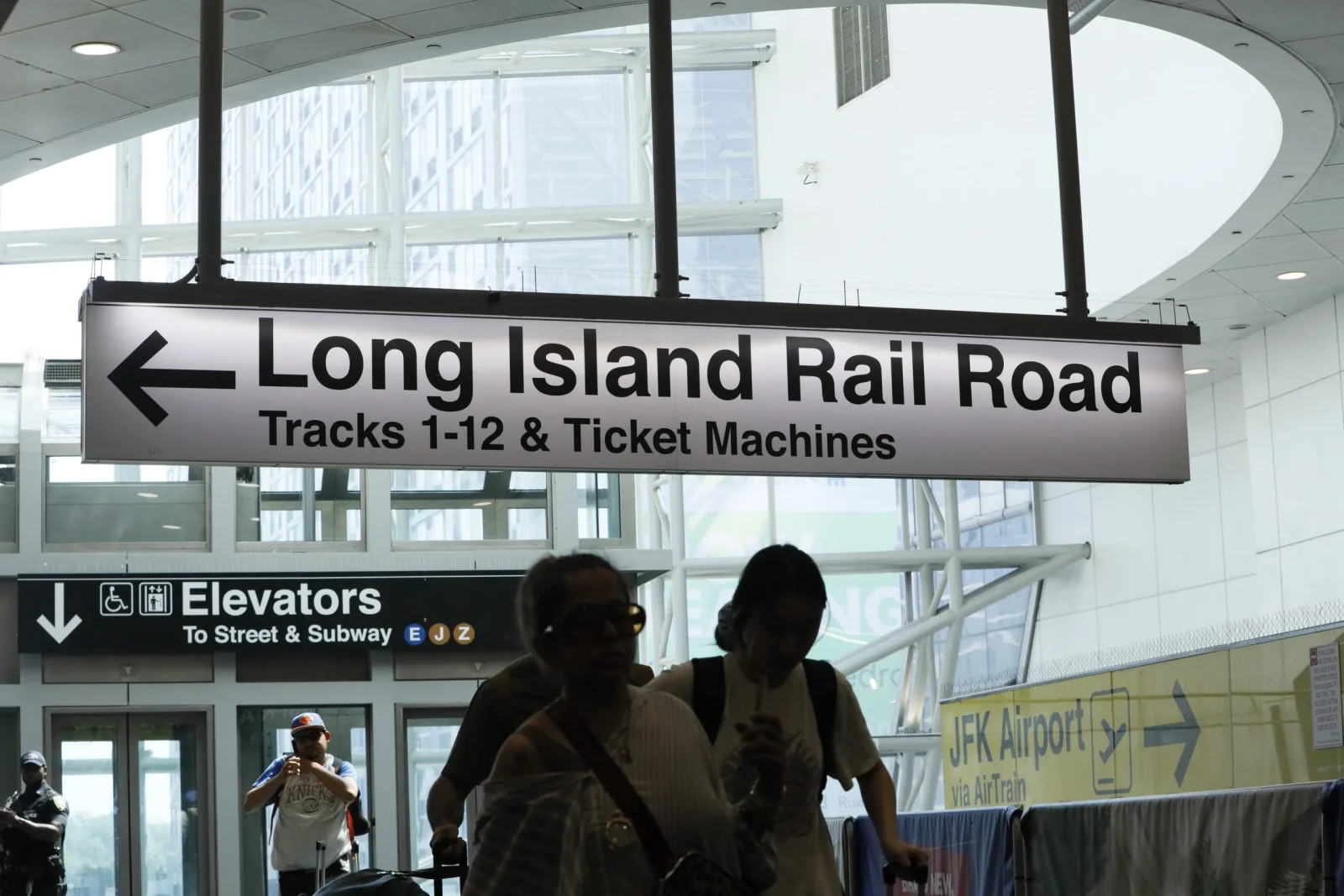
The Long Island Rail Road (LIRR) resumed operations on Tuesday afternoon, restoring hourly train service after a labor strike that disrupted commute routines for thousands. The walkout, which lasted over three days, forced passengers to rely on complex alternate routes involving shuttle buses and subway transfers.
The tentative agreement between the Metropolitan Transportation Authority (MTA) and five unions representing roughly half of the LIRR workforce was announced late Monday. Officials emphasized that the deal provides pay raises for workers without triggering additional fare increases or tax burdens for riders and taxpayers.

The strike had significantly impacted commuters like Roy Masquitta, a landscaper from Jackson Heights, whose usual 70-minute trip to Bay Shore more than doubled during the disruption. On Tuesday, he was seen waiting for a shuttle bus at the Howard Beach-JFK station, part of the alternate route required while train service was halted.
The five unions involved include the Brotherhood of Locomotive Engineers and Trainmen, the Brotherhood of Railroad Signalmen, and the Transportation Communications Union. The deal, which must still be ratified by union members, aims to balance fair worker compensation with the MTA’s budget constraints.
MTA leadership highlighted the challenge of negotiating a settlement that supports employees without straining finances. The chairman and CEO noted the importance of avoiding fare hikes or increased taxes in securing public support and maintaining fiscal stability.
LIRR President Rob Free expressed satisfaction with the resolution as trains headed back to the rails, emphasizing the railroad’s role in moving close to 300,000 daily passengers. Full service was expected to be restored by the evening rush, just in time for increased demand linked to a major basketball playoff series at a nearby arena.
The strike marked the first disruption at the LIRR since 1994. Tensions had escalated after MTA legal counsel criticized the unions for showing little urgency in ending the walkout. The agreement concluded a standoff that had complicated travel for commuters across Long Island and New York City boroughs.