

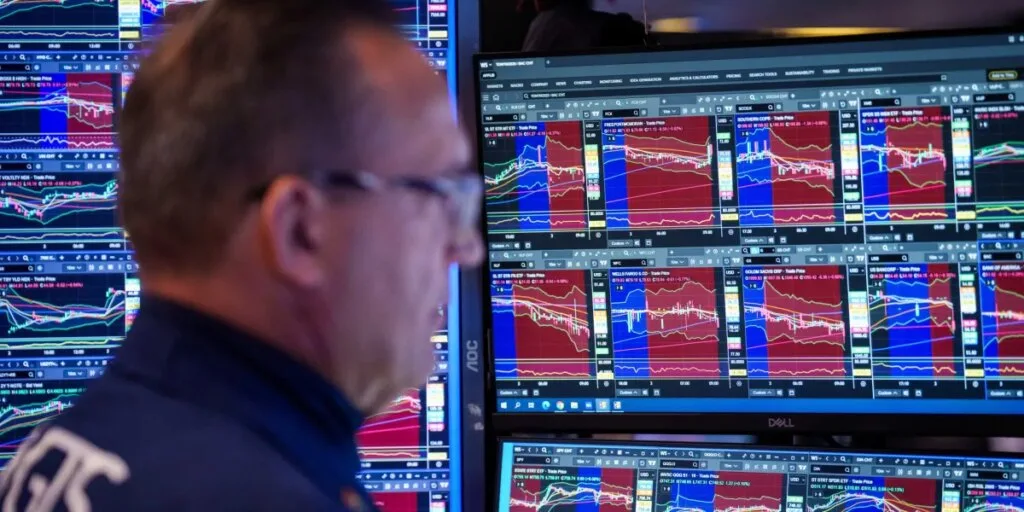
Stocks plunged sharply on Friday, intensifying a selloff that began earlier in the week amid rising concerns about the Federal Reserve’s monetary policy and skepticism surrounding the longevity of the AI-driven semiconductor surge. The Nasdaq plunged nearly 4%, marking its steepest drop since April 2025, while the S&P 500 and Dow Jones fell 2.6% and 1.35%, respectively.
Chipmakers were hit hardest, with major players like Micron Technology, Intel, Cisco, and Nvidia leading the declines. Technology giants dependent on cloud infrastructure and AI investments, such as Meta, Amazon, and Microsoft, also faced notable but smaller losses. The downturn accelerated following disappointing earnings guidance from chip designer Broadcom, which triggered heightened selling pressure starting Wednesday and spilling into Thursday.

The market jitters were compounded by a strong jobs report released on Friday showing robust employment growth—nearly double Wall Street projections—with previous months’ figures revised upward. This suggested a resilient labor market capable of withstanding ongoing inflationary pressures, particularly those driven by higher oil prices linked to the conflict in Iran. A firmer employment landscape has heightened expectations for the Fed to maintain or even intensify its inflation-fighting stance, moving away from the prospect of near-term rate cuts.
Yields on the benchmark 10-year Treasury note rose, climbing more than five basis points to 4.532%, despite a retreat in oil prices that had previously pushed yields higher. This move reflected investors pricing in a higher likelihood of continued or increased interest rates.
Some Wall Street economists remain cautiously optimistic that the Fed may hold rates steady rather than pursue additional hikes. One analyst noted that subdued wage growth and solid productivity metrics imply the labor market is balanced but not overheating, creating a “goldilocks” scenario. This stable job environment is neither signaling an urgent need for rate cuts to stimulate the economy nor justifying aggressive rate increases to cool inflationary pressures.
Investors will continue monitoring earnings reports and economic data closely as the interplay between sustained inflation, labor market dynamics, and the health of the AI chip sector shapes market direction in the near term.