

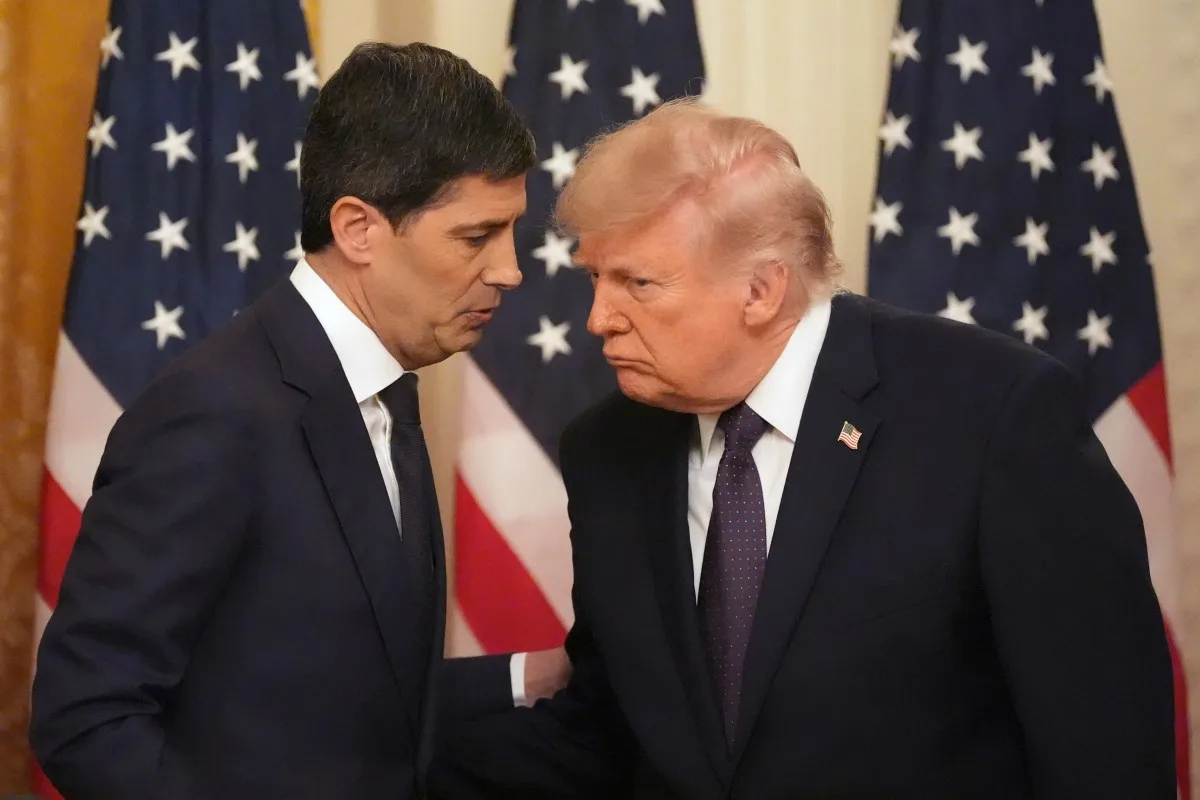
President Donald Trump emphasized that he wants the Federal Reserve to operate without political influence under its newly appointed chair, Kevin Warsh. Despite previously pressuring the central bank to lower interest rates, Trump insisted that Warsh should "do your own thing" and maintain full independence in guiding monetary policy.
Warsh was sworn in at the White House and stressed the Fed’s dual mandate of promoting price stability and maximum employment. He highlighted the importance of independence and clear decision-making to foster lower inflation, stronger growth, and higher real wages. His remarks seemed designed to reassure markets and policymakers wary of political interference after Trump’s repeated public critiques of former Fed Chair Jerome Powell.

Warsh, who previously served as a Federal Reserve governor and economic adviser during the George W. Bush administration, assumes leadership at a challenging time. Inflation remains persistent, markets are volatile, and the Fed’s approach to interest rates faces intense scrutiny. Warsh is known for advocating a more aggressive tightening stance and criticizing what he described as the Fed’s prolonged loose monetary policy.
The Federal Reserve’s benchmark interest rate currently rests between 3.50% and 3.75%, following a pause in rate cuts earlier this year. Policymakers project only modest easing moving forward, with little indication of substantial rate reductions through 2026. This outlook contrasts with earlier expectations encouraged by Trump, who had pushed for lower borrowing costs. Recent inflation data, however, has complicated the path for rate cuts, prompting markets to adjust their forecasts, some even anticipating stable or slightly higher rates in the near term.
Kevin Warsh’s background includes his tenure as a Fed governor from 2006 to 2011, a period when he questioned the effectiveness of emergency bond-buying programs during the financial crisis. Prior to that, he worked at Morgan Stanley and advised the Bush administration on economic matters. Since leaving the Fed, Warsh has frequently advocated for decisive action to tame inflation and reduce the central bank’s balance sheet.