

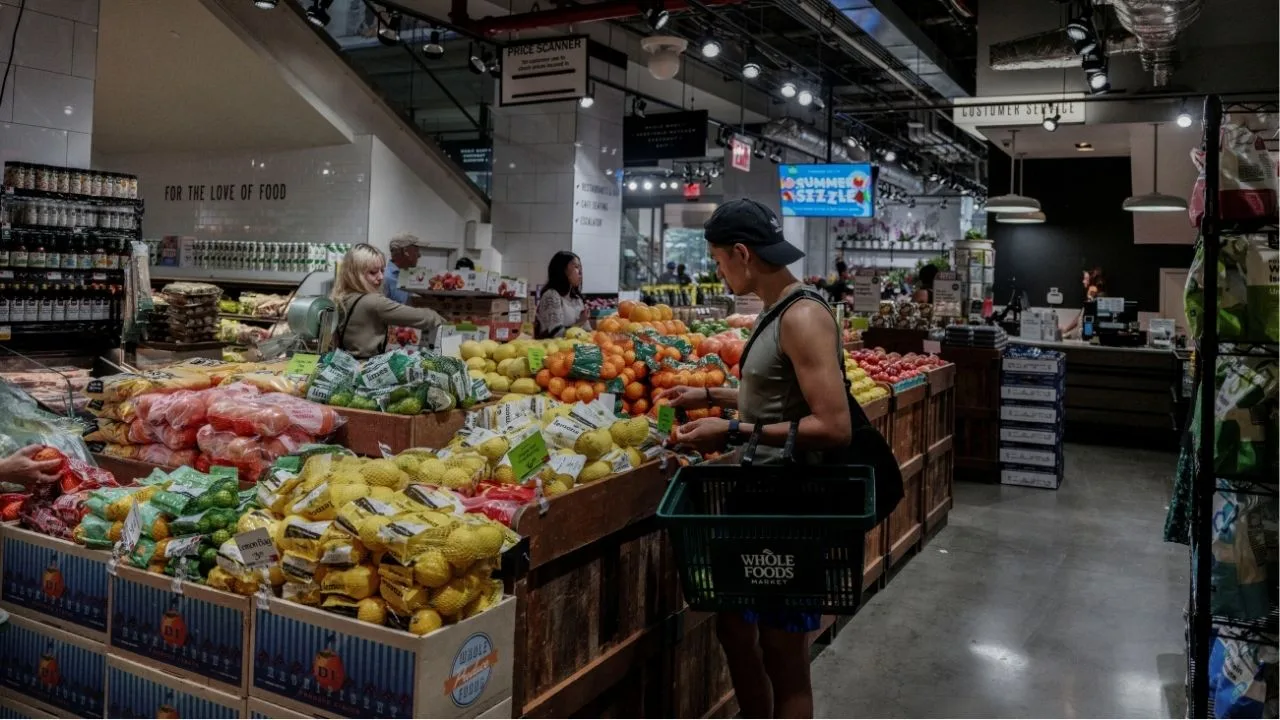
US inflation surged in April at the fastest pace seen in three years, primarily due to rising energy costs linked to the conflict in Iran. This escalation has strained household incomes, leading to a decline in consumer spending that could weigh on economic growth in the coming months.
The personal consumption expenditures (PCE) price index, a key inflation measure tracked by the Federal Reserve, jumped 3.8% year-on-year in April, the largest increase since May 2023. On a monthly basis, prices rose 0.4%, following a 0.7% surge in March. This acceleration reflects persistent price pressures that the Fed may find increasingly difficult to manage, particularly since the inflation drivers include supply disruptions beyond traditional monetary policy control.

The ongoing conflict in the Middle East has severely disrupted shipping routes through the Strait of Hormuz, fueling sharp increases in energy prices that ripple through the broader economy. National average retail gasoline prices shot up by over 12% in April alone, with a total rise exceeding 50% since the war’s onset in late February. Beyond energy, shortages in fertilizers, aluminum, and various consumer goods have tightened supply chains, pushing prices higher across multiple sectors.
Inflationary pressures were already elevated before the conflict, partly due to broad import tariffs imposed by the Trump administration. In April, goods prices climbed 0.7%, driven by a 5.5% increase in gasoline and energy product costs. Food prices also rebounded slightly, rising 0.5%. Excluding volatile food and energy categories, core PCE inflation rose to 3.3% annually in April, up from 3.2% in March, signaling that underlying inflation remains sticky. Core PCE increased 0.2% month-on-month after a 0.3% gain in March.
Rising inflation is eroding households’ real income, which has fallen for three consecutive months, limiting consumers’ ability to maintain their spending levels. This trend contributed to declining approval ratings for President Trump, whose 2024 campaign largely relied on promises to reduce inflation. The persistence of rising prices poses a challenge not only to consumer confidence but also to the Republican Party’s chances in the upcoming congressional midterms.
Economists and market participants widely expect the Federal Reserve to maintain its current interest rate range between 3.50% and 3.75% well into next year. Although the Fed cannot directly solve supply shocks caused by geopolitical conflicts, it faces pressure to respond to inflation that risks becoming entrenched in the economy.