

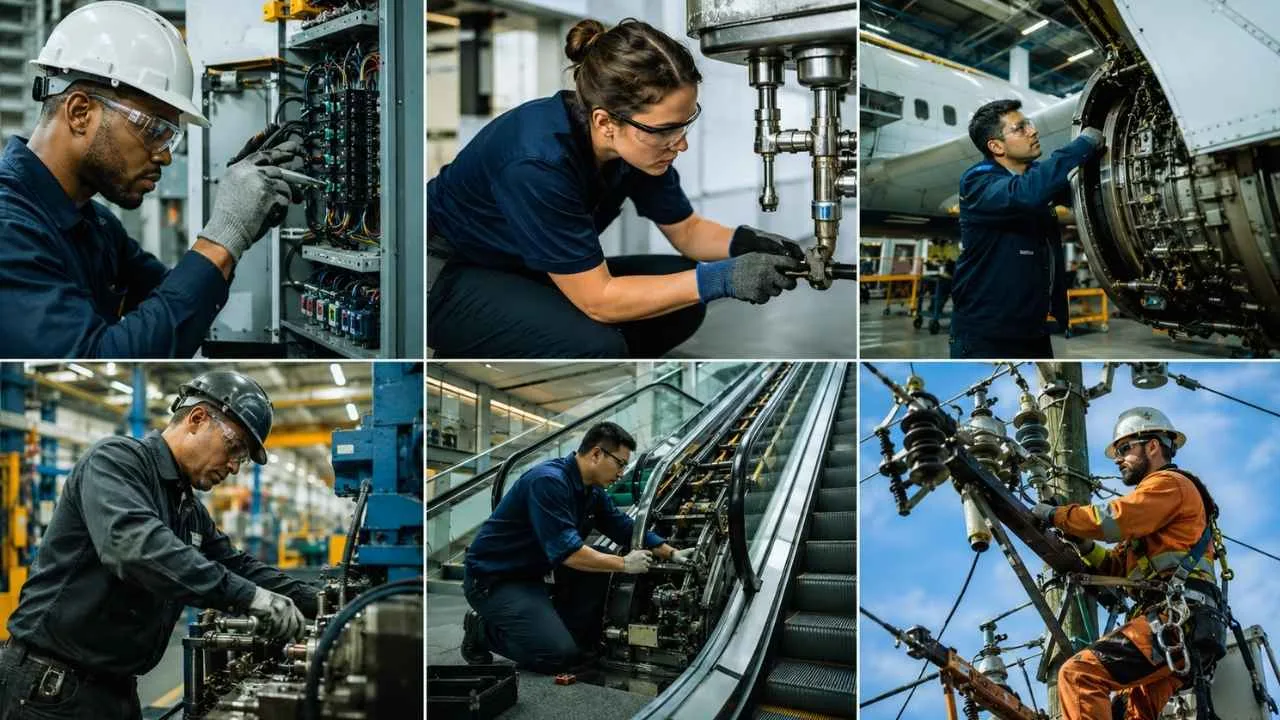
In today’s evolving job market, many workers are reconsidering the long-standing notion that a four-year college degree is the only path to financial success. Skilled trade careers stand out for offering solid incomes and demand that often withstands economic downturns. These roles focus on maintaining critical infrastructure—such as electrical systems, water supply, elevators, and manufacturing equipment—that people rely on daily.
Unlike many office jobs vulnerable to automation and artificial intelligence, trade positions require physical skills, on-site presence, judgment, and adherence to strict safety standards. This hands-on nature makes these jobs difficult to automate fully. Their essential role ensures that a broken elevator, power outage, or machinery failure demands immediate, expert intervention, maintaining steady demand despite economic slowdowns.

The path into trades typically offers faster workforce entry and lower education costs compared to traditional college degrees. Many trades use apprenticeships, allowing individuals to earn wages while gaining practical experience, reducing or eliminating student debt. Although trade training can be rigorous—often involving work at heights, exposure to weather, and use of heavy equipment—the long-term financial rewards can surpass those available to many degree holders, especially when factoring overtime, specialized certifications, union benefits, and potential business ownership.
The current economic landscape, shaped by infrastructure modernization, increased energy needs, and expanding data centers, further intensifies the demand for skilled tradespeople. These jobs play a key role in sectors like healthcare, transportation, and utilities, which require continuous operation regardless of the broader economic climate.
While no career is entirely immune to recessions, trade jobs are widely regarded as recession-resistant, meaning their necessity and employment opportunities remain relatively stable when others decline. This resilience, combined with the ability to enter the workforce more quickly and avoid extensive educational costs, makes trade careers a compelling alternative for many in 2026.