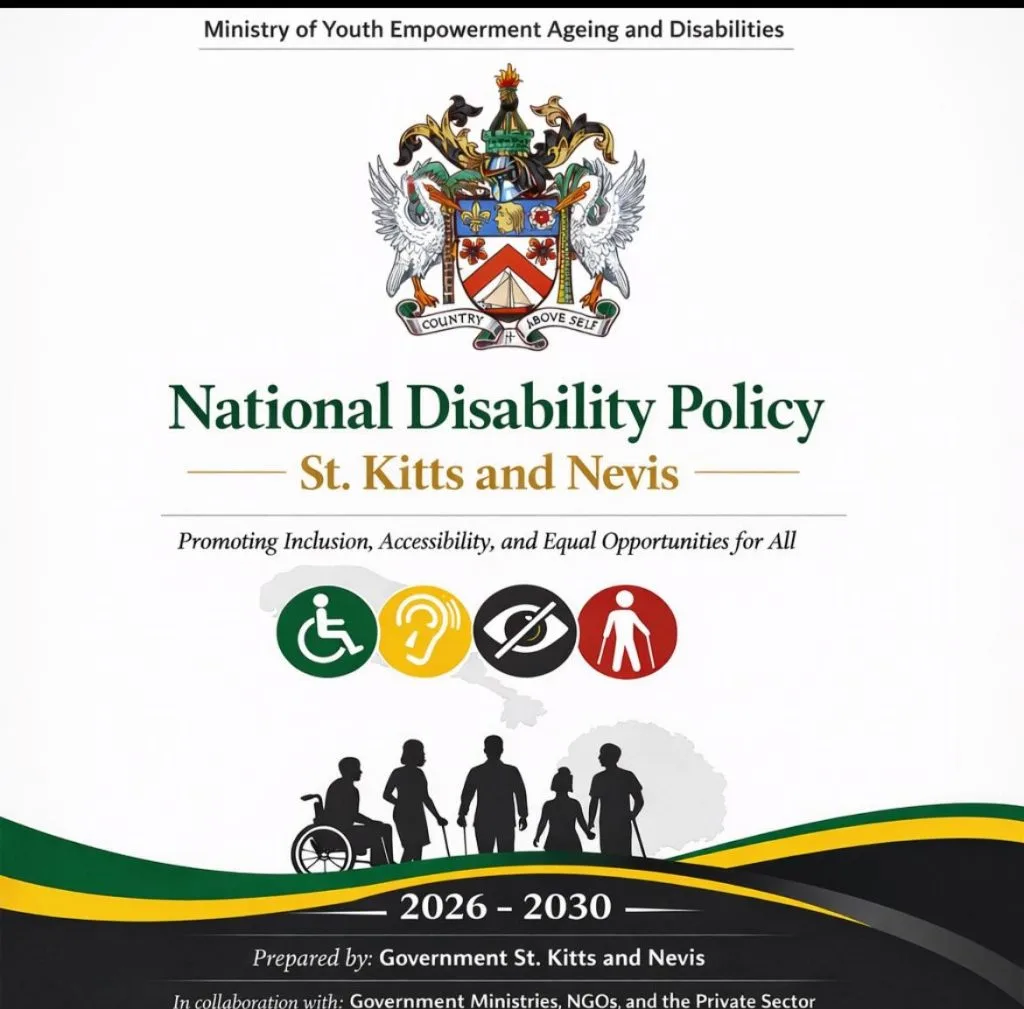
Senator the Honourable Isalean Phillip, Minister of State responsible for Ageing, Disabilities and related matters, laid the policy before the Federal Parliament, marking a significant policy milestone for the federation. The National Disability Policy covers the period 2026-2030 and includes guiding principles and an action plan designed to ensure full inclusion of persons with disabilities within the broader National Development Planning Framework and Sustainable Island State Agenda.
The policy establishes ten core imperatives intended to guide government efforts in improving the lives and standards of living for persons with disabilities. These imperatives address removal of environmental barriers to public spaces, transportation, and information access; educational equality for students and adults; economic inclusion and employment rights; public awareness and the dismantling of attitudinal barriers; health and wellness services; inclusive housing and community accessibility; social, cultural, and public participation; legal protections and access to justice; disability-centered data collection for planning purposes; and accountability mechanisms through governance structures.

Environmental accessibility measures focus on equal access to public infrastructure and assistive devices. Education provisions guarantee that students and adults with disabilities have equal opportunities to attain certifications. Economic components affirm the right to work, earn income, and build financial security.
The awareness pillar includes integrating disability rights into the national school curriculum and launching a national public awareness campaign. Healthcare provisions call for a disability-inclusive sector with equitable access to quality medical and mental health services.
Housing initiatives include quotas for public housing options alongside grant programs to retrofit existing homes. The policy also mandates that emergency shelters, sporting facilities, and community centers meet accessibility standards. Social participation provisions guarantee the right to engage in cultural life, sports, voting, and decision-making processes affecting communities and families.
Legal reforms will review existing legislation and procedures that discriminate against persons with disabilities by omission or design. The policy calls for establishing a Disability Commission to receive and investigate complaints and rights violations. Implementation oversight will operate through a National Disability Council with a dedicated Secretariat responsible for coordinating policy execution and ensuring accountability. According to Phillip, the policy demonstrates the government's commitment to building a fully inclusive society that embraces and values every person regardless of ability.