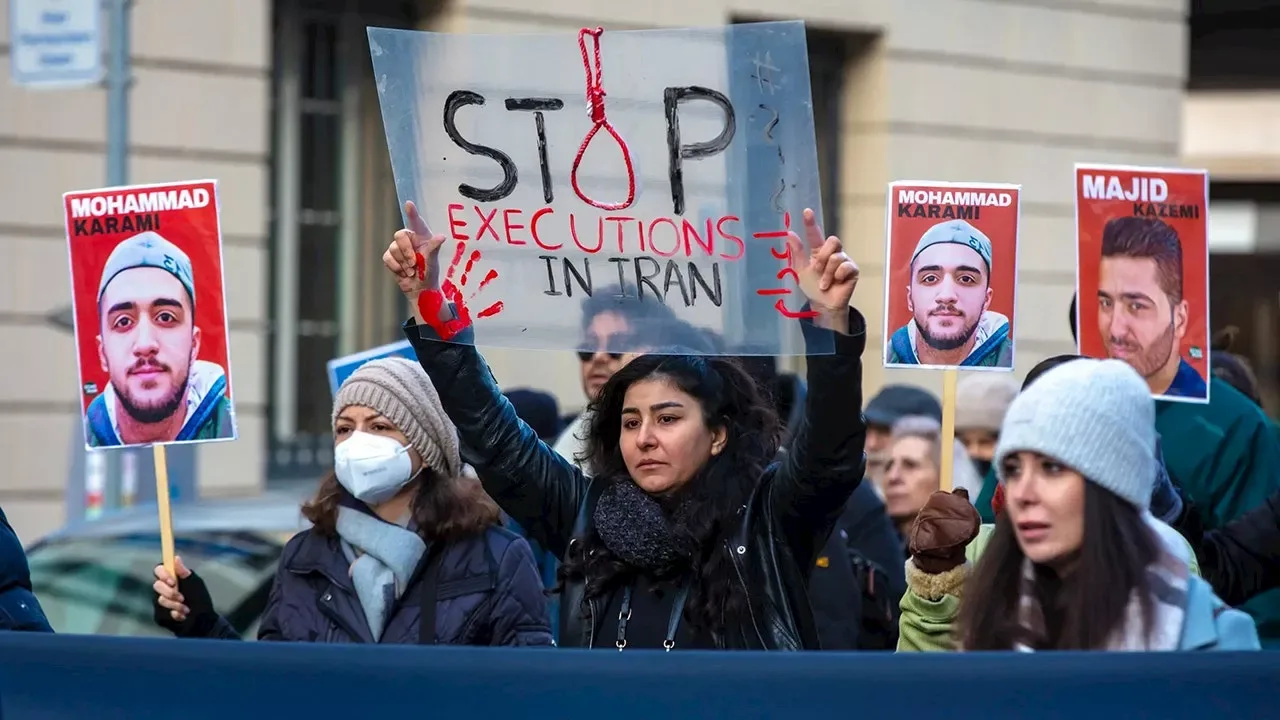
Volker Türk, the U.N. High Commissioner for Human Rights, issued a sharp condemnation of Iran's government on Tuesday, stating that at least 21 people have been executed and more than 4,000 arrested on national security charges since late February. Türk's statement, delivered from Geneva, documented what he characterized as a sweeping assault on fundamental rights occurring in tandem with the country's ongoing conflict.
The crackdown has extended across multiple domains. The U.N. documented nine executions connected to January 2026 protests, ten for alleged opposition group membership, and two on espionage charges. Prison authorities have reportedly subjected detainees to enforced disappearances, torture, mock executions, and televised confessions. Türk warned that Iran's broad application of vaguely defined national security laws has allowed authorities to expedite prosecutions, deny legal representation, and rely on coerced statements.

Ethnic and religious minorities have faced particular risk, including Bahá'ís, Zoroastrians, Kurds, and Baluch Iranians. Prison conditions themselves have deteriorated markedly, with documented overcrowding, shortages of food, water, and medicine, along with systematic denial of medical care. The U.N. documented claims that security forces killed at least five detainees in Chabahar Prison following protests over suspended food distribution.
The crackdown has claimed notable victims. On Saturday, a 21-year-old karate champion, Sassan Azadvar Joonqani, was executed after detention during January anti-regime protests. Last month, 19-year-old wrestling champion Saleh Mohammadi was executed for protesting against the regime.
Among those cited by the U.N. is Narges Mohammadi, an imprisoned Nobel Peace Prize laureate whose health crisis Friday prompted emergency hospitalization. According to her family's statement, Mohammadi suffered two episodes of complete loss of consciousness in a single day accompanied by severe cardiac distress while detained at Zanjan Prison. Her husband, Taghi Rahmani, stated that prison authorities had blocked specialist medical treatment in Tehran despite her history of heart procedures, and that her condition deteriorated under what he described as violent arrest and harsh prison treatment.
Banafsheh Zand, an Iranian-American journalist, told Fox News Digital that authorities are "completely killing off the country." Yet while dissidents welcomed the U.N.'s forceful language, skepticism persisted about its practical impact. Zand questioned whether statements without enforcement could alter conditions meaningfully, particularly given that Iran was elevated to a vice-chair role on a U.N. nuclear nonproliferation committee this week. "What are they gonna do about it?" she asked.