

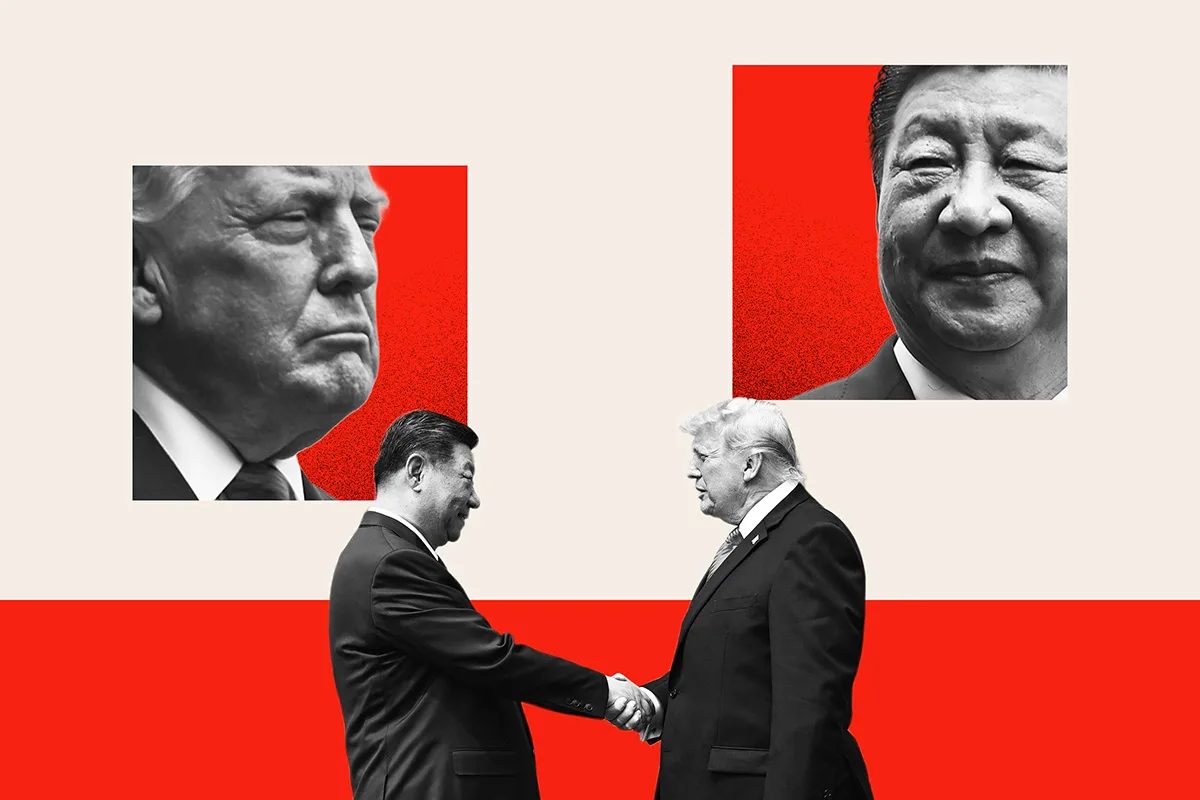
President Donald Trump’s recent visit to Beijing revealed a complex dance between diplomacy and deterrence, where a softened public stance on China coexists with a visible display of American power. Though Trump emphasized his long-standing respect for Xi Jinping and sought to promote greater business cooperation, several prominent China critics accompanied him, signaling that Washington’s tough posture remains intact behind the scenes.
Alongside Trump in the immense hall near Tiananmen Square were figures known for their hawkish views on China, highlighting that the U.S. administration’s approach blends engagement with a clear strategic warning. This show of force serves to remind Beijing that the United States continues to lead globally and is prepared to exert pressure if necessary, according to a former senior adviser involved in the Trump administration’s China policy.

Last year’s lowering of mutual tariffs paved the way for Trump’s visit, turning a previously volatile relationship—marked by disputes over trade imbalances and the origins of the COVID-19 pandemic—into a tentative détente. Trump’s concessions, including adjustments related to Taiwan and restrictions on AI chip exports, aimed to address Chinese concerns, even as some of his own supporters voiced criticism. In response, China agreed to high-profile meetings and pledged significant agricultural purchases, setting the stage for an anticipated U.S. state visit from Xi Jinping.
Despite these diplomatic overtures, experts caution that the U.S.-China relationship remains deeply competitive, often described as a “new Cold War.” The visible presence of hawkish officials during Trump's outreach underscores that strategic rivalry continues beneath the surface, with neither side fully relinquishing their hardline positions. This complex balancing act reflects an effort to manage an increasingly consequential bilateral relationship without tipping into open conflict.