

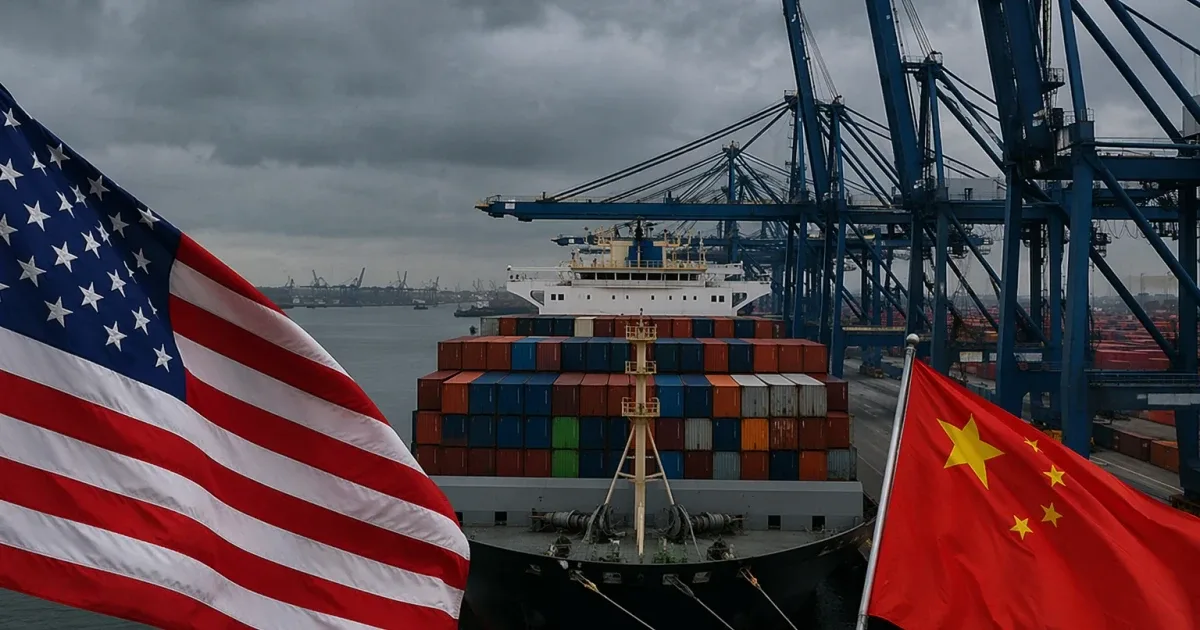
The failure of the World Trade Organization’s (WTO) dispute settlement system has removed a critical safeguard that once kept trade conflicts between nations orderly and rule-bound. Since 2018, this breakdown coincided with escalating tariff exchanges between the United States and China, transforming targeted trade measures into comprehensive tariffs covering all goods traded between the two countries.
Initially, the WTO provided a structured platform for governments to address trade disagreements without resorting to retaliatory tariffs, maintaining global trade stability for over two decades. However, the system began to falter around 2018, leading to a significant erosion of this mechanism. As a consequence, tariff implementation became a more accessible and dominant strategy for escalating economic pressures, challenging established supply chains and increasing costs far beyond the US and China.

The tariff confrontation began when the US imposed duties on over a thousand tariff lines, amounting to roughly $50 billion in trade value. China promptly retaliated with tariffs on US imports, marking a shift from isolated trade measures to a broad economic conflict. This tit-for-tat approach quickly expanded to cover industrial components, consumer goods, and agricultural products, complicating the operational landscape for multinational businesses that relied on predictable trade relations.
Today, tariffs cover the entirety of bilateral goods between the two nations, with the Peterson Institute for International Economics estimating that US tariffs on Chinese exports average 47.5 percent, while China’s tariffs on US goods average 31.9 percent. These widespread tariffs have driven up consumer prices, introduced inefficiencies, and triggered retaliatory trade measures globally.
The pervasive tariff regime has not only affected trade flows but also slowed economic growth and disrupted supply chains critical to industries such as US agriculture and durable manufacturing, where import and export costs have sharply increased. The disruption underscores the practical implications of a weakened multilateral dispute framework, signaling a shift toward a more fragmented and confrontational global trade environment.