

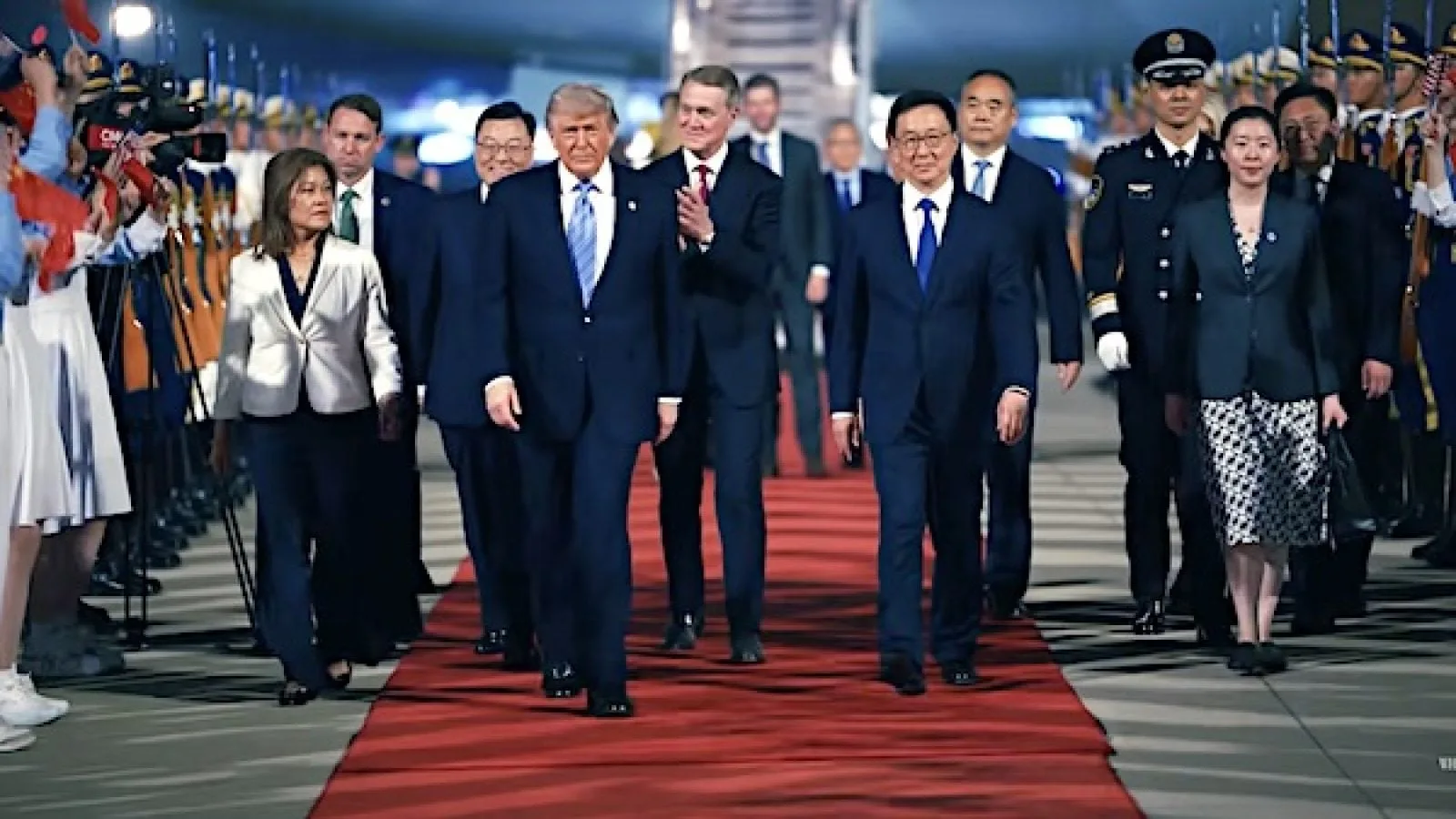
China has long operated not simply as a competitor but as a determined geopolitical enemy of the United States, a reality that has persisted since the establishment of the Chinese communist regime in 1949. Despite repeated U.S. efforts to engage and moderate Beijing—from Nixon’s opening of diplomatic relations aimed at dividing China from the Soviet Union to economic policies encouraging China’s integration into global markets—these approaches have failed to change China’s authoritarian and expansionist nature.
Rather than transforming into a partner aligned with democratic values, China remains a communist surveillance state intent on maintaining strict domestic control and extending its global influence. Unlike democracies constrained by electoral cycles, the Chinese Communist Party operates with a generational strategy, allowing it to patiently leverage U.S. openness to infiltrate and weaken American institutions. This includes massive intellectual property theft, university infiltration, and influence campaigns targeting public discourse.

The global outbreak of the COVID-19 pandemic underscored this adversarial stance when China concealed vital information about the virus’s severity and human-to-human transmission, misleading international organizations and the world. The World Health Organization, criticized for its deference to Beijing, further illustrated how Chinese interests have compromised global oversight mechanisms. The pandemic highlighted the risks of relying heavily on China for critical supply chains, including pharmaceuticals and strategic manufacturing sectors.
Addressing this challenge requires a comprehensive U.S. strategy focused on economic and diplomatic pressure to curtail China’s influence. First, America must build solid trade alliances with dependable partners such as Canada, Mexico, Europe, and developing countries to isolate China economically. The objective is clear: nations should have to choose between access to U.S. markets and dependence on Chinese manufacturing and political leverage, but not both.
Second, the U.S. should work to sever China’s financial lifelines, including restricting access to resources gained through ties with countries like Venezuela and Iran, which supply oil critical to Beijing’s economy. Recent geopolitical events, such as the conflict in Ukraine and Russia’s role as a resource conduit, also intersect with efforts to limit China’s energy and economic advantages.