

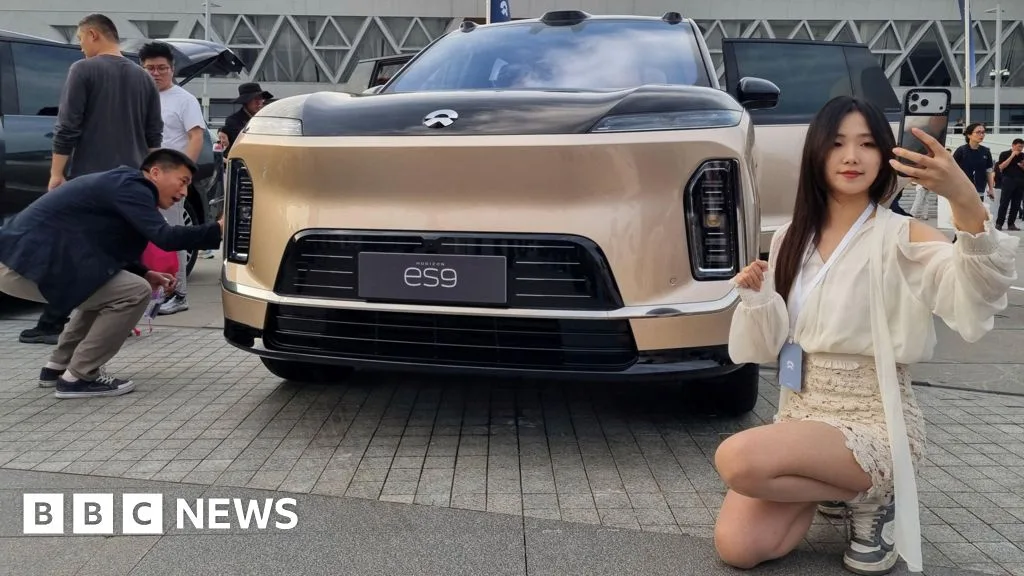
Chinese carmakers have rapidly eclipsed many Western and Japanese rivals, emerging as dominant forces not only in electric vehicles (EVs) but also in battery production, vehicle design, and software innovation. This shift highlights a broader transformation in the automotive sector where technology integration and automation are central to competition.
Industry leaders from established global brands recognize the uphill battle they face. Honda’s chief executive admitted his company struggles to compete after witnessing cutting-edge automation at a Shanghai factory. Ford’s CEO described the situation as a "fight for our lives," acknowledging the global expansion of Chinese competitors that had once been confined primarily to their domestic markets.

The competitive edge of Chinese automakers extends beyond manufacturing scale. China’s dominance permeates over 300 product categories within the EV supply chain, ranging from batteries and components to the machinery used in production. Analysts point out that the cost of manufacturing a small electric SUV in China is significantly lower than in developed economies, largely due to extensive state subsidies and a highly coordinated supply chain. These government-backed investments, totalling tens of billions of dollars in recent years, have facilitated rapid growth and aggressive price competition in global markets.
Inside China, competition among local companies fuels a relentless pace of innovation. Tech giants such as Xiaomi, Huawei, and Alibaba have moved beyond their traditional sectors to enter the EV market, injecting consumer technology expertise directly into vehicle development. Xiaomi’s EV factory near Beijing exemplifies this approach, with vehicles rolling off the line every 76 seconds—remarkable given the company launched its first EV only recently. The brand emphasizes seamless integration between cars, smartphones, apps, and home devices, creating interconnected mobility ecosystems.
Factories like Nio’s in Hefei showcase advanced automation, where certain production lines operate almost entirely without human intervention. Meanwhile, BYD continues to push forward with innovations such as ultra-fast charging technology, enhancing the practicality and appeal of electric vehicles.
The evolving landscape prompts foreign manufacturers to reconsider traditional joint ventures and partnerships in China. No longer purely production-based, these collaborations are adapting to include shared development of new mobility technologies to remain relevant in the face of China’s accelerating progress.