

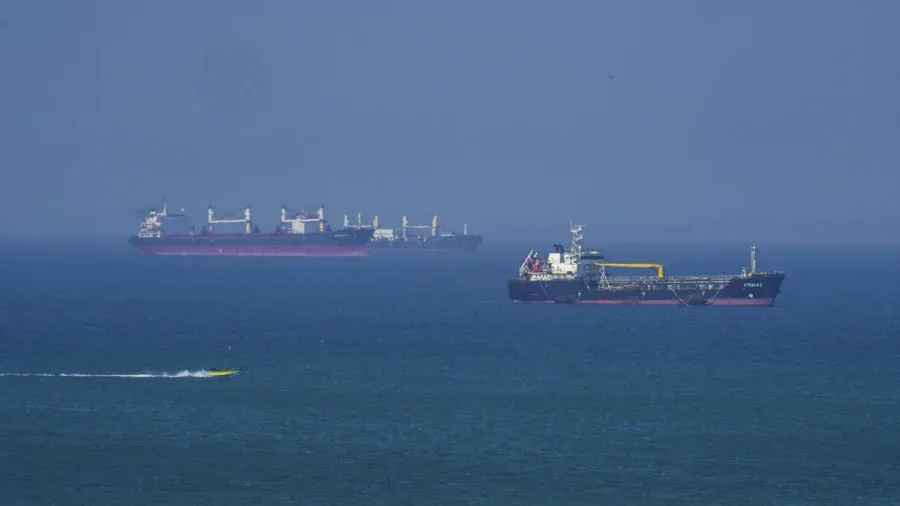
The European Union has imposed sanctions on a unit of Iran’s Islamic Revolutionary Guard Corps (IRGC) and two Iranian nationals in response to Tehran’s actions restricting maritime traffic through the Strait of Hormuz. The measures target the Hormozgan Provincial Command, which reportedly controls access to the vital waterway by requiring vessels to provide identification and cargo details and imposing toll fees for transit.
This move by Iran challenges established international norms that guarantee free passage through international straits, a principle the EU says Tehran is violating. By implementing a system that assesses and sometimes charges fees to ships passing through the strait, the IRGC’s Hormozgan Command effectively exerts sovereign control over a critical global trade route, disrupting shipping and raising tensions among maritime and energy-importing nations.

The EU’s sanctions also name Mohammad Akbarzadeh, deputy commander for political affairs in the IRGC Navy, and Hamid Hosseini, a representative of an Iranian gas and oil union who supports the toll policy. These individuals face restrictions for their involvement in enforcing and promoting the transit fee system that undermines freedom of navigation.
The Strait of Hormuz is a strategic chokepoint through which approximately one-fifth of the world’s oil supply passes. Iran’s naval assertion over this passage followed escalating tensions with the United States after American military strikes earlier this year. In response to Iran’s control efforts, the U.S. Navy imposed a blockade on Iranian ports, heightening the standoff amid ongoing attempts at diplomatic negotiations.
European Union foreign policy chief Kaja Kallas emphasized that these sanctions are the first application of the EU’s new freedom of navigation framework, signaling a readiness to respond firmly to future disruptions. The EU’s stance aligns with that of the United States, which has condemned Iran’s toll system as illegal and demanded reopening of the strait for unimpeded maritime traffic.
Beyond sanctions, diplomatic developments include reported moves by Iran and Israel toward ceasefire talks following recent escalations, with statements from the U.S. highlighting ongoing peace negotiations subject to obstacles.