

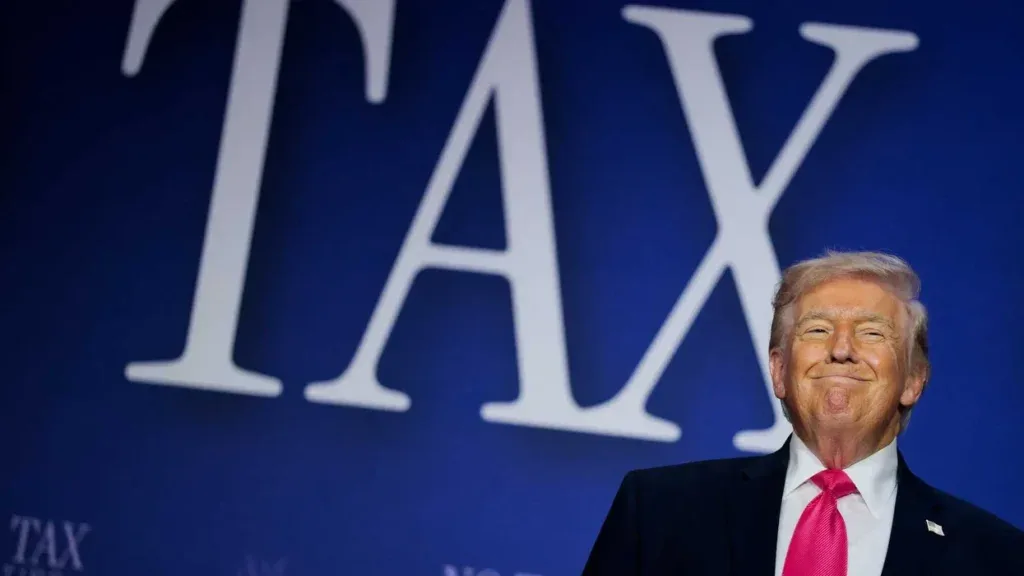
President Donald Trump secured a sweeping tax immunity agreement with the Justice Department last week, shielding him, his family, and his businesses from ongoing federal tax audits. However, tax law specialists caution that this deal may unravel after Trump leaves office, potentially exposing him to renewed IRS scrutiny.
The arrangement followed Trump’s decision to drop a $10 billion lawsuit against the Internal Revenue Service over the 2019 leak of his tax returns. In exchange, Trump received a $1.8 billion settlement from a newly established “anti-weaponization fund” aimed at compensating individuals who allege unfair targeting by the current Justice Department, including some involved in the January 6 Capitol events. The pact simultaneously halted all pending IRS audits related to Trump’s tax filings despite the government possessing several unasserted legal defenses.

Despite the immediate protections, experts highlight significant vulnerabilities in the agreement. One major limitation is that it applies only at the federal level, leaving state authorities free to continue their own investigations into Trump’s tax records. As a former Justice Department tax litigator observed, federal officials cannot waive state tax enforcement powers through this deal.
Another concern centers on unfiled gift tax returns. Without deadlines for these filings, the IRS could later interpret portions of the $1.8 billion settlement as taxable income or gifts, an angle the agreement attempts to block but does not categorically prevent. A Duke University tax law professor underscored that a future IRS might challenge these transactions, potentially generating taxable liabilities for Trump.
Most crucially, the immunity pact’s protection hinges on the current Justice Department leadership and may lose effect once a different administration assumes control. IRS rules typically allow audits of tax returns within three years of filing, though exceptions for significant income omissions extend this period to six years and unlimited time applies for suspected tax fraud. This means tax years from 2025 onward could come under review again, raising the possibility of a post-presidential tax reckoning.
The agreement represents an unprecedented effort to grant broad tax immunity as part of a political and legal settlement but carries unanswered questions about its long-term enforceability in the face of shifting government priorities and independent state authorities.