

China’s latest space mission has set a new precedent by including its first astronaut from Hong Kong, Li Jiaying, on a journey to the Tiangong space station. The three-member crew lifted off from the Gobi Desert in a high-profile launch that signals China’s ongoing commitment to advancing human spaceflight and preparing for extended missions.
Li Jiaying, a 43-year-old police officer and mother of three, serves as the payload scientist on this mission alongside two experienced colleagues: Zhu Yangzhu, a space engineer, and Zhang Zhiyuan, a former air force pilot. One crew member is expected to stay in orbit for an entire year, the longest crewed mission China has attempted, focused on studying the effects of microgravity on the human body. However, the identity of the astronaut who will undertake this extended stay has yet to be disclosed by Chinese officials.

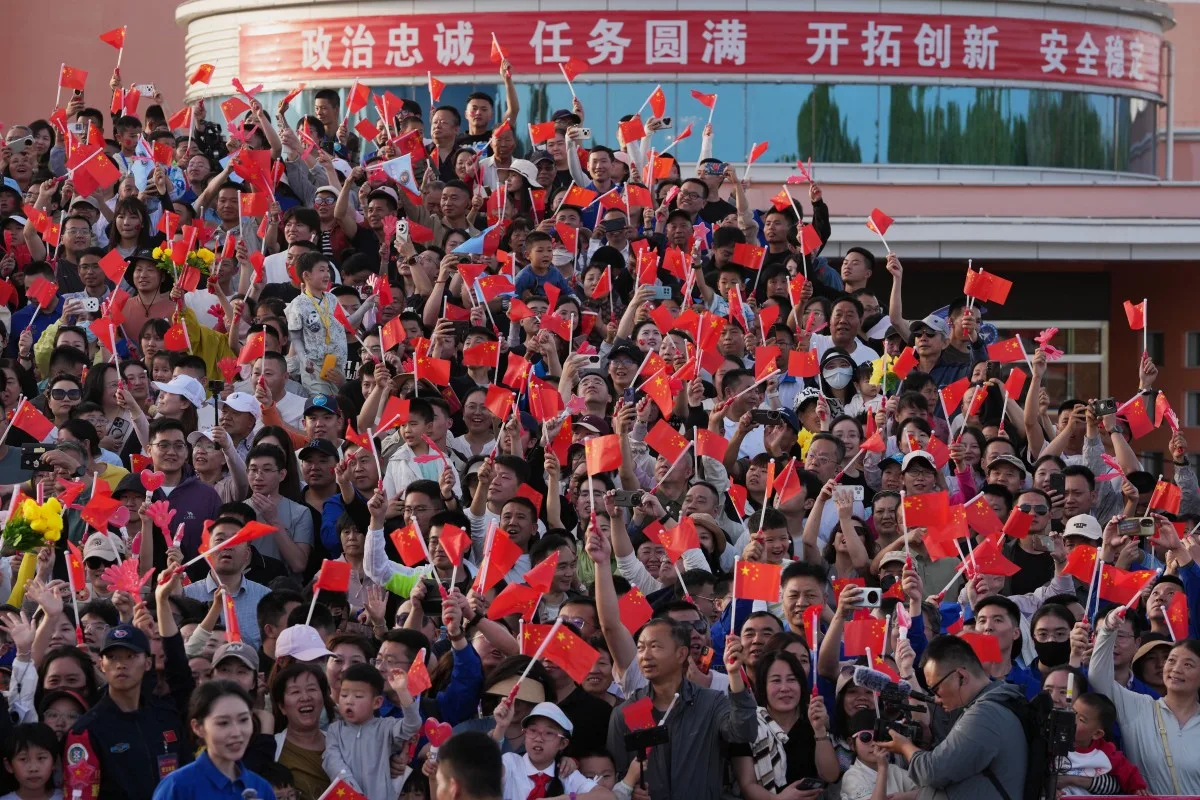
This mission aligns with China’s strategic timeline for space exploration, including a targeted crewed lunar landing by 2030—a goal that parallels America’s own plans to return astronauts to the moon by 2028. The launch drew crowds waving national flags, underscoring the symbolic importance of the flight both domestically and for Hong Kong. The region’s leader hailed Li’s participation as historic, while observers suggest her role might also serve to strengthen patriotic sentiment amid ongoing political tensions.
Li’s family has emphasized their roots in Guangdong province, reinforcing narratives that highlight the integration of Hong Kong within China’s broader national framework. This mission follows China’s recent breakthroughs, such as collecting lunar samples from the moon’s far side, and sets the stage for an upcoming orbital test of a new spacecraft designed for lunar missions later this year.