

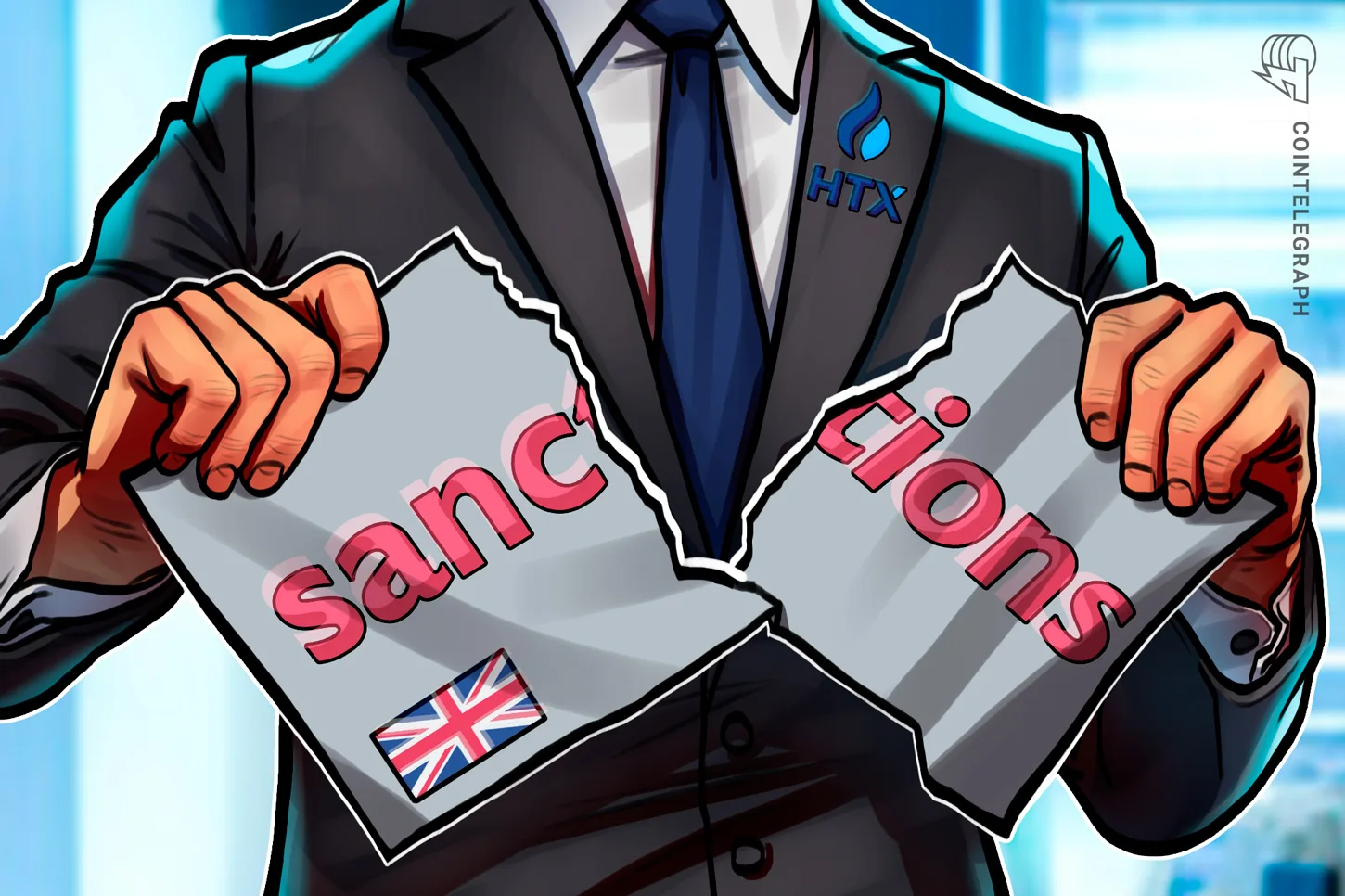
The cryptocurrency exchange HTX has firmly denied allegations from the United Kingdom accusing it of enabling Russia to funnel funds through a covert network known as A7. The UK government recently blacklisted Huobi Global S.A., the Panamanian company behind HTX, blaming it for providing financial services to entities under sanctions for supporting Russia’s war economy.
In its latest sanctions package, the UK targeted a network of crypto and illicit finance operators linked to Russia, including a Kyrgyz bank and a major global cryptocurrency exchange, which the Foreign Office said helped channel over $1.5 billion back to the Kremlin. HTX was named among these entities, drawing a freeze on its assets and prohibitions on financial services within UK jurisdiction.

HTX responded through a spokesperson who said the sanctions apply exclusively to Huobi Global as a distinct legal entity and emphasized that HTX’s platform operations and user funds remain untouched. The spokesperson stressed that HTX has maintained vigilant sanctions compliance and monitoring systems, contesting the blockchain analysis cited by UK officials and announcing plans to challenge the designation. Additionally, HTX noted it does not operate within or serve customers in the UK.
Nevertheless, a recent report by blockchain analytics firm Global Ledger paints a contrasting picture. According to data shared with Cointelegraph, HTX processed approximately $21 billion in what Global Ledger describes as “high-risk” crypto flows from 2021 through May 2026. Within this figure, around $7.6 billion is reportedly tied to Russian counterparties and darknet markets including Garantex, Grinex, A7A5, and the now-defunct Hydra marketplace, as well as others like Kraken darknet and Mega darknet.
Global Ledger’s head of investigations, Vladyslav Syrotin, explained that “high-risk” activity was identified using an internal risk-scoring system, flagging entities and transactions scoring above a threshold of 70 on a scale of 0 to 100. These encompass sanctioned individuals, illicit marketplaces, scams, and other suspicious patterns. Syrotin noted that the attribution data is continuously updated to reflect evolving blockchain intelligence.
The UK’s sanctions reflect increasing Western concern over Russia’s ability to circumvent international financial restrictions by exploiting cryptocurrency platforms. The A7 network, described as a Kremlin-backed shadow system, allegedly facilitates covert movement of funds to sustain Moscow’s military efforts, prompting governments to clamp down on the infrastructure underpinning these flows.