

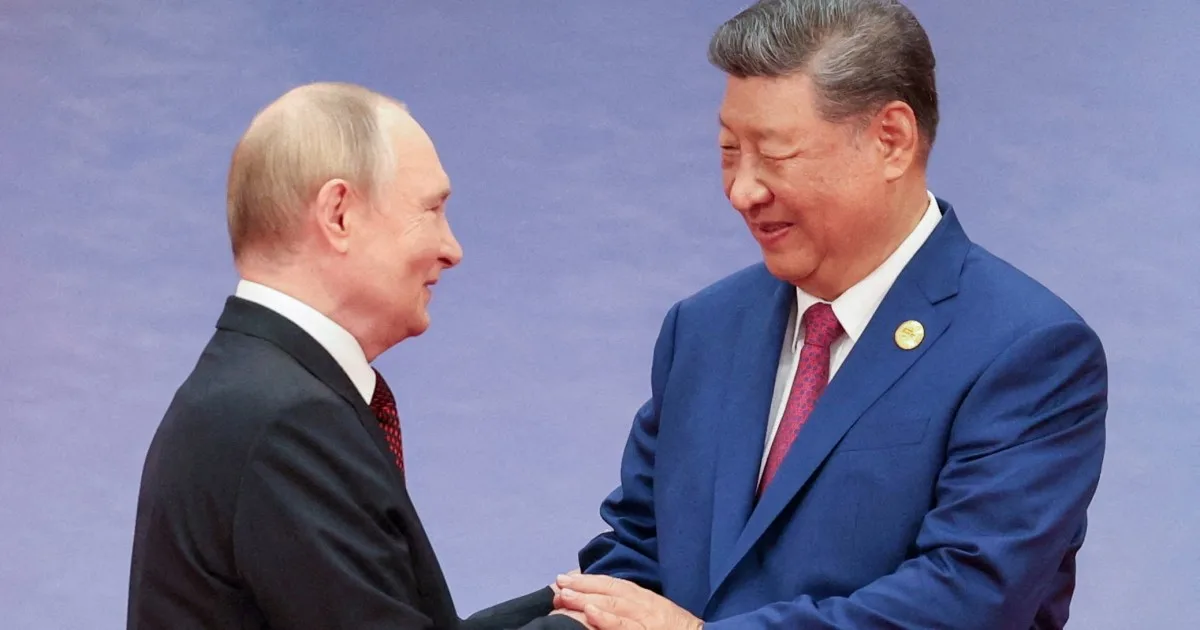
Russian President Vladimir Putin arrived in China for a two-day visit focused on bolstering ties with Chinese President Xi Jinping, underscoring the countries’ increasing interdependence amid a volatile international landscape. This meeting, their second in under a year, coincides with the 25th anniversary of the 2001 Treaty of Good-Neighborliness and Friendly Cooperation that transformed decades of rivalry into formal cooperation between Moscow and Beijing.
The timing of Putin’s visit shortly after U.S. President Donald Trump’s trip to Beijing reflects China’s strategic positioning amid shifting global power dynamics. Both Russia and China face challenges in their relations with Washington, and the unpredictability of the current U.S. administration has accelerated Moscow and Beijing’s rapprochement. Their alliance extends beyond symbolic gestures, addressing critical issues such as the ongoing conflict in Ukraine, regional tensions around Iran, and disruptions affecting vital global energy corridors like the Strait of Hormuz.

China’s reliance on energy imports has become a pressing concern given the strained security of maritime routes. In response, China has strengthened its partnership with Russia, viewing overland energy supplies as a more secure alternative. This energy collaboration exemplifies pragmatic cooperation that has evolved from historical tensions. The border that once divided Soviet Russia and Maoist China, nearly sparking conflict during the Cold War, has now become a conduit for strategic trade and political engagement.
Neither Putin nor Xi frequently embark on international trips, but both leaders have emphasized maintaining strong personal diplomacy. Putin faces international travel restrictions due to an International Criminal Court arrest warrant related to the Ukraine war, while Xi’s trips abroad remain tightly controlled. Despite these constraints, their ongoing interactions have grown in frequency and warmth, with the leaders publicly affirming their mutual friendship and shared interests.
Experts view China’s decision to host both Trump and Putin within days as a deliberate diplomatic move to assert itself as a key stabilizing actor amid global fragmentation. By fostering relationships with major powers on divergent paths, Beijing aims to enhance its influence and security in an increasingly unpredictable world order.