

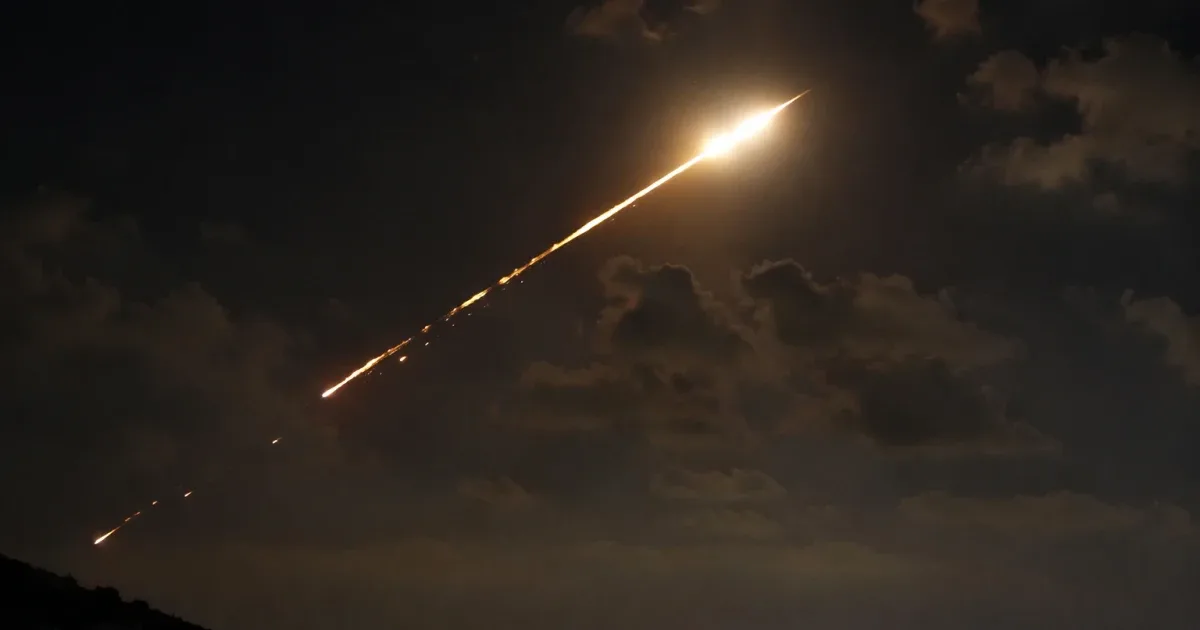
Direct military clashes have intensified between the United States and Iran around the strategic Strait of Hormuz following the alleged downing of a U.S. Army Apache helicopter. In response, U.S. fighter jets launched a precision air campaign targeting Iranian air defense systems, ground control stations, and surveillance radars in a prolonged operation lasting several hours.
This escalation shattered a fragile truce established two months prior, reinserting U.S. forces, regional bases, and the vital waterway into the heart of the confrontation. Iran retaliated with missile and drone attacks on U.S. military installations in several neighboring Gulf countries, including Jordan, Kuwait, and Bahrain. Jordan reported intercepting multiple missiles aimed at one of its districts, while Bahrain activated air-raid warnings amid fears of further assaults.

The Islamic Revolutionary Guard Corps framed these counterstrikes as a direct response to U.S. aggression, signaling a rapid expansion from a single incident into a broader regional conflict. Iranian officials further cautioned that if provocations continue, more severe and widespread attacks could follow, underscoring the escalating stakes in the area.
Despite this military escalation, a senior White House official indicated that U.S. leadership still pursues a diplomatic resolution, with President Trump stating a peace agreement remains within reach. However, this simultaneous pursuit of dialogue and military action reflects a complex strategy where ongoing hostilities may complicate the prospects for a lasting settlement.
Meanwhile, the renewed violence in the Persian Gulf has begun impacting global markets. The instability threatens critical shipping lanes for oil exports, potentially driving up energy prices and transport costs worldwide. In fact, recent reports have noted U.S. inflation rising to its highest point in several years, a development linked in part to the conflict’s market disruptions.
- The U.S. conducted self-defense airstrikes targeting Iranian military installations near the Strait of Hormuz.
- Iran launched missile and drone attacks against U.S. bases in Jordan, Kuwait, and Bahrain.
- Jordan intercepted multiple Iranian missiles aimed at its territory, and Bahrain issued air-raid alerts.
- Iranian officials warned of more severe attacks if U.S. military actions continue.
- Despite hostilities, U.S. leadership maintains talks to pursue a possible peace deal with Iran.