

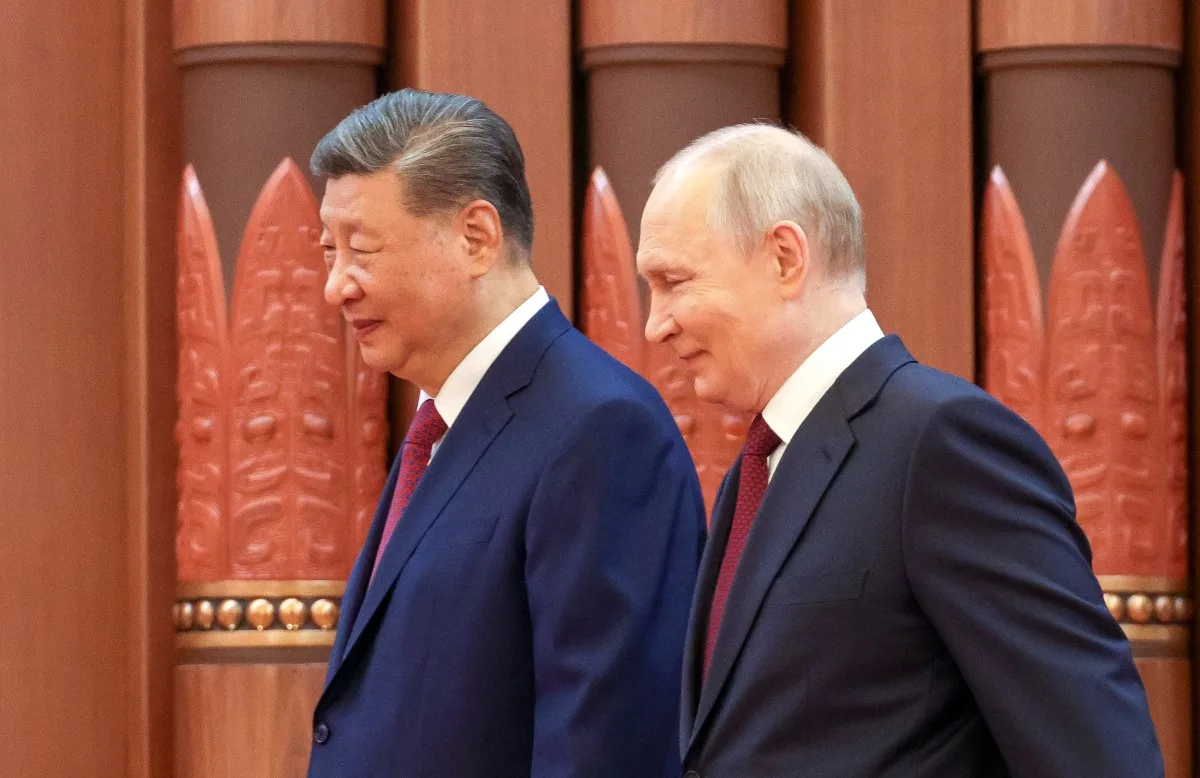
Russian President Vladimir Putin’s recent visit to China resulted in a comprehensive joint declaration emphasizing deepening ties, yet analysts note the visit delivered few significant new initiatives. Marking his 25th trip to China as Russia’s leader, Putin arrived shortly after U.S. President Donald Trump’s high-profile talks with Chinese President Xi Jinping, prompting both Moscow and Beijing to reiterate their partnership as a counterbalance amid shifting global dynamics.
The nearly 10,000-word statement outlined an ambitious agenda spanning security, energy, technology, and trade. While it reaffirmed longstanding commitments—such as the extension of the Treaty of Good-Neighborliness and Friendly Cooperation signed in 2001—the language took on a sharper geopolitical tone, especially concerning U.S. activities in areas like missile defense and Taiwan.

The document underscored Moscow’s support for Beijing’s stance on Taiwan, opposing any form of independence for the island which Beijing claims as its own territory. Both countries pledged to deepen military collaboration, including expanding joint exercises and increasing coordinated air and maritime patrols, particularly in the Pacific region. Moscow and Beijing also criticized U.S. defense projects, notably the “Golden Dome” missile defense system, warning it jeopardizes strategic stability and could heighten conflict risks in outer space.
On the economic front, the statement highlighted steady bilateral trade growth despite Western sanctions targeting Russia. Both governments committed to enhancing cooperation through closer alignment of China’s upcoming five-year plan with Russia’s economic strategy through 2030. Areas of practical collaboration mentioned included oil, gas, coal, civilian nuclear power, renewable energy, artificial intelligence, and space technology, reaffirming joint projects such as China’s Tianwan and Xudapu nuclear power plants.
Although the summit produced numerous agreements and a sweeping strategic vision, there was no announcement of breakthrough deals or major new projects. The overall picture reflects a relationship marked by sustained cooperation and mutual support, but constrained by the broader geopolitical environment and competing international pressures.