

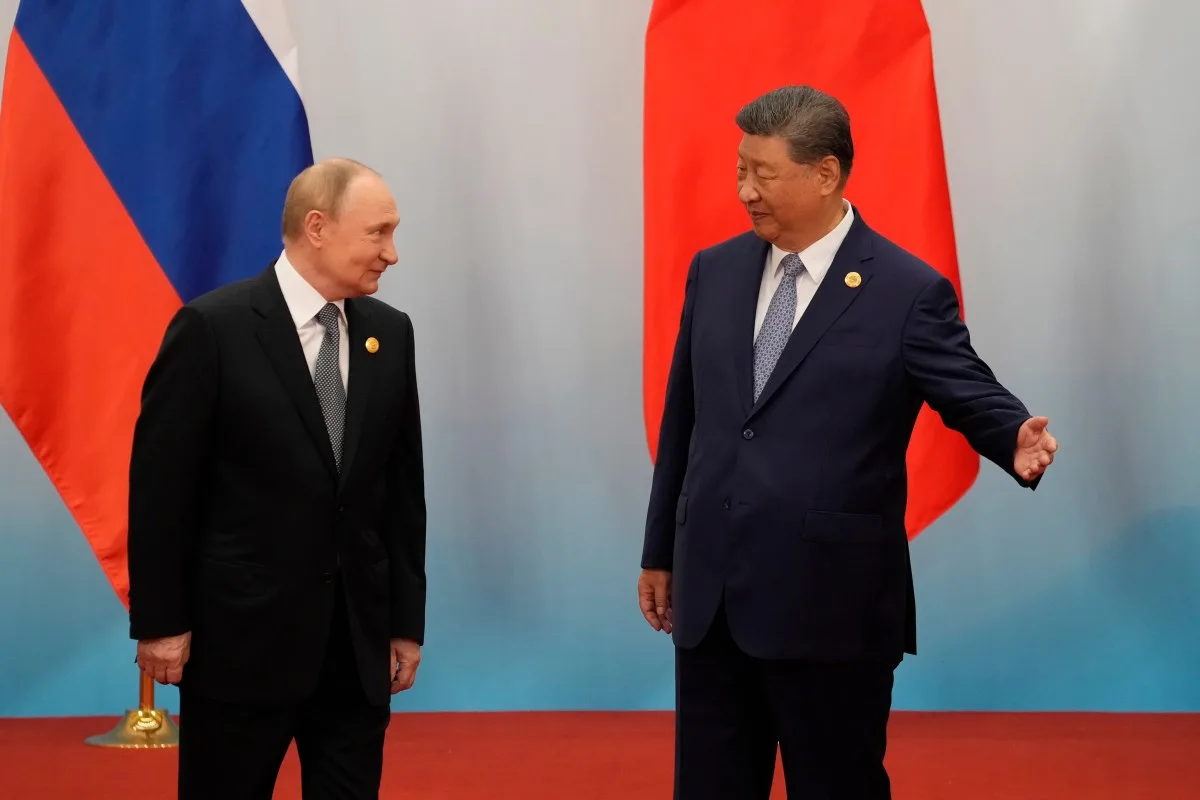
President Vladimir Putin’s visit to China underscores Russia’s strategic pivot toward strengthening its partnership with Beijing amid the ongoing conflict in Ukraine and shifting global alliances. After US President Donald Trump’s recent visit, Russia is now pressing China for deeper cooperation, focusing on trade, energy, and diplomatic alignment.
One of the most significant topics between the two leaders is the expansion of energy ties, notably the Power of Siberia 2 gas pipeline project. This pipeline, designed to deliver up to 50 billion cubic meters of natural gas annually from Russia’s Arctic reserves through Mongolia to China, represents a critical effort for Moscow to redirect its gas exports away from Europe. The European Union has dramatically cut its import of Russian energy as a response to the war, compelling Russia to diversify its markets.

China has emerged as the largest purchaser of Russian oil, circumventing Western sanctions by settling contracts in the Chinese yuan. While both countries agreed on a binding deal to construct the Power of Siberia 2 pipeline last year, price negotiations are ongoing, with Russia hoping geopolitical tensions elsewhere might encourage Beijing to offer more favorable terms.
Beyond energy, President Putin aims to secure broader economic and diplomatic support from China. The visit also serves a symbolic purpose, signaling to the United States and the international community that China’s principal allies are Russia, Iran, and North Korea. This alignment is reflected in high-profile joint events, such as China’s recent military parade, where representatives from these countries were present.
This visit arrives at a moment when Russia seeks to consolidate partnerships that can counterbalance Western sanctions and diplomatic pressure. The discussions span multiple sectors, including increased trade relations and geopolitical cooperation, all while reflecting China’s strategic positioning on the global stage.